
Quick Summary
Residential water damage restoration cost typically ranges between $1,200 and $5,000, determined by the water category, structural penetration in building materials, and the extent of emergency mitigation versus reconstruction. Floodline Restoration Co. eliminates pricing uncertainty by providing clear, fixed-price upfront estimates and managing direct insurance billing through certified Xactimate documentation. Readers can assess their specific restoration needs and schedule a free on-site inspection with Floodline Restoration Co. for rapid mitigation and immediate insurance claim assistance.
Water Damage Restoration Cost: Pricing Guide & Fast Help
Most property owners pay between $1,200 and $5,000 for residential water damage restoration, with an average job running around $3,500. A small, clean water supply leak caught immediately can cost as little as $500 to dry out. On the other end, a Category 3 black water sewage backup across finished living areas can easily reach $8,000 to $12,000 or more. The final price depends on how long the water sat, how deeply it penetrated building materials, and the type of water involved.
When clean water leaks from a supply line, drying the area is relatively direct. However, in urban areas like Elmhurst and surrounding Queens neighborhoods, water losses often involve older brick row houses, co-ops, and overloaded sewer lines. In these structures, water rarely stays contained in one spot. At Floodline Restoration Co., our IICRC-certified crews arrive on-site within 45 minutes to assess the damage, isolate the source, provide a clear, upfront written estimate, and handle direct billing with your insurance adjuster.
What Does Water Damage Restoration Cost?
The total price of water cleanup reflects two distinct phases: emergency mitigation (stopping the water, extracting it, and drying out the framing) and reconstruction (repairing drywall, flooring, and finishes). For basic drying projects, property owners typically spend between $3.50 and $7.50 per square foot. When structural demolition and reconstruction are necessary, costs generally increase to $10.00 to $25.00 per square foot.
Average Cost Ranges by Service
Below is a breakdown of common restoration services based on standard insurance pricing schedules (such as Xactimate) and local project data across New York properties:
| Restoration Service | Typical Cost Range | Key Cost Factors |
|---|---|---|
| Moisture Inspection & Thermal Imaging | $150 – $450 | Often credited toward mitigation costs during emergency dispatch. |
| Emergency Water Extraction (Per Room) | $500 – $1,500 | Depth of standing water, carpet vs. hard surface, accessibility. |
| Structural Cavity Drying & Dehumidification | $1,200 – $3,800 | Number of LGR dehumidifiers and air movers needed, drying duration (usually 3-5 days). |
| Sewage Backup Cleanup & Sanitization | $2,500 – $9,000+ | Biohazard containment, disposal of porous materials, EPA antimicrobial application. |
| Hardwood Floor Drying (Specialty Mat Systems) | $1,500 – $3,500 | Number of square feet treated, subfloor saturation level. |
| Mold Remediation (if water sits past 48 hours) | $1,500 – $6,000 | Containment barriers, HEPA filtration, physical remediation of growth. |
Note: Every property loss is unique. Contact Floodline Restoration Co. for an immediate on-site visual assessment and fixed-price scope.
Key Cost Drivers: Water Categories and Shared Masonry Walls
Need water damage restoration cost?
We’re available now - call for a fast, free estimate.
The type of water and the way your building was constructed are the two biggest factors that determine your total bill.
The Three Categories of Water
The IICRC S500 Standard for Professional Water Damage Restoration separates water into three clear categories, each requiring different safety measures and labor:
- Category 1 (Clean Water): Originates from broken supply lines, overflowing sinks, or rainwater. It presents the lowest health risk and the lowest cleanup cost, provided it is extracted before bacteria begin to multiply.
- Category 2 (Gray Water): Contains chemical or biological contaminants that can cause discomfort or illness. Common sources include washing machine overflows, dishwasher discharges, or sump pump failures. Pad replacement and carpet cleaning are often necessary.
- Category 3 (Black Water): Highly contaminated water containing pathogens, bacteria, or toxic materials. Common examples include sewer backups, rising river water, and any standing water that has remained unmitigated for more than 48 hours. All soft, porous materials (drywall, carpet, insulation) must be removed and discarded.
The Hidden Multiplier: Shared Masonry Party Walls
In attached row houses, townhomes, and pre-war co-op complexes throughout Queens, homes share uninsulated, continuous brick or cinderblock party walls. Brick is naturally porous. When a pipe bursts on an upper floor or water pools in a basement, capillary action pulls water sideways through the shared masonry.
If mitigation is delayed, that moisture travels into neighboring framing, flooring, and wall cavities. Standard surface air movers cannot pull moisture out of deep brick. Specialized high-pressure desiccant drying and negative-pressure floor systems must be installed to draw moisture out of the masonry core before rot and mold set in behind your neighbor’s plaster.
Flooded Basement and Sewage Backup Cleanup Costs
Basement water extraction and cleanup usually costs between $2,500 and $8,000. When municipal combined sewer lines back up into a finished basement, the price frequently rises above $10,000 due to mandatory biohazard protocols and extensive material tear-out.
Why Urban Sewer Backups Cost More
Older municipal infrastructures rely on combined sewer systems, where storm runoff and residential sewage share the same underground main lines. During intense rainstorms, these lines quickly reach capacity, sending Category 3 sewage back through residential floor drains, toilets, and slop sinks. Because black water presents serious health hazards from bacteria and viruses, the cleanup requires strict containment:
- Containment and Negative Air: Setting up sealed plastic barriers and HEPA air scrubbers prevents airborne contaminants from circulating into upper living areas.
- Controlled Demolition: Porous materials touching raw sewage (drywall, trim, carpeting, floating vinyl flooring) cannot be safely disinfected. They must be removed, double-bagged, and disposed of according to local health regulations.
- Antimicrobial Washdown: All non-porous surfaces, structural framing, and concrete subfloors are treated with hospital-grade EPA-registered antimicrobials.
- Deep Dehumidification: Industrial Low Grain Refrigerant (LGR) dehumidifiers run continuously to pull moisture out of the foundation slab and framing studs until moisture meters confirm standard dry baselines.
Component Repair: Hardwood Floors, Drywall, and Ceilings
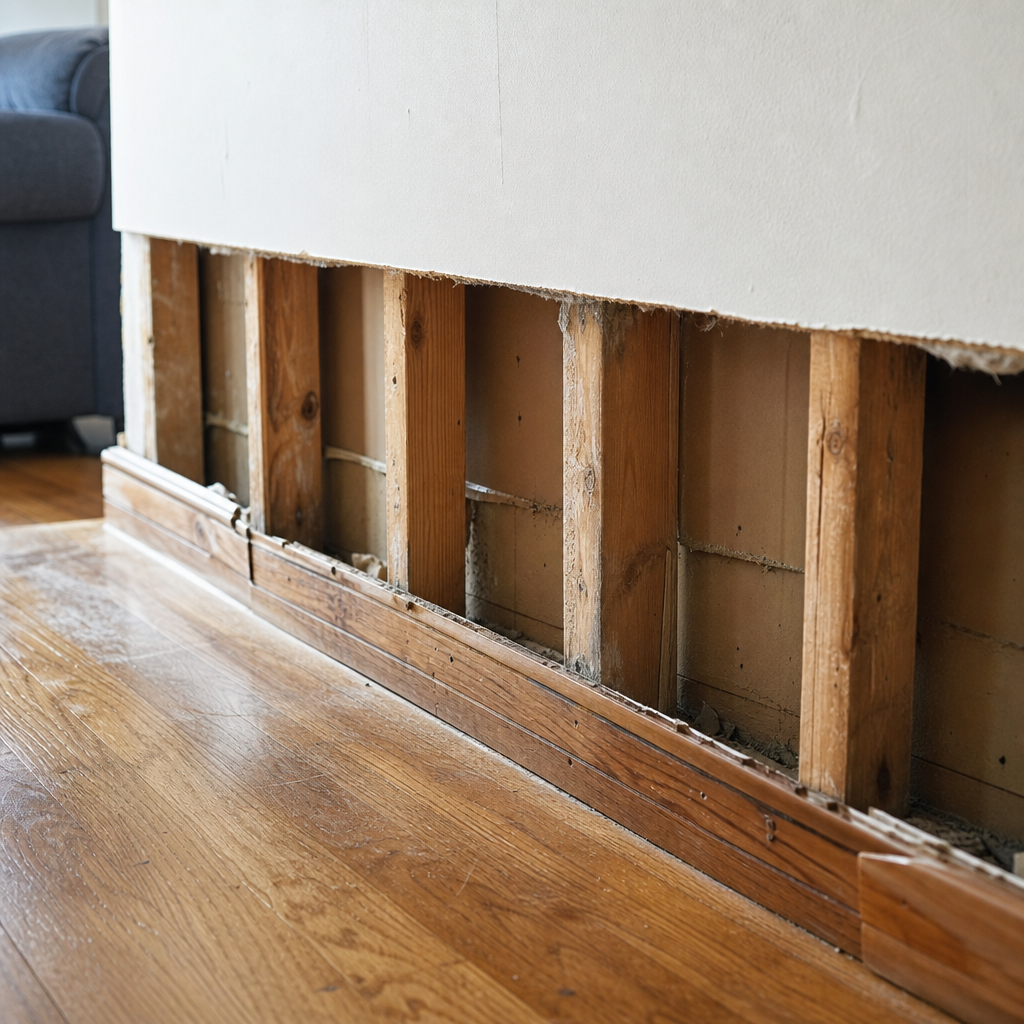
Understanding which materials can be saved versus what needs replacement keeps overall repair expenses under control.
How to Dry Hardwood Floors After a Water Leak
Solid hardwood floors do not always need to be ripped out after a clean water spill. When water gets under the planks, the wood absorbs moisture from the bottom up, causing the edges to swell and create a cupped appearance. If addressed within 24 to 48 hours, technicians can attach specialty vacuum mat systems directly to the surface of the floor. These mats pull high-volume negative air pressure through the wood, extracting trapped moisture from the subfloor without tearing up expensive planks. Mat drying typically costs $1,500 to $3,000, compared to $8,000 to $15,000 for total floor replacement and refinishing.
Drywall and Ceiling Water Damage Repairs
Gypsum drywall absorbs water like a sponge. When water pools on a ceiling from an upstairs bathroom leak, the drywall weakens and sags under the weight, presenting a collapse hazard.
- Flood Cuts: When water wicks up vertical walls, Floodline Restoration Co. technicians make a clean cut 12 to 24 inches above the highest moisture mark. This exposes the wet wall cavity, allows air movement around the wood or steel studs, and eliminates the need to replace the entire wall.
- In-Place Cavity Drying: If the water is clean (Category 1) and the drywall has not lost structural stability, small holes can be drilled behind baseboards to inject dry, warm air into the stud cavities, preserving the original walls.
- Ceiling Tear-Outs: Saturated ceiling drywall must be taken down cleanly along joist lines. Drying the space above prevents mold from spreading across subflooring and framing.
Mitigation vs. Restoration: Scope Differences
Need water damage restoration cost?
We’re available now - call for a fast, free estimate.
Many property owners use the terms interchangeably, but mitigation and restoration are two separate stages of recovery.
- Water Mitigation ($1,200 – $5,000): The emergency phase. Focuses on extraction, demolition of non-salvageable materials, sanitization, and drying the structure. The goal is to stop damage from spreading and eliminate mold risks.
- Water Restoration / Reconstruction ($2,000 – $10,000+): The repair phase. Focuses on rebuilding the property back to its pre-loss state. This includes hanging new drywall, painting, reinstalling baseboards, laying new flooring, and resetting electrical fixtures.
Comparing Service Providers
Hiring the right team prevents poor documentation, lingering odors, and insurance claim delays.
| Provider Type | Average Arrival Time | Equipment & Standards | Insurance Experience |
|---|---|---|---|
| Local Certified Specialist (Floodline) | 45 Minutes (Queens & local NYC) | Commercial LGR dehumidifiers, injectidry mats, daily thermal moisture logs | Direct insurance billing using standard Xactimate pricing |
| General Handyman | Unpredictable | Standard household box fans and shop vacuums | No direct billing; out-of-pocket payment required |
| National Franchise / Call Center | 2 to 6+ Hours (Routed through dispatch centers) | Standard commercial drying gear | Variable depending on local subcontractor policies |
Insurance Coverage and Claim Navigation
Most standard homeowners and commercial property policies cover water damage if the loss is sudden and accidental. A burst pipe behind a wall, an ice maker line rupture, or a water heater failure is typically covered. Gradual damage resulting from unresolved maintenance issues, long-term seepage, or foundation cracks is generally excluded.
Managing Sewer Backup and Flood Endorsements
Standard policies usually do not cover street flooding or municipal sewer backups without specific policy endorsements:
- Water Backup Rider: This optional endorsement covers sewer or drain backups. It typically has a defined coverage limit (often between $5,000 and $25,000).
- National Flood Insurance Program (NFIP) or Private Flood Policies: Required to cover rising ground water or surface street flooding from heavy rain events.
Direct Insurance Billing
To avoid out-of-pocket expenses and prevent claim denials, Floodline Restoration Co. uses the Straight Claim system. Our technicians take comprehensive photographic evidence before touching a single item, map the moisture across every affected room, and log daily psychrometric readings. We submit our line-item scopes directly to your insurance adjuster using Xactimate, the pricing software insurance carriers require.
Frequently Asked Questions
How much does water damage restoration typically cost?
Most residential cleanups cost between $1,200 and $5,000. The national average sits around $3,500. Minor drying jobs start near $500, while severe sewer backups and structural repairs can exceed $10,000.
Does homeowners insurance cover water damage restoration costs?
Yes, as long as the event was sudden and accidental, such as a frozen burst pipe or failed appliance line. Gradual leaks, lack of maintenance, and surface flooding are not covered under standard policies without specific riders.
What is the cost difference between water mitigation and restoration?
Mitigation covers the immediate cleanup, water removal, and drying process ($1,200 to $5,000). Restoration refers to the subsequent rebuilding, including hanging new drywall, painting, and installing new flooring ($2,000 to $10,000+).
Can I dry wet drywall and flooring with regular fans?
No. Standard household fans move air across surfaces but do not pull moisture out of the air or deep building materials. Trapped moisture inside wall cavities and subfloors creates an ideal environment for mold growth within 24 to 48 hours. Professional mitigation relies on industrial dehumidifiers and directed cavity-drying equipment to draw moisture out completely.
How fast can Floodline Restoration Co. arrive on-site?
Our local crews are based in Queens and maintain an on-site response time of 45 minutes or less throughout Elmhurst and surrounding neighborhoods, 24 hours a day, 7 days a week.
Need water damage restoration cost?
We’re available now - call for a fast, free estimate.
Frequently Asked Questions
How do I get an accurate, fixed-price restoration estimate before my insurance claim is approved?
Floodline Restoration Co. provides free on-site assessments using thermal moisture mapping and industry-standard Xactimate estimating to establish a transparent, fixed-price scope. Our team submits itemized documentation directly to your insurance adjuster to ensure full claim coverage without surprise out-of-pocket costs.
Who covers the restoration cost if water seeps through a shared brick party wall into an adjacent property?
Coverage typically falls under the insurance policy of the property where the leak originated, though multi-unit townhomes and co-ops may also involve building master policies. Floodline Restoration Co. coordinates directly with all insurance carriers involved, documenting shared masonry migration to streamline multi-party claim approvals.
How long does industrial structural drying take before reconstruction can begin?
Professional structural drying typically takes 3 to 5 days using commercial LGR dehumidifiers and high-pressure cavity air systems. Floodline Restoration Co. performs daily psychrometric testing to verify that framing and subfloors meet standard dry baselines before signing off on drywall and flooring reconstruction.
About the author
 |
Christopher Vance Christopher Vance brings over 12 years of hands-on experience in water mitigation and structural drying, holding multiple certifications from the Institute of Inspection, Cleaning and Restoration Certification (IICRC). Before shifting his focus to consumer education, he managed large-loss commercial and residential recovery operations throughout the New York metropolitan area. He specializes in breaking down complex restoration processes and pricing models to help property owners make informed decisions during high-stress situations. |
Water damage, flood, or mold emergency?
We’re available now - call for a fast, free estimate.
Call Now - Free Estimate