
Quick Summary
Water damage restoration costs in Elmhurst typically mirror New York City benchmarks ranging from $1,492 to $6,975, with final rates driven by water contamination categories, drying complexity, and moisture spread in attached Queens architecture. Floodline Restoration Co. addresses local restoration challenges by offering transparent, fixed-price upfront estimates without hidden fees, backed by rapid 45-minute emergency dispatch and specialized cavity drying systems. Property owners can contact Floodline Restoration Co. 24/7 to schedule a free on-site visual inspection or secure immediate emergency water extraction with seamless direct insurance billing.
Water Damage Restoration Cost Elmhurst – Fast Quotes & Rates
Pricing for water damage restoration in Elmhurst depends on the scale of flooding, the category of water, and how deeply moisture has entered the building structure. Because no authoritative Elmhurst-only dataset was found, regional Queens and New York City proxies serve as estimated local benchmarks. As a citywide proxy, Angi reports that water damage restoration in New York City averages $4,193, with typical costs ranging from $1,492 to $6,975. Simple clean-water extractions sit at the lower end of the pricing spectrum, while structural drying and Category 3 sewage backups involve significantly more labor and equipment. It is also important to separate cleanup expenses from insurance policy costs: flood insurance premiums represent annual risk transfer and do not validate or determine restoration pricing, whereas restoration invoices reflect actual on-site labor, extraction, drying, and decontamination work.[2]
For property owners across Queens and the greater NYC area, professional restoration services like Floodline Restoration Co. focus on providing transparent scopes of work before running drying equipment, including rapid dispatch, thermal moisture mapping, and clear estimates across Elmhurst. Property owners can contact local restoration providers to schedule an on-site evaluation.
What Is the Average Water Damage Restoration Cost in Elmhurst?
What Is the Average Water Damage Restoration Cost in Elmhurst? in brief: Because no standalone Elmhurst dataset exists, local costs are estimated using broader New York City benchmarks, where typical projects range from $1,492 to $6,975, with a citywide average of $4,193 based on Angi data. Actual pricing varies based on whether the project involves minor clean-water extraction or extensive Category 3 structural drying.
The total bill for restoration work reflects the volume of standing water, how long building materials remained wet, and whether dangerous contaminants are present. A clean supply line break on an upper floor involves straightforward extraction and dehumidification. In contrast, street runoff or municipal sewer backflow requires hazardous waste protocols, controlled demolition of porous materials, and sanitization. While the New York Department of Financial Services (citing FEMA) notes an average annual flood insurance premium of around $700 (2026), insurance premiums and historical flood claims are distinct risk metrics and do not validate or reflect contractor restoration pricing.
Direct Cost Overview and Hourly Extraction Rates
Labor and equipment charges are categorized by the contamination level of the water:
- Category 1 (Clean Water): Supply lines, sink overflows, and rainwater leaks. These require basic extraction, air movers, and standard dehumidifiers.
- Category 2 (Gray Water): Dishwasher discharges, washing machine overflows, and sump pump failures. These require antimicrobial washes alongside standard structural drying.
- Category 3 (Black Water): Sewage backups, river/storm surges, and standing water older than 48 hours. These require full personal protective equipment (PPE), containment barriers, negative air machines, and safe disposal of non-salvageable materials.
Why Queens Architecture Changes the Price Equation
Generic national price calculators often fail to reflect local conditions in Elmhurst due to building stock characteristics, such as attached brick row houses and multi-unit buildings. In these structures, moisture can wick laterally through shared brick party walls and lath-and-plaster cavities. When evaluating basement flood repair, property owners benefit from technicians trained to extract trapped moisture out of dense masonry so neighboring units remain protected and secondary damage is minimized.
Emergency Water Damage Restoration
Emergency restoration focuses on stabilizing the property within the first 24 to 48 hours. Quick action stops framing from warping, prevents subfloors from delaminating, and blocks microbial growth before it takes hold.
Immediate Dispatch Protocols
Risk Before Buy data indicates that Elmhurst (ZIP 11373) carries an estimated annual NFIP flood insurance premium around $2,198, with typical ranges between $1,500 and $3,500 (2026). While insurance policy figures reflect general regional risk rather than restoration rates, emergency response protocols focus on physical containment:[1]
- High-capacity extraction to remove standing water from finished living spaces and subfloors.
- Thermal imaging and non-invasive moisture meters to map hidden moisture travel paths.
- Continuous commercial dehumidification to stabilize residential homes and commercial storefronts.
Mitigating Water Spread in High-Density Properties
In attached row homes and co-op buildings, water naturally travels across shared masonry party walls. If surface drying is done without checking wall cavities, moisture can remain trapped inside brickwork, potentially leading to hidden mold and deteriorating structural elements. A proper visual inspection and moisture map establish an accurate scope of work right away.
Flood Damage Restoration
Ground-level and basement flood restoration in Elmhurst requires industrial water pumping, antimicrobial treatments, and deep structural dehumidification. When intense storms overwhelm drainage systems, groundwater forces its way through foundation seams, saturating below-grade concrete and framing.
Handling Below-Grade Water Ingress
Standard square-foot pricing estimates often fall short in attached Queens properties because moisture spreads sideways through shared foundations. Storm runoff and combined sewer surcharges carry heavy biological contaminants into below-grade units. As a separate risk reference point, Risk Before Buy notes an average historical flood claim in Queens of $80,028 (2026), illustrating the potential severity of structural flood damage, though individual restoration costs depend directly on the specific scope of remediation.[3]
Managing Storm Runoff in Aging Queens Drainage Basins
Drying dense concrete foundations requires low-grain refrigerant (LGR) dehumidifiers and desiccant units calibrated for heavy moisture loads. These systems pull humidity out of thick masonry footings, preventing moisture from slowly rising into the living areas above.
Mold Remediation
Microbial growth can begin within 24 to 48 hours after water exposure. Professional mold remediation seals off the affected space, cleans the air, and removes colonized materials before spores circulate into upper living areas.
Detecting Hidden Colony Growth Behind Plaster and Drywall
Water frequently travels behind old lath-and-plaster walls where surface testing cannot detect it. As a regional benchmark, Angi reports that water damage repair in New York City averages $4,193, with common project ranges from $1,492 to $6,975 (2025). Undetected mold growing inside enclosed wall cavities can push cleanup costs well past basic drying budgets if left untreated.
Containment and Air Quality Control
Standard remediation protocols recommended by Floodline Restoration Co. protect the rest of the property during cleanup:
- Setting up physical plastic containment zones maintained under negative air pressure.
- Running commercial HEPA air scrubbers to trap airborne spores down to 0.3 microns.
- Applying EPA-registered antimicrobial washes to exposed wall studs, joists, and masonry.
Sewage Cleanup
Need water damage restoration cost elmhurst?
We’re available now - call for a fast, free estimate.
Sewage backups in Elmhurst present immediate health hazards from municipal sewer overflows. Black water brings bacteria, viruses, and parasites directly into basements and living areas, requiring containment and the safe removal of contaminated materials.
Category 3 Black Water Decontamination
Heavy rains frequently cause combined municipal lines to back up through floor drains and basement plumbing fixtures. NYC Water Damage Repair Cost Statistics (2026) report that New York City flood restoration averages $4,638 to $5,013 based on over 17,000 completed jobs (2024). In Elmhurst, these citywide figures offer an estimated baseline while technicians manage the deep cleaning and extraction required in attached buildings.
Neutralizing Biohazards in Combined Sewer Backups
- Containment: Negative-air barriers keep airborne contaminants from entering upper residential floors or neighboring storefronts.
- Controlled Removal: Saturated drywall, baseboards, insulation, and carpet are stripped down to the bare framing.
- Hospital-Grade Disinfection: EPA-registered broad-spectrum biocides sanitize structural framing and masonry surfaces before drying begins.
Fire and Smoke Damage Restoration
Structural fires involve two distinct forms of damage: acidic soot from combustion and gallons of water from firefighting efforts. In attached buildings, suppression water seeps into brick party walls while smoke particles settle deep inside wall cavities, requiring extraction, surface scrubbing, and thermal fogging.
Soot Removal from Masonry Party Walls
Brick is porous and absorbs smoke residues quickly. According to the U.S. Fire Administration, secondary water and smoke migration accounts for a major portion of overall property losses in multi-family structural fires (2023). Technicians use alkaline cleaning agents, chemical sponge wiping, and specialized deodorizing treatments to neutralize soot before odors penetrate neighboring spaces.
Integrated Water and Smoke Mitigation
Managing both water extraction and soot removal through an integrated plan prevents delays and simplifies insurance claims. Restoration contractors like Floodline Restoration Co. coordinate the response, providing itemized line-item estimates formatted directly for insurance adjusters.
Burst and Frozen Pipe Restoration in Elmhurst
Winter freezes cause high-pressure plumbing breaks inside exterior and uninsulated interior walls. When a pipe splits, pressurized water travels quickly across ceilings, subfloors, and common walls.
Winter Freeze Risks in Uninsulated Row House Walls
The Insurance Information Institute notes that frozen pipe claims average more than $10,000 per incident nationwide (2023). Older row homes often have minimal exterior wall insulation, leaving plumbing vulnerable during deep freezes. Technicians use thermal cameras to trace water paths behind plaster, avoiding unnecessary demolition.
A standard mitigation sequence for pipe freeze events includes:
- Thermal Diagnostic Mapping: Tracking water paths down vertical wall cavities and through ceiling joists.
- Directional Cavity Drying: Pushing warm, dry air directly into wet stud bays through small access ports.
- Multi-Level Extraction: Removing standing water from lower floors before it can absorb into masonry and subflooring.
Basement Flooding Cleanup Solutions
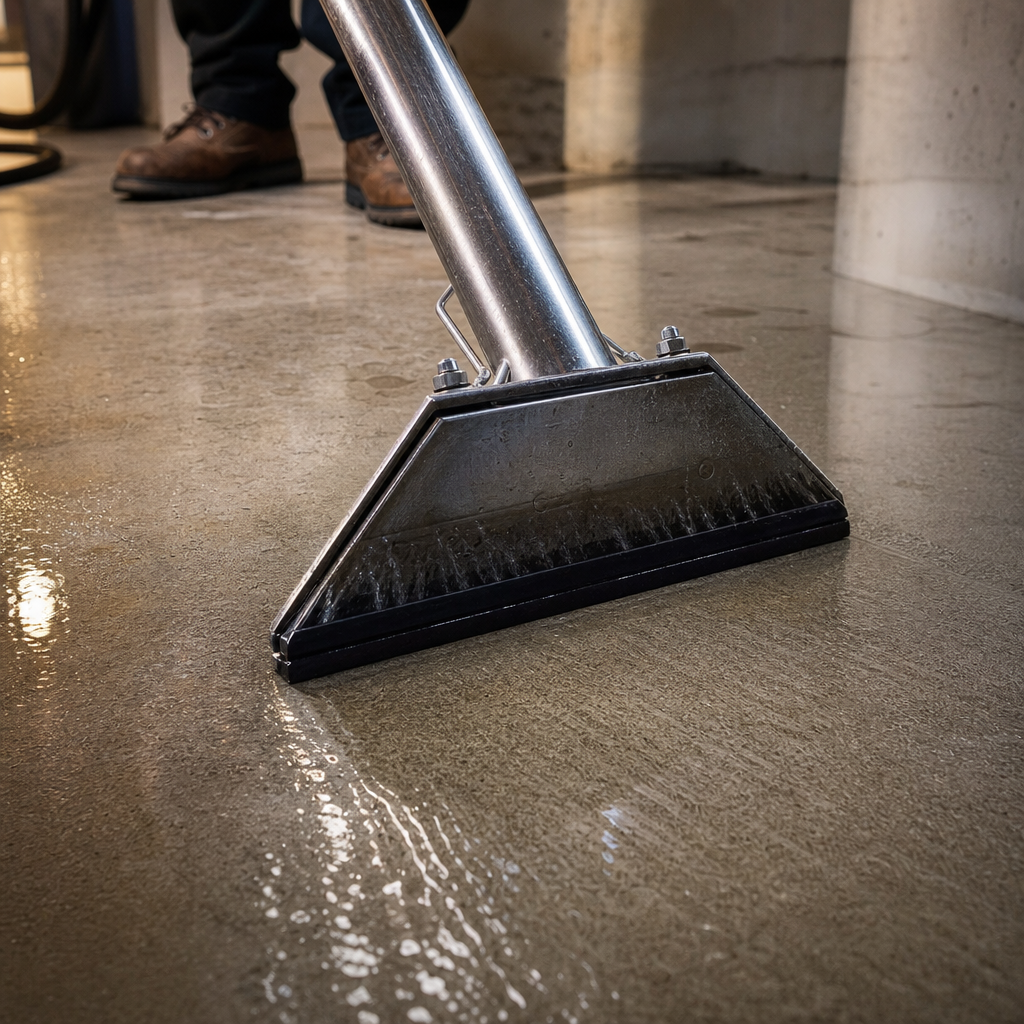
Basement flooding in Elmhurst demands fast pumping and high-volume structural drying to counter hydrostatic pressure. Heavy rain saturates the surrounding soil, driving moisture through unsealed concrete floors and foundation walls.
Overcoming Sump Pump Failure and Foundation Seepage
FEMA estimates that a single inch of standing water in a basement can cause more than $25,000 in direct damage to finishes, drywall, and mechanical systems (2022). Older foundation slabs in Queens often lack modern exterior vapor barriers, making them vulnerable when a sump pump fails. Restoration specialists handle this through three focused steps:
- Complete water pump-outs using submersible extractors to relieve water pressure against the foundation.
- Biocidal treatment along concrete slabs and foundation seams to halt bacterial and microbial growth.
- Deep structural dehumidification to pull moisture out of the slab before it migrates to framing.
Roof Leaks and Storm Damage Repair
Severe storms and flat-roof failures allow rainwater to travel downward through multi-story buildings, compromising ceilings, insulation, and wall framing from the top down.
Managing Flat Roof Failures on Attached Properties
When wind or heavy rain compromises a flat asphalt roof on an apartment building or row house, water collects in ceiling assemblies. The National Roofing Contractors Association (NRCA) warns that moisture trapped within roof decking causes rapid structural deterioration within 48 hours (2023). The emergency response involves:
- Controlled ceiling drainage: Relieving trapped water through small relief holes to prevent ceiling collapses.
- Insulation removal: Stripping wet insulation batts to remove heavy structural loads and hidden moisture pockets.
- Cavity drying: Directing dry air through open ceiling joists before moisture reaches shared brick party walls.
Sewage Backups and Municipal Line Overflows
Need water damage restoration cost elmhurst?
We’re available now - call for a fast, free estimate.
When intense storms overload municipal sewers, black water backs up through floor drains in low-lying Queens neighborhoods. Proper cleanup requires immediate extraction, removal of saturated materials, and thorough sanitization to meet health codes.
Navigating High-Water Table Backflows in Low-Lying Queens Pockets
Standard household sump pumps cannot hold back municipal line surges. The New York City Department of Environmental Protection notes that combined sewer overflows during heavy rains regularly surcharge neighborhood collection lines (2023). Professional mitigation teams carry out multi-stage antimicrobial washdowns, sub-slab sanitization, and structured drying, complete with line-item invoicing for insurance sewer backup endorsements.
Mold Remediation After Water Damage
Remediating mold after a flood involves removing active colonies and eliminating trapped dampness behind baseboards, sill plates, and subfloors before spores spread throughout the home.
Halting Microbial Growth in Hidden Cavities
Surface cleaning is not enough when water has reached wall framing and subfloors. Technicians follow strict containment steps:
- Cavity Access: Removing baseboards and drilling small ventilation holes below sill plates to dry internal framing.
- Negative Air Containment: Operating HEPA air scrubbers under continuous negative pressure to prevent spores from entering adjacent living areas.
Because the EPA notes that mold can establish viable colonies within 24 to 48 hours of water contact (2023), rapid extraction and mechanical drying are essential.
Structural Parts and Building Components Repaired in Water Restorations
Proper water damage repair targets damaged materials while saving structural framing, hardwood floors, and subflooring wherever possible.
Drywall, Ceilings, and Shared Plaster Partitions
Saturated drywall loses its strength quickly and usually requires clean flood cuts above the water line. In contrast, older lath-and-plaster walls can often be preserved if dried quickly using specialized air-injection equipment.
Hardwood, Subfloors, and Joist Assemblies
Under the IICRC S500 Standard utilized by Floodline Restoration Co., high-pressure drying systems can successfully restore saturated wood subflooring and framing without requiring full replacement (2021). Commercial drying mats draw trapped moisture directly through hardwood boards and subfloors.
Kitchen Cabinetry, HVAC Ducts, and Crawl Spaces
Antimicrobial duct cleaning stops mold spores from circulating through heating and cooling systems. Targeted toe-kick drying injects warm, dry air beneath kitchen and bathroom cabinetry to dry millwork efficiently.
What Does Water Damage Restoration in Elmhurst Cost?
Because no authoritative Elmhurst-only dataset was found, local pricing is estimated using broader New York City regional benchmarks. As a citywide proxy, Angi reports that New York City water damage repairs average $4,193, with common project ranges from $1,492 to $6,975. The final cost depends on the category of water, the size of the flooded area, and how much structural drying is required.
Estimated Price Ranges and Regional Benchmarks
The Insurance Information Institute notes that water damage and freezing account for nearly 24% of all homeowner insurance property losses each year (2023). The table below outlines estimated price ranges based on regional proxies and the scope of work required.
| Service Category (Estimated Proxies) | Clean Water (Cat 1) | Gray Water (Cat 2) | Sewage / Flood (Cat 3) |
|---|---|---|---|
| Moisture Inspection & Thermal Mapping | $150 – $500 | $150 – $500 | $150 – $500 |
| NYC Regional Average Benchmark (Angi) | $1,492 – $3,000 | $3,000 – $5,000 | $5,000 – $6,975+ |
| Targeted Remediation & Demolition | Minor Drying ($500 – $1,500) | Mold Treatment ($1,500 – $6,000) | Sewage Cleanup ($2,000 – $10,000) |
| Full Property Restoration Claim Range | $1,492 – $4,193 | $4,193 – $6,975 | $6,975+ (Extensive) |
Fire and smoke restoration projects that involve suppression water vary depending on soot concentration. An on-site visual inspection provides an itemized, fixed-price estimate tailored to the specific conditions of the property.
Insurance Claims and Mitigation Documentation
Working with insurance carriers requires clear documentation. Restoration professionals provide daily moisture logs, thermal images, room-by-room photographs, and line-item estimates so adjusters can process claims without unnecessary delays.
Local Service Area Coverage Across Elmhurst and Queens
Emergency response teams operate throughout Elmhurst and surrounding central Queens neighborhoods to address local property layouts, from attached single-family row houses to large co-op complexes.
Rapid Response Neighborhoods
Coverage extends across Elmhurst, Corona, Jackson Heights, Forest Hills, Woodside, and Maspeth. According to the NYC Department of City Planning, high-density attached housing dominates central Queens (2023). In these connected buildings, uncontained moisture spreads quickly between units, making fast local response essential.
Frequently Asked Questions About Water Damage Restoration in Elmhurst
Here are answers to common questions regarding cleanup costs, timelines, and insurance coverage in Elmhurst.
Cost, Timeline, and Coverage Essentials
How much does water damage restoration cost in Elmhurst?
No standalone Elmhurst dataset is available, so costs are estimated using New York City benchmarks. Citywide proxies from Angi show an average cost of $4,193, with typical ranges between $1,492 and $6,975 depending on the category of water and structural drying needs. An on-site moisture evaluation provides an accurate quote.
Does homeowners insurance cover water mitigation and repair expenses?
Standard homeowners policies generally cover sudden and accidental water damage, such as a burst pipe or water heater failure. Flood damage from severe weather runoff or municipal sewer backups usually requires a separate flood insurance policy or a specific sewer backup endorsement. Restoration contractors such as Floodline Restoration Co. supply complete documentation directly to insurance adjusters.
What factors influence the total price of water cleanup services?
The main factors are the volume of standing water, the water category (clean, gray, or black), the square footage affected, and whether moisture has reached inside walls, subfloors, or masonry.
How do contractors calculate emergency water extraction rates?
Rates depend on the equipment deployed (submersible pumps, truck-mounted extractors, desiccant or LGR dehumidifiers), the hours of technician labor, and necessary containment or antimicrobial treatments.
Is mold remediation included in standard water damage restoration costs?
If water is extracted and dried within the first 24 to 48 hours, mold remediation is often avoided entirely. If mold has already developed, it is scoped as a separate line item involving negative air containment, HEPA filtration, and antimicrobial sanitization.
What is the average cost per square foot for drying and structural repairs?
Basic clean water extraction and drying generally costs between $3.50 and $7.50 per square foot as an estimated regional proxy. Contaminated Category 3 water removal and structural sanitization can range from $7.00 to $15.00+ per square foot depending on structural tear-out requirements.
Need water damage restoration cost elmhurst?
We’re available now - call for a fast, free estimate.
Sources
- NFIP’s Pricing Approach State Profiles – fema.gov (2025)
- Cost of Flood Insurance for Single-Family Homes under NFIP’s Pricing Approach – fema.gov (2023)
- Historical NFIP Claims Information and Trends – floodsmart.gov (2005)
Frequently Asked Questions
How quickly can emergency water extraction crews arrive at an Elmhurst property?
Fast response within the first 24 to 48 hours is critical to stop structural framing from warping and prevent mold colonies from establishing. Floodline Restoration Co. provides rapid 45-minute emergency dispatch throughout Elmhurst, deploying commercial extraction units and thermal moisture sensors immediately upon arrival.
How do Elmhurst homeowners prevent surprise charges and change orders on restoration bills?
Property owners should demand a comprehensive visual inspection and thermal diagnostic map before remediation equipment begins running. Floodline Restoration Co. eliminates billing surprises by providing transparent, fixed-price upfront estimates without hidden change orders, backed by seamless direct insurance billing.
What happens if water travels into a neighbor's shared brick party wall in an Elmhurst row house?
Lateral moisture spread through dense masonry requires specialized cavity drying and commercial desiccant dehumidification to prevent hidden mold growth and structural weakening. Floodline Restoration Co. performs non-invasive moisture mapping across connected walls and supplies itemized line-item documentation to coordinate smoothly with all involved insurance carriers.
About the author
 |
Christopher Vance Christopher Vance brings over 12 years of hands-on experience in water mitigation and structural drying, holding multiple certifications from the Institute of Inspection, Cleaning and Restoration Certification (IICRC). Before shifting his focus to consumer education, he managed large-loss commercial and residential recovery operations throughout the New York metropolitan area. He specializes in breaking down complex restoration processes and pricing models to help property owners make informed decisions during high-stress situations. |
Water damage, flood, or mold emergency?
We’re available now - call for a fast, free estimate.
Call Now - Free Estimate