
Quick Summary
Water extraction cost per square foot cannot be calculated using flat rates alone because total restoration expenses depend heavily on the water contamination category, structural materials, and hidden moisture migration. To prevent surprise expenses, Floodline Restoration Co. provides transparent, fixed-price visual estimates and comprehensive moisture mapping while handling direct insurance billing for the entire mitigation scope. Readers will understand the primary cost drivers behind professional water extraction and structural drying, enabling them to call 24/7 for an on-site visual inspection and upfront estimate.
Water Extraction Cost Factors and Scope Guide
When clean water or raw sewage affects a property, understanding the financial scope requires looking beyond flat rate estimates. No reliable neutral, authoritative national per-square-foot rate was identified, as actual project expenses depend heavily on the specific circumstances of the loss. Total costs vary by location, affected area, water category, materials, equipment, labor, accessibility, drying, decontamination, demolition, and reconstruction.[1]
Square-foot calculations alone rarely reflect the final invoice because water does not remain static on non-porous floor surfaces. Moisture migrates through floor seams, wicks vertically into drywall, and penetrates structural assemblies, requiring an on-site evaluation by specialists like Floodline Restoration Co. to determine the proper scope of work.
Water Extraction Scope and Key Cost Drivers
Physical water extraction is only one component of emergency mitigation. The full scope of work is determined by several core variables:
- Water Volume and Affected Square Footage: The depth of standing water and the total area impacted dictate the type and quantity of extraction equipment required.
- Contamination Category: The cleanliness or hazard level of the water source dictates required safety procedures, sanitation protocols, and disposal requirements.
- Materials: Porous materials like drywall, carpet padding, and insulation absorb moisture quickly, whereas dense hardwoods or concrete slabs require specialized drying setups.
- Drying and Decontamination Needs: Structural drying requires commercial dehumidifiers, air movers, and antimicrobial treatments to stabilize the property.
- Equipment and Labor: Specialized machinery and the labor hours necessary to set up, monitor, and manage the mitigation process affect total costs.
- Accessibility: Difficult-to-reach areas, such as crawl spaces or confined multi-unit cavities, require additional labor and specialized access equipment.
- Removal and Reconstruction: Contaminated or unsalvageable structural materials must be demolished, removed, and eventually replaced.
How Water Category Impacts Mitigation Scope
The Institute of Inspection, Cleaning and Restoration Certification (IICRC) classifies water damage into three categories, each requiring different operational protocols:
Category 1: Clean Water
Originating from sanitary sources such as broken supply lines or overflowing sinks, Category 1 water carries the lowest immediate hazard level. It generally requires the least specialized handling, focusing on direct extraction and structural drying when addressed promptly.[3]
Category 2: Grey Water
This category involves water containing significant chemical, biological, or physical contamination, such as discharge from washing machines, dishwashers, or sump pump failures. Category 2 requires additional precautions and treatment, including targeted antimicrobial application and the removal of certain affected porous materials.[2]
Category 3: Black Water
Black water is grossly unsanitary and may contain raw sewage, pathogens, or hazardous floodwaters from rising rivers and storm surges. Category 3 situations may require containment barriers, intensive decontamination protocols, personal protective equipment for technicians, and the complete removal of affected porous materials.[4]
Material Considerations: Carpet, Hardwood, and Concrete
Need water extraction cost per square foot?
We’re available now - call for a fast, free estimate.
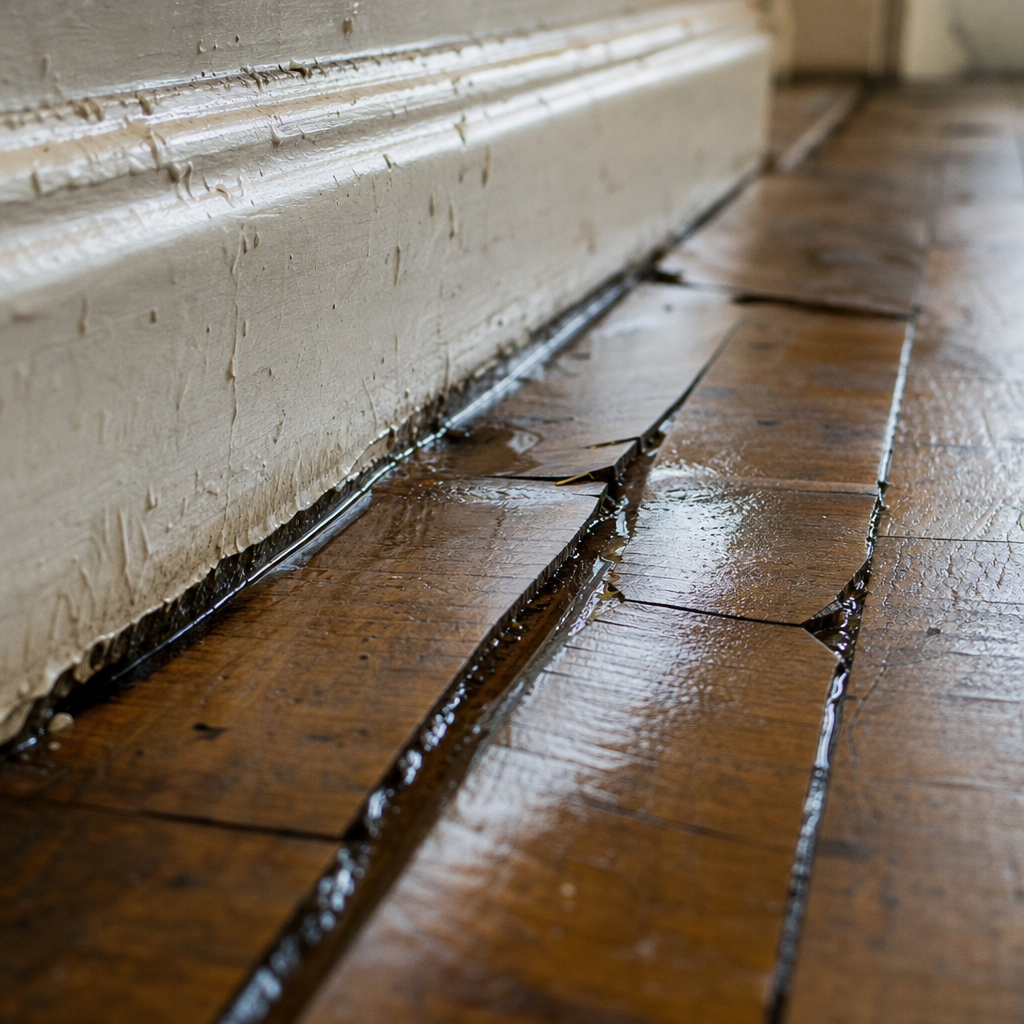
The type of substrate and structural flooring beneath standing water influences the required restoration process.
Flooded Carpet
Water in carpeted spaces requires high-powered extraction. In instances involving higher contamination categories or prolonged saturation, carpet padding and carpet materials may require removal and disposal rather than restoration.
Hardwood and Engineered Flooring
Hardwood absorbs moisture, which can lead to cupping and buckling. Specialized drying systems may be deployed to pull moisture out of subflooring assemblies without removing the planks, depending on the extent of saturation.
Basement Concrete Slabs
Concrete is porous and draws water deep into its structure. While removing surface water is straightforward, drying the slab thoroughly requires dehumidification equipment to prevent residual moisture from affecting future installations.
Structural Complexity and Building Assemblies
In older urban structures and multi-unit buildings, calculating project requirements strictly by floor area does not account for complex structural assemblies.
Vertical Moisture Wicking
Moisture often wicks vertically into plaster and drywall assemblies. In properties with lath-and-plaster construction, water can become trapped within dense wall assemblies, requiring drying protocols that extend well beyond the original floor footprint.
Shared Walls and Multi-Unit Structures
In attached structures and multi-family buildings, water can travel along shared floor joists and inside party walls. Tracking moisture across structural boundaries requires thorough moisture mapping, a standard protocol used by teams such as Floodline Restoration Co., to confirm that water has not migrated into adjacent units.
Insurance Considerations for Water Mitigation
Sudden and accidental water damage may be covered by property insurance, subject to policy terms, deductibles, exclusions, and limits. Conversely, gradual leaks, maintenance-related damage, and flood damage may be excluded under standard policies unless covered by specific endorsements or separate flood insurance policies.
Insurance claims generally require comprehensive documentation, such as the detailed line-item records, moisture mapping, and psychrometric logs provided by Floodline Restoration Co. to track the stabilization of the structure.
Frequently Asked Questions
How much does professional water extraction cost per square foot?
The provided research does not support a reliable national per-square-foot figure. Because costs depend on the water category, affected materials, required equipment, labor, and necessary decontamination or demolition, an on-site estimate is needed to determine accurate pricing.
What is the difference between water extraction and water mitigation?
Water extraction refers specifically to the physical removal of standing surface water. Water mitigation encompasses the complete process of stabilizing the structure, which includes containment, demolition of non-salvageable materials, structural drying, antimicrobial treatment, and continuous moisture monitoring.
Are drying and dehumidification included in basic extraction services?
Physical extraction and structural drying are distinct phases of mitigation. Air movers, dehumidification equipment, and environmental monitoring are evaluated and billed based on the specific drying requirements of the property.
Can standing water be extracted with a standard shop vacuum?
A standard shop vacuum can remove small amounts of surface water, but it lacks the capacity and lift necessary to remove deep moisture from subfloors, wall assemblies, and dense materials.
Why is an on-site inspection necessary?
An on-site inspection allows technicians to assess the category of water, trace moisture migration through hidden structural cavities, and determine the exact equipment, labor, and safety measures required for proper restoration.
Need water extraction cost per square foot?
We’re available now - call for a fast, free estimate.
Sources
- Preliminary Report on Construction Cost Assessment – ofm.wa.gov
- Greywater reuse as a key enabler for improving urban … – PMC – pmc.ncbi.nlm.nih.gov
- MAY/JUN 2024 cleanfax.com | 15 – cleanfax.com (2024)
- anvilfield.com › field-guides › plumbingWater damage restoration field guide: dry it fast, IICRC S500 – anvilfield.com
Frequently Asked Questions
Will homeowners insurance cover the full cost of water extraction?
Most standard property policies cover sudden and accidental water damage, though final coverage depends on your specific deductible, endorsements, and policy exclusions. To streamline the process and eliminate surprise expenses, Floodline Restoration Co. provides detailed line-item documentation and handles direct insurance billing.
How quickly can clean standing water turn into contaminated water?
Category 1 clean water can degrade into Category 2 grey water within 24 to 48 hours as it interacts with organic building materials, dust, and microbial growth. Calling Floodline Restoration Co. for 24/7 emergency extraction ensures standing water is removed before contamination escalates restoration costs.
How do professionals detect hidden water that flat square-foot pricing misses?
Technicians use non-invasive tools such as infrared thermal cameras, calibrated moisture meters, and psychrometric sensors to trace moisture trapped inside wall cavities and subflooring. Floodline Restoration Co. performs comprehensive moisture mapping during the visual inspection to build an accurate, fixed-price mitigation plan.
About the author
 |
Christopher Vance Christopher Vance brings over 12 years of hands-on experience in water mitigation and structural drying, holding multiple certifications from the Institute of Inspection, Cleaning and Restoration Certification (IICRC). Before shifting his focus to consumer education, he managed large-loss commercial and residential recovery operations throughout the New York metropolitan area. He specializes in breaking down complex restoration processes and pricing models to help property owners make informed decisions during high-stress situations. |
Water damage, flood, or mold emergency?
We’re available now - call for a fast, free estimate.
Call Now - Free Estimate