
Quick Summary
Successfully navigating a water damage restoration insurance claim requires immediate loss mitigation, detailed moisture tracking, and precise photographic documentation before policyholders file their First Notice of Loss. Floodline Restoration Co. eliminates claim friction by pairing rapid emergency structural drying with standardized, carrier-ready Xactimate estimates and direct insurance billing. Property owners will understand the exact steps to document structural water intrusion and can call Floodline Restoration Co. for 24/7 emergency dispatch and direct claims support.
Water Damage Restoration Insurance Claim: Claim Process and Documentation
When you are dealing with a sudden pipe burst or soaked floors, navigating a water damage restoration insurance claim requires proper documentation. Prompt notice, complete documentation, and cooperation with the adjuster can help support claim evaluation, but approval time varies by policy and circumstances. According to FEMA, just one inch of standing water in an average home can cause more than $26,000 in structural and property damage.[2]
Working with restoration contractors like Floodline Restoration Co. who document the boundaries of wet materials may assist in documenting your claim and preserving property records. See also Elmhurst Water Damage Restoration Costs | Call Now-10% Off | Same-Day Service | Free Estimate.
What You Need Before Filing Your Claim
Notify your insurer or agent as soon as possible, take reasonable steps to prevent further damage, document the scene, and ask whether inspection or authorization is required before non-emergency work. In attached buildings and multi-unit structures, for example, water can travel across shared wall assemblies, making early documentation helpful before carrier inspections take place.
Essential Policy Details
- Policy declarations page: Check your policy for coverage terms, limits, sewer backup endorsements, and water damage deductibles. Sudden plumbing or roof-related water damage may be covered, while flooding, gradual damage, maintenance-related issues, and other exclusions depend on the policy language. Flood damage from rising or surface water is generally excluded by standard homeowners policies and may require separate flood coverage, subject to policy terms and definitions. According to NAIC data, flood events affected 99% of U.S. counties between 1996 and 2019.
- Written inventory of damaged items: Make an itemized list of damaged flooring, drywall, trim, furniture, and personal property before anything gets discarded.
Visual Proof and Moisture Logs
- Time-stamped photos and video: Record wide angles of standing water, close-ups of baseboards, and water lines along door frames before extraction begins.
- Moisture documentation (optional): Tools such as thermal imaging cameras or moisture meters are optional practices that may assist in documenting moisture migration across ceilings, framing, and subfloors.
Step 1: Stop the Source and Assess Structural Assemblies
Shut off your main water valve immediately to stop active flow. Once the water stops, examine how saturation affects framing, subflooring, and finished surfaces.
Drywall, Plaster, and Ceilings
In attached houses and multi-unit buildings, water can wick vertically up drywall and migrate across plaster lath. Trapped moisture inside wall cavities can affect building materials over time. Moisture mapping, as utilized by Floodline Restoration Co., is an optional method that can identify hidden pathways so affected drywall and insulation can be evaluated.
Subfloors and Joists
Evaluating saturated flooring may include:
- Inspect flooring for cupping or warping: Check whether floorboards are expanding against baseboards and trapping water beneath underlayment.
- Evaluate structural lumber: Check moisture levels in framing and joists to determine whether materials can be dried in place or require repair.
- Track moisture levels: Record moisture readings over time to monitor drying progress.
Step 2: Document Moisture Conditions and Prepare Records
When reporting a loss, provide clear and factual information about the incident. Accurate records can help demonstrate the extent of water intrusion and support the claim evaluation.
Psychrometric and Moisture Data
Psychrometric logs, which record relative humidity, ambient temperature, and grains per pound (GPP) of air, are optional tools that some contractors use to track structural drying and assist in documenting equipment use for claim review.
Step 3: File the First Notice of Loss (FNOL)
Need water damage restoration insurance claim?
We’re available now - call for a fast, free estimate.
Once the water is shut off and initial photos are saved, contact your insurance agent or claims department to submit your First Notice of Loss.[3]
Communicating With Adjusters
- Stick strictly to the observable facts: state where the water came from, what time it was discovered, and what materials are wet. Avoid guessing how long a condition existed.
- Request your formal claim number and the direct contact information of your assigned adjuster.
- Ask if your carrier requires specific authorization or inspection before non-emergency structural work begins.
- Save all work authorizations, receipts, and invoices for emergency mitigation services.
Understanding Flood vs. Water Damage Coverage
Flood damage from rising or surface water is generally excluded by standard homeowners policies and may require separate flood coverage, subject to policy terms and definitions. Sudden plumbing or roof-related water damage may be covered, while flooding, gradual damage, maintenance-related issues, and other exclusions depend on the policy language. Surface water entering through ground-level openings or rising street runoff generally requires a dedicated flood policy through the National Flood Insurance Program (NFIP) or a private flood carrier. According to FEMA figures from February 2025, the NFIP provides approximately $1.3 trillion in coverage to nearly 4.7 million policyholders nationwide. Heavy-rain storms in 2024, including Hurricanes Helene and Milton, produced tens of thousands of flood insurance claims and required additional borrowing authority for eligible claims payments.[1]
Step 4: Begin Emergency Mitigation and Extraction
Policyholders generally have a duty to take reasonable steps to prevent further damage, subject to the policy terms. Prompt mitigation helps protect the property and stabilize the structure.[5]
The Mitigation Process
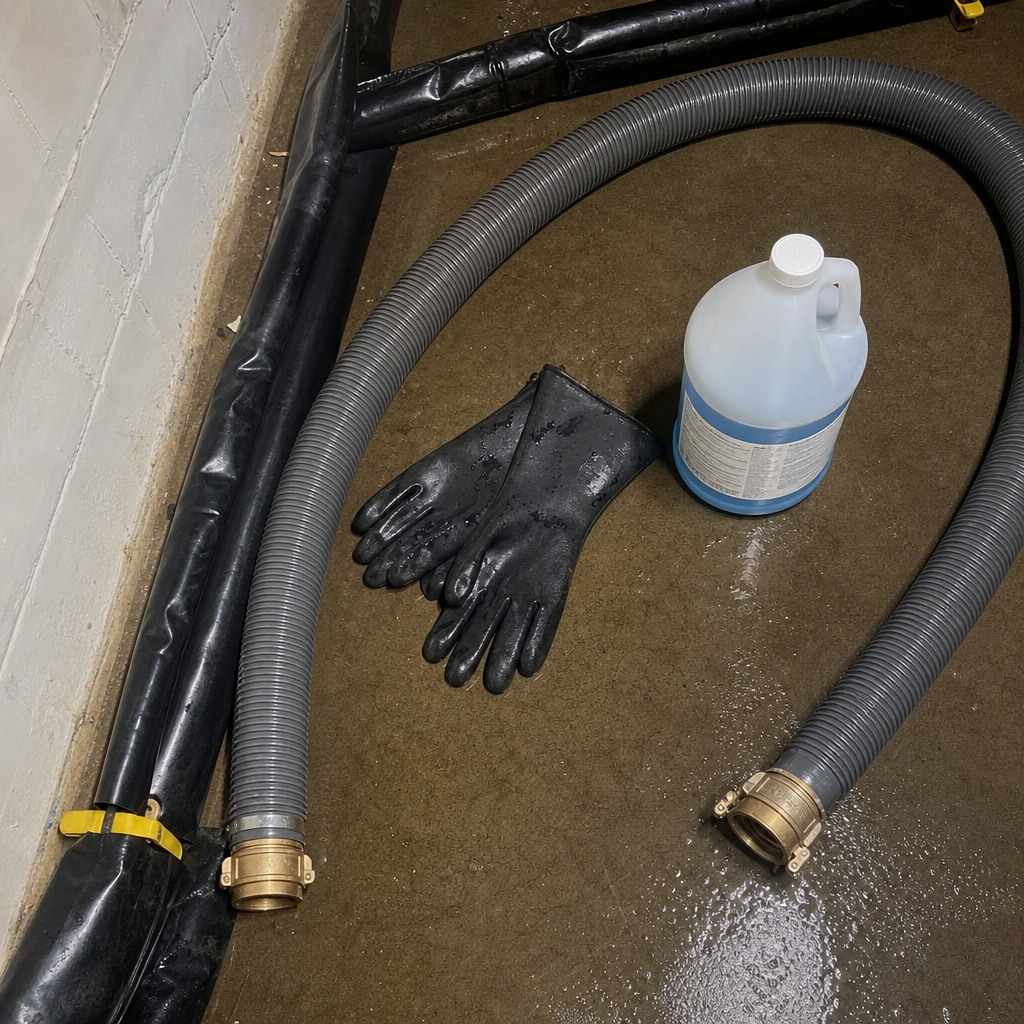
- Bulk Extraction: Extractors remove standing water from basements, crawl spaces, and living areas.
- Cleaning and Treatment: Technicians from Floodline Restoration Co. clean salvageable structural surfaces and may apply EPA-registered antimicrobial treatments to help inhibit mold growth.
- Dehumidification: Dehumidifiers and air movers are positioned to remove moisture from structural materials.
Step 5: Line-Item Scopes of Work and Estimates
Many mitigation contractors, including Floodline Restoration Co., prepare estimates using standardized estimating software like Xactimate. Itemized line items, equipment run times, and area dimensions can assist adjusters in reviewing the scope of work.
Direct Insurance Billing
Some contractors may bill insurers directly, but the policyholder remains responsible for amounts not covered by the policy and should review any assignment or direction-to-pay agreement carefully.
Frequently Asked Questions About Water Damage Insurance Claims
Does homeowners insurance cover water damage restoration?
Sudden plumbing or roof-related water damage may be covered, while flooding, gradual damage, maintenance-related issues, and other exclusions depend on the policy language. Flood damage from rising or surface water is generally excluded by standard homeowners policies and may require separate flood coverage, subject to policy terms and definitions.[4]
How do I file an insurance claim for water damage?
Notify your insurer or agent as soon as possible, take reasonable steps to prevent further damage, document the scene, and ask whether inspection or authorization is required before non-emergency work.
Should I call a water damage restoration company or insurance first?
Take safe emergency measures to stop the source and prevent further damage, then notify your insurer promptly; ask whether the insurer requires authorization or inspection before non-emergency restoration. Policyholders generally have a duty to take reasonable steps to prevent further damage, subject to the policy terms.
How much will insurance pay for water damage repair?
Payment depends on coverage, policy limits, deductible, and whether the policy uses actual cash value or replacement cost.
Can a restoration company bill my insurance directly?
Some contractors may bill insurers directly, but the policyholder remains responsible for amounts not covered by the policy and should review any assignment or direction-to-pay agreement.
What should I document before the restoration team begins work?
Take clear photos and video sweeps of standing water levels, damaged belongings, structural joints, wet baseboards, and any visible pipe breaks. Avoid discarding damaged items before documenting them, and keep records of all emergency actions taken, as recommended by Floodline Restoration Co.
Need water damage restoration insurance claim?
We’re available now - call for a fast, free estimate.
Sources
- As Flood Risks Increase, Most Americans Still Don't Have Insurance for It (Interactive Map) – gao.gov (2026)
- FEMA Exercises Borrowing Authority for National Flood Insurance Program – fema.gov (2025)
- Hurricane Milton – floir.gov (2025)
- What is My Flood Risk – The National Flood Insurance Program – floodsmart.gov (2024)
- Don’t Wait for a Flood to Check Your Insurance Coverage – waihalana.hawaii.gov (2019)
Related reading: What Water Damage Is Covered By Insurance | Call Now-10% Off | Same-Day Service | Free Estimate
Related reading: Water Extraction Cost Per Square Foot | 10% Off & Free Estimate | Same-Day Service
Related reading: Water Mitigation Cost Per Square Foot – 10% Off & Free Estimate – Same-Day Service
Frequently Asked Questions
How does direct insurance billing work for emergency water damage restoration?
Direct billing allows the restoration contractor to submit standardized, carrier-ready Xactimate estimates, psychrometric logs, and invoices straight to your insurance carrier. Through their dedicated Straight Claim Program, Floodline Restoration Co. coordinates directly with adjusters to streamline approvals and eliminate out-of-pocket friction beyond your policy deductible.
What happens if an insurance adjuster underestimates the cost of water damage restoration?
If an initial estimate falls short, your contractor can file a supplemental claim backed by detailed structural data, moisture readings, and photo logs. Floodline Restoration Co. works directly with adjusters using standardized industry pricing to justify essential mitigation steps and secure full coverage for the scope of work.
Why is professional moisture mapping critical for getting a water damage claim approved?
Moisture mapping establishes verifiable, time-stamped proof of how far water traveled behind drywall, framing, and subfloors immediately following a loss. Floodline Restoration Co. uses these psychrometric records to prove the damage was sudden and continuous, preventing carrier disputes over pre-existing conditions.
About the author
 |
Christopher Vance Christopher Vance brings over 12 years of hands-on experience in water mitigation and structural drying, holding multiple certifications from the Institute of Inspection, Cleaning and Restoration Certification (IICRC). Before shifting his focus to consumer education, he managed large-loss commercial and residential recovery operations throughout the New York metropolitan area. He specializes in breaking down complex restoration processes and pricing models to help property owners make informed decisions during high-stress situations. |
Water damage, flood, or mold emergency?
We’re available now - call for a fast, free estimate.
Call Now - Free Estimate