
Free visual inspection and a written scope of work before any mitigation begins - photos, moisture readings, and drying logs go in your claim file
The scope we write is the scope we bill. Anything new gets shown to you, in writing, before we touch it.
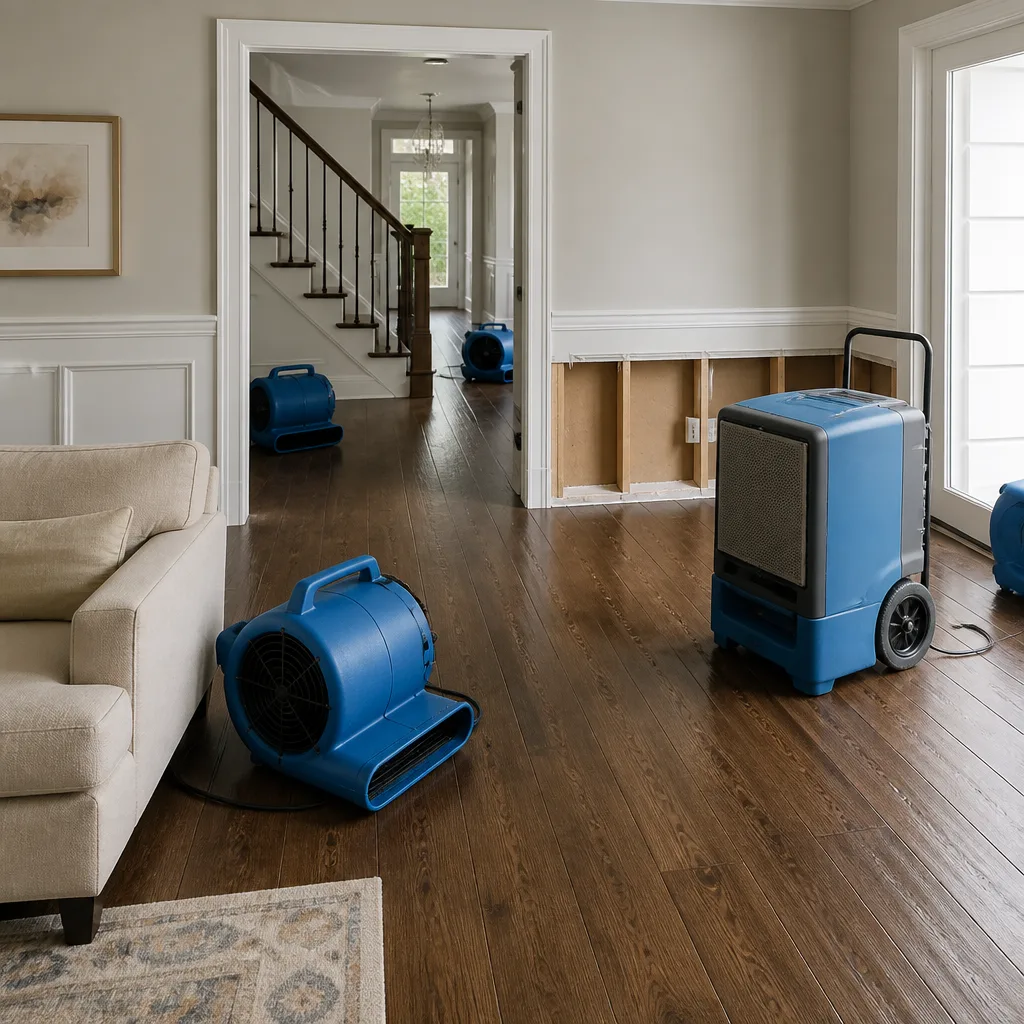
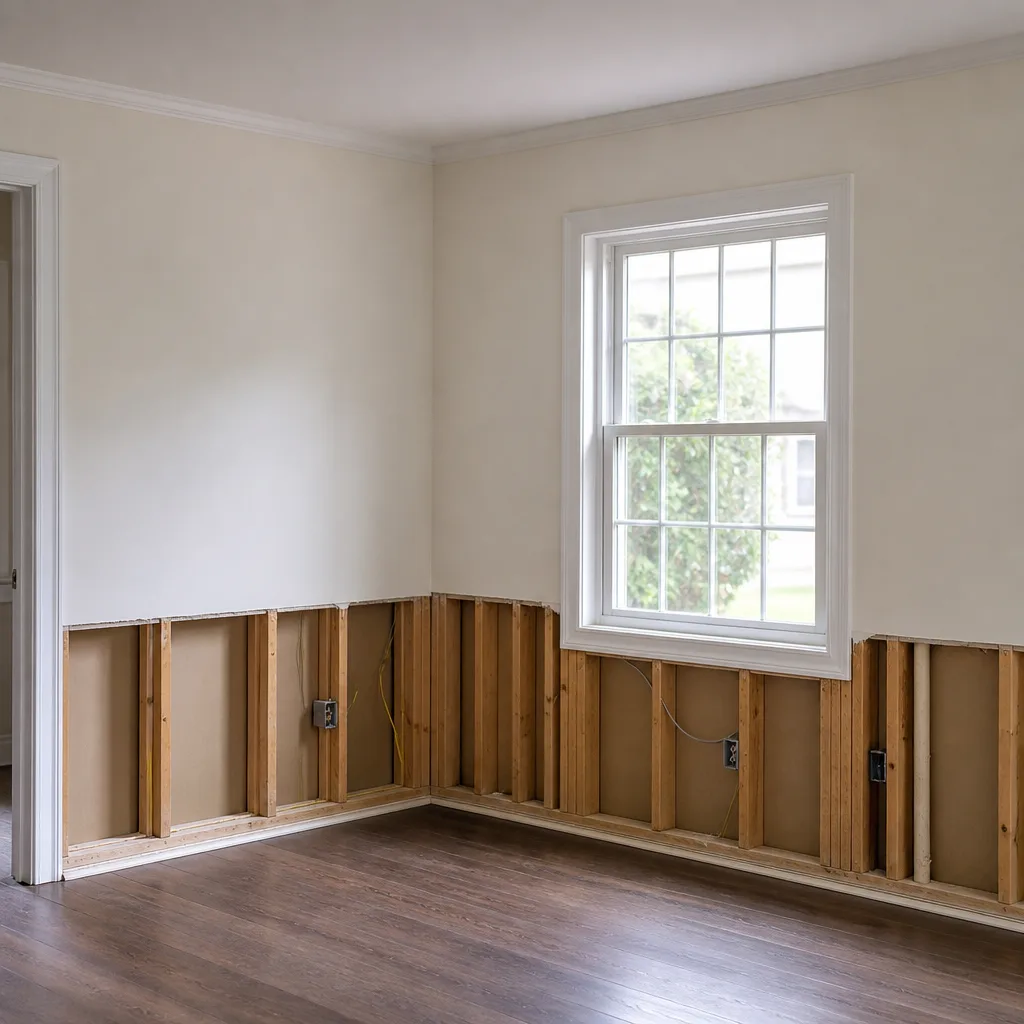
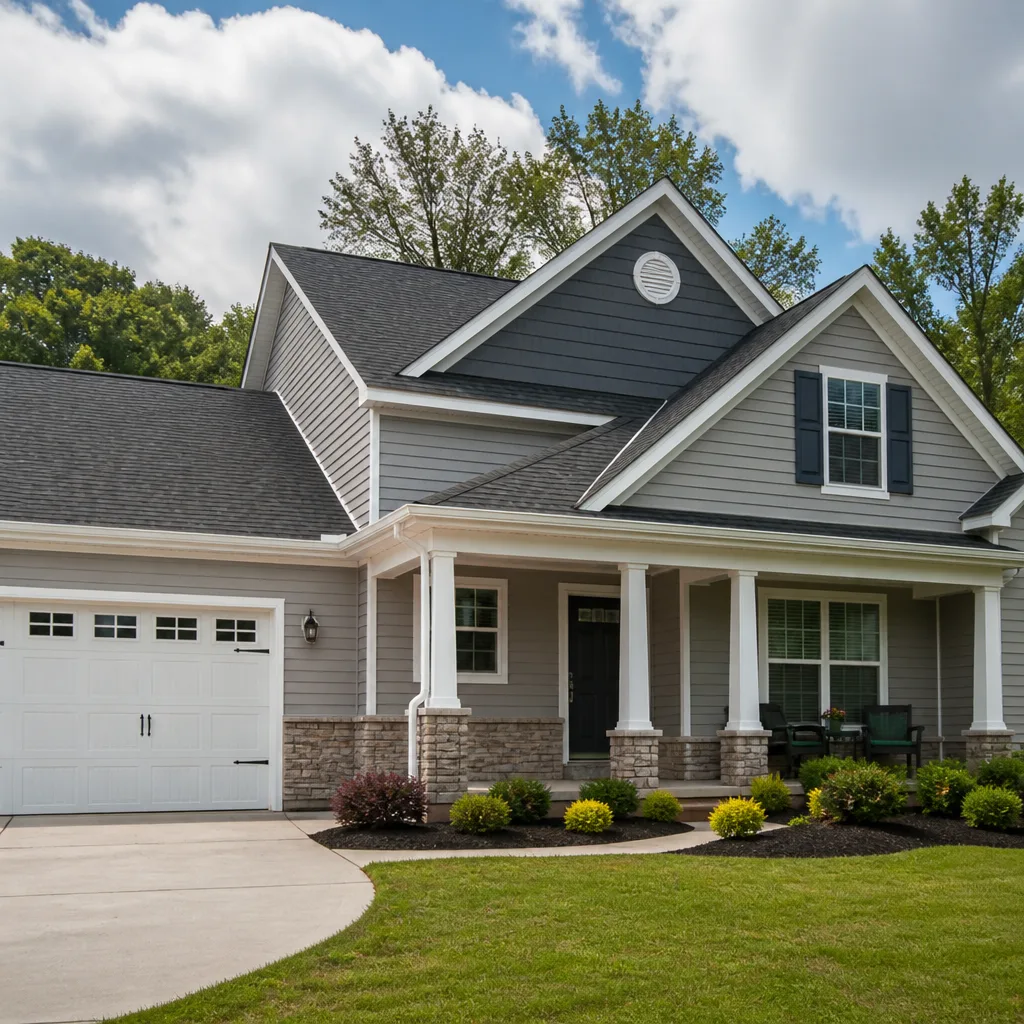
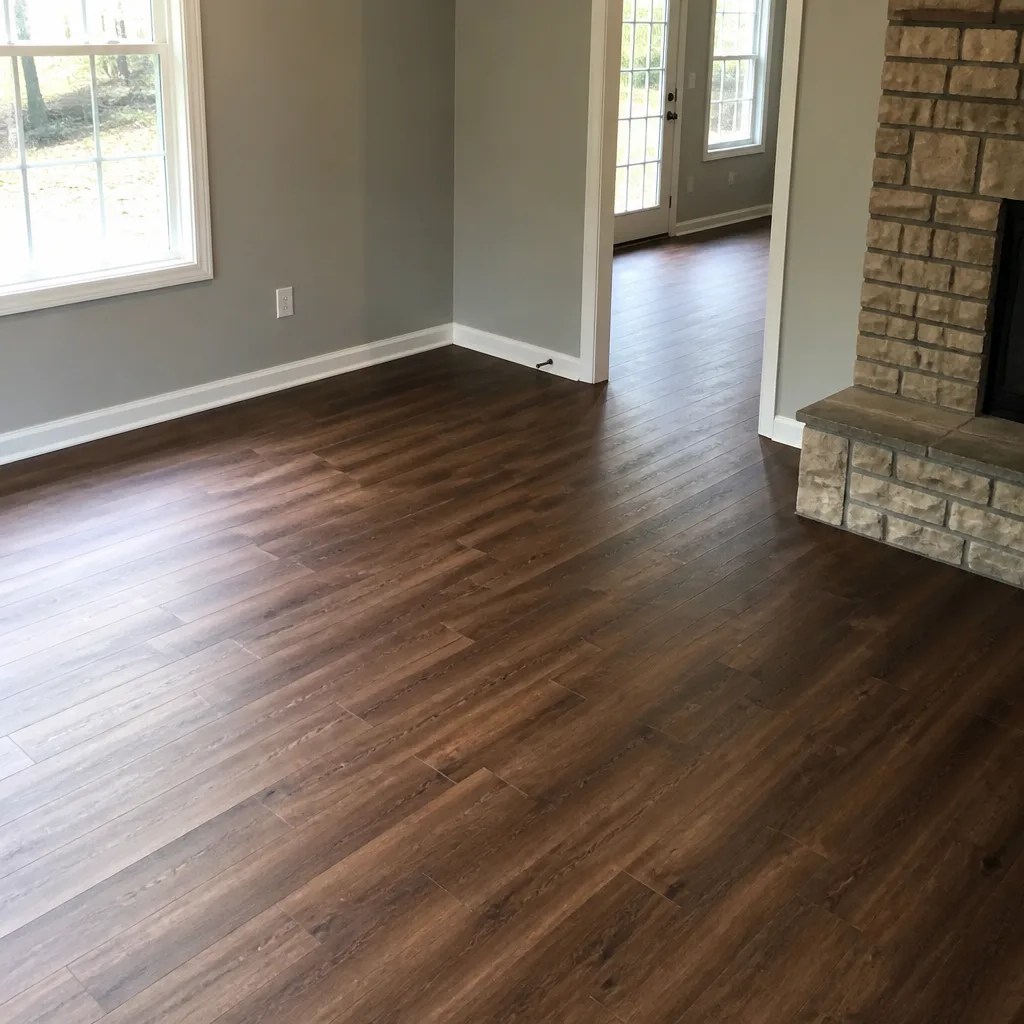
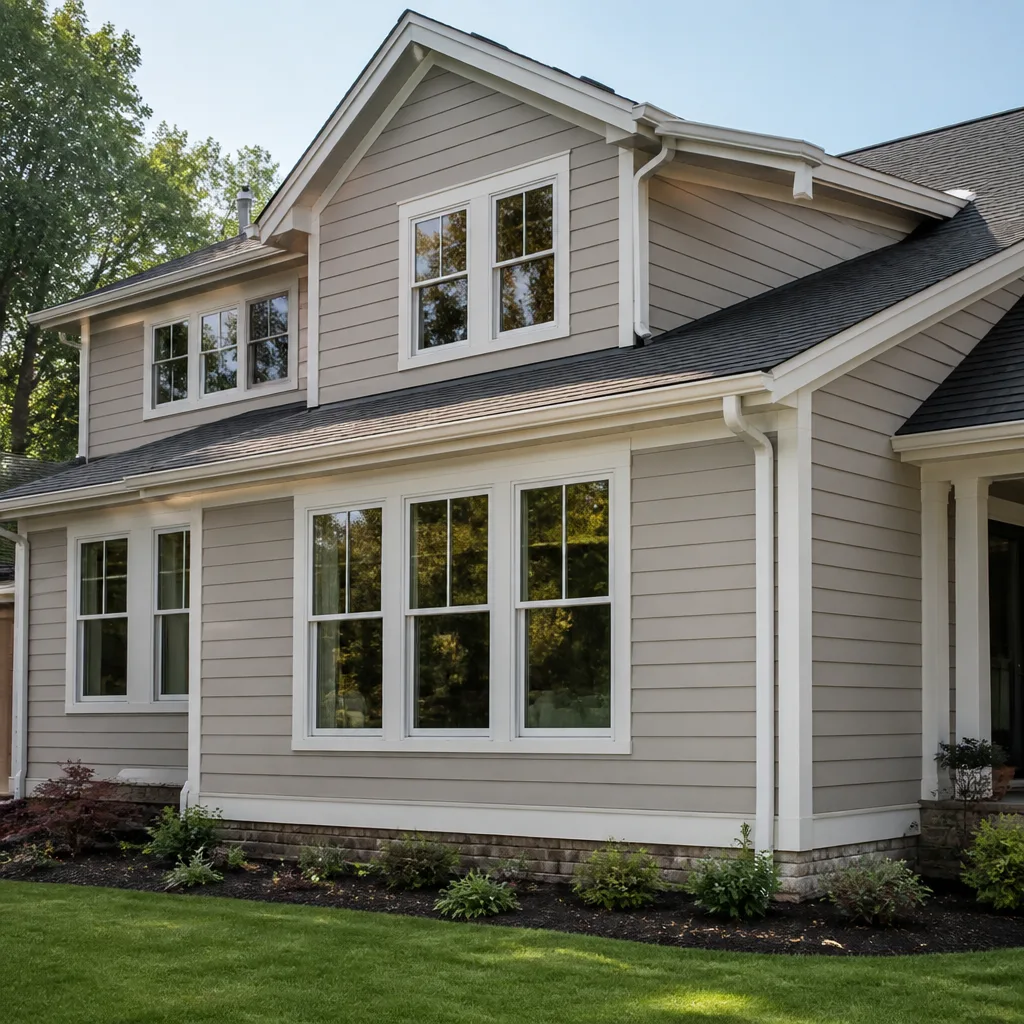
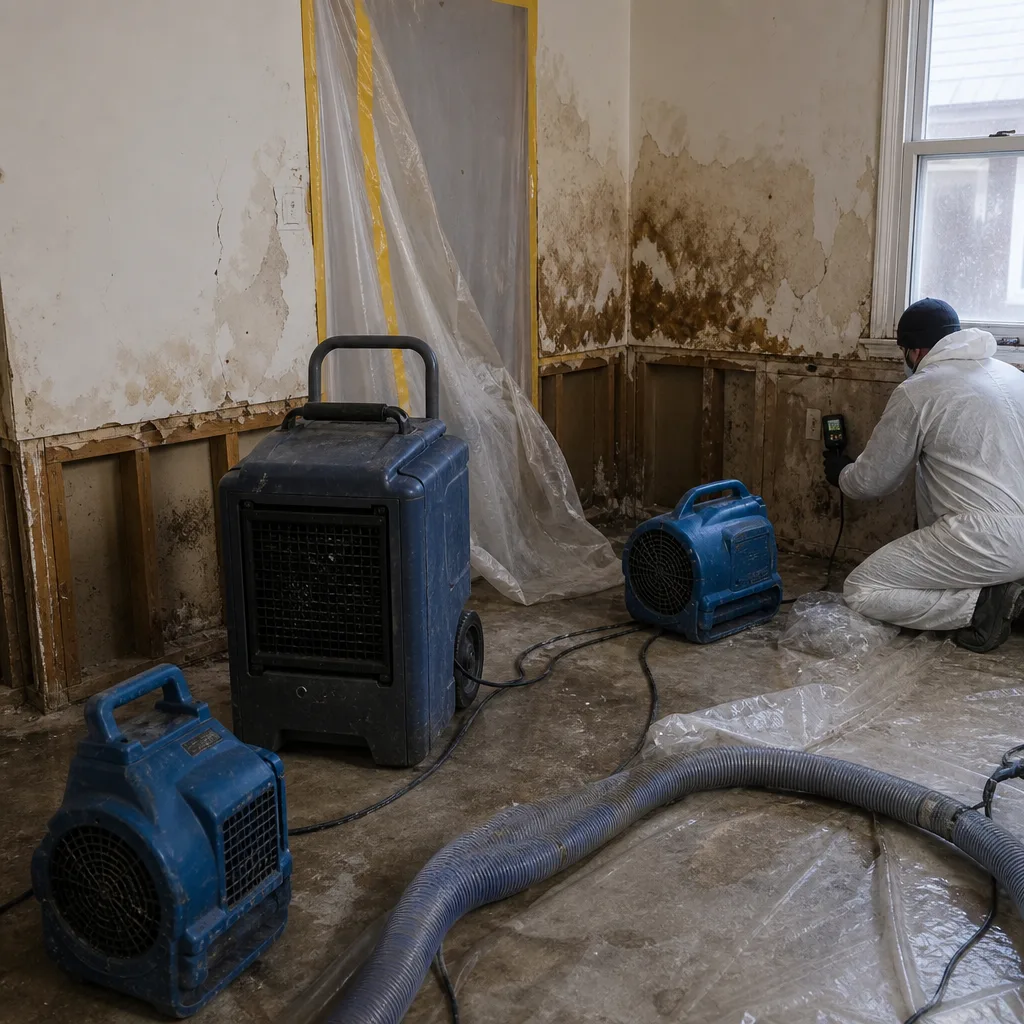 Before
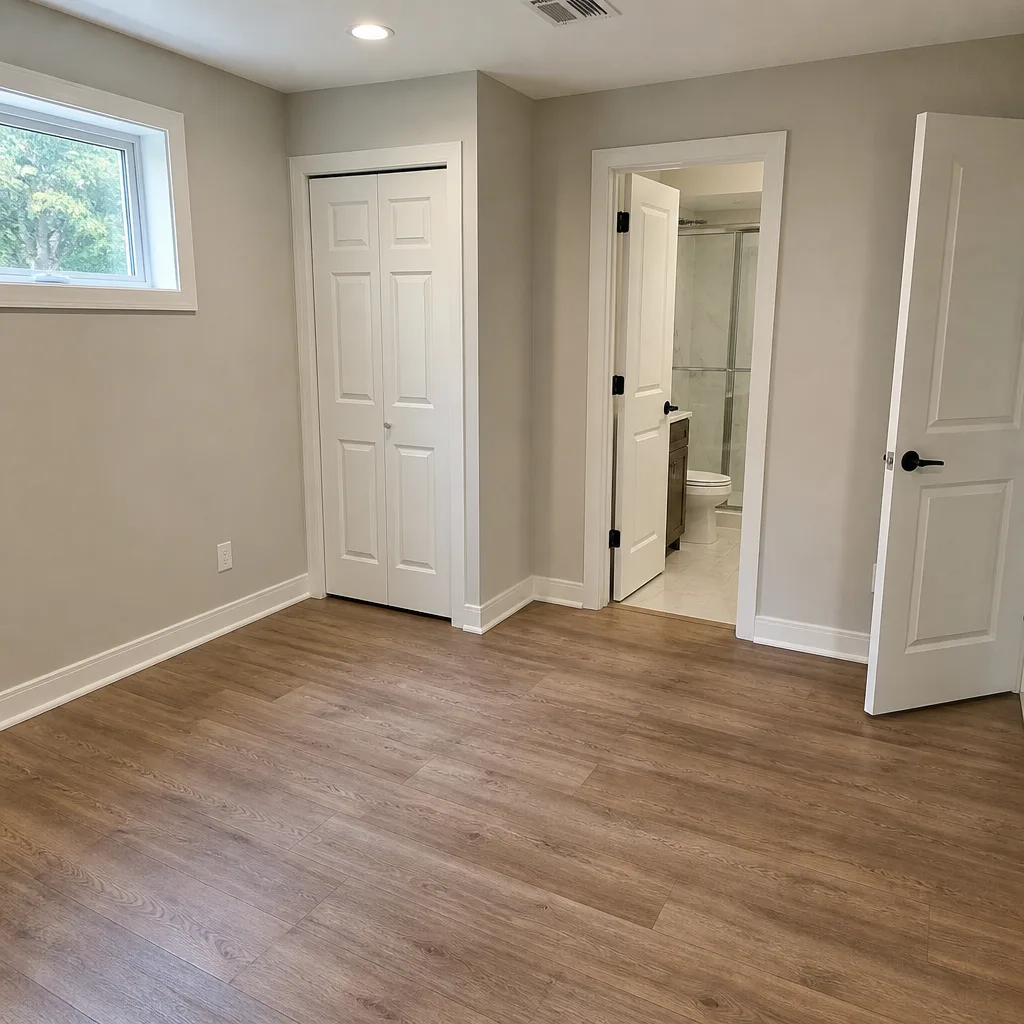 After
After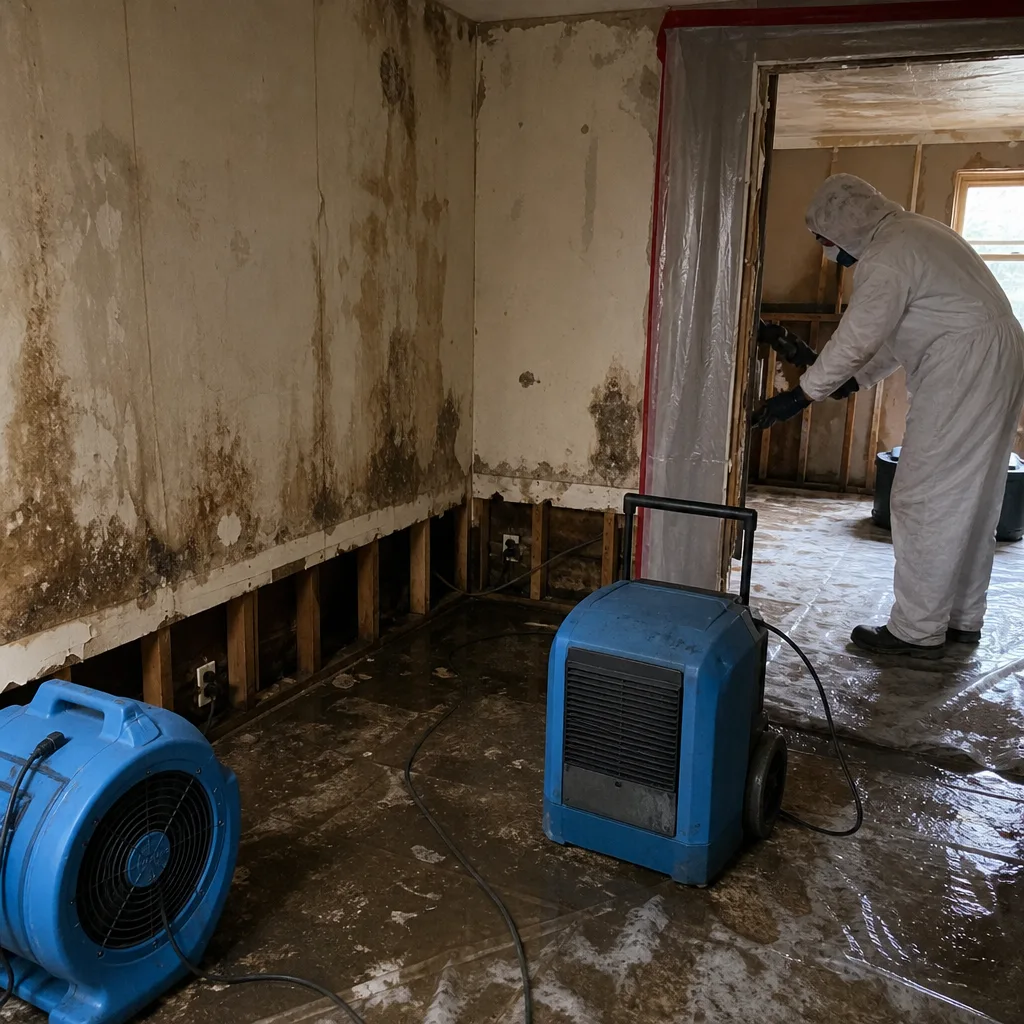 Before
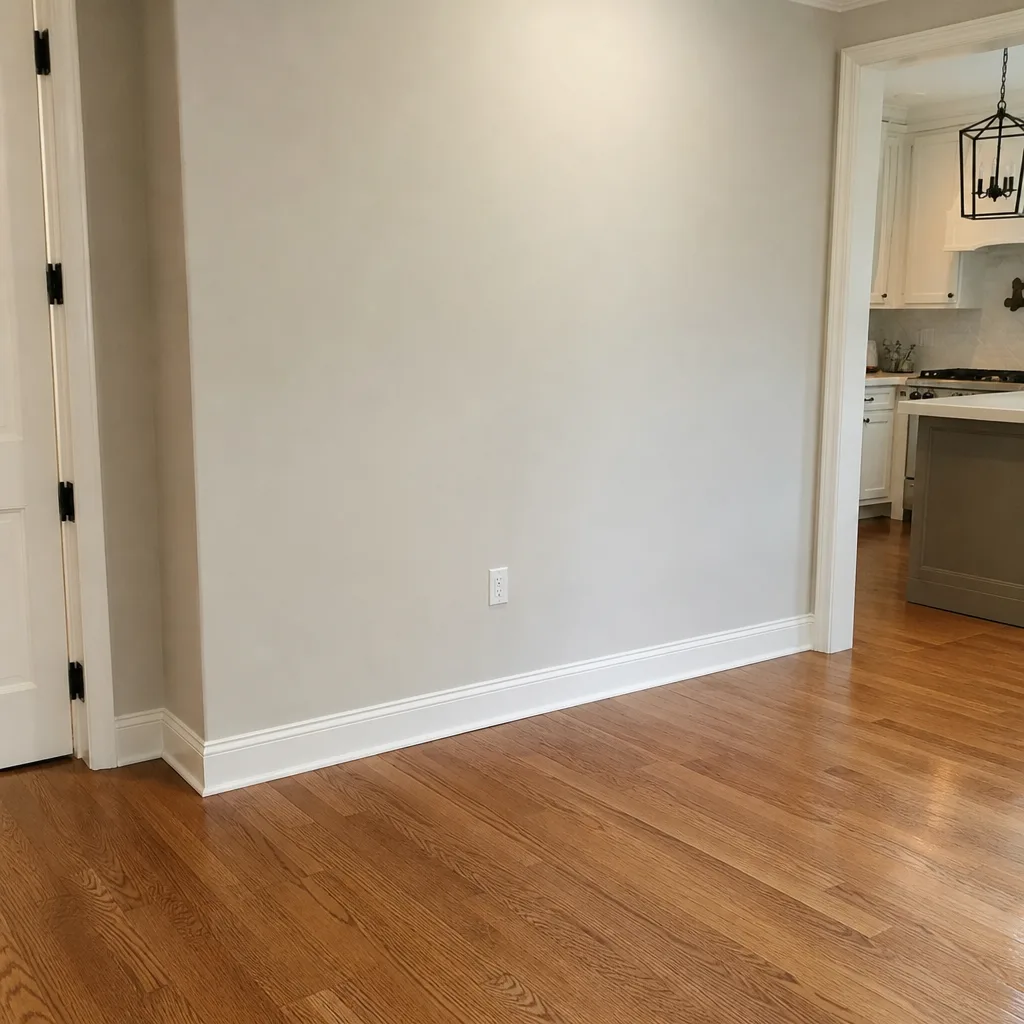 After
After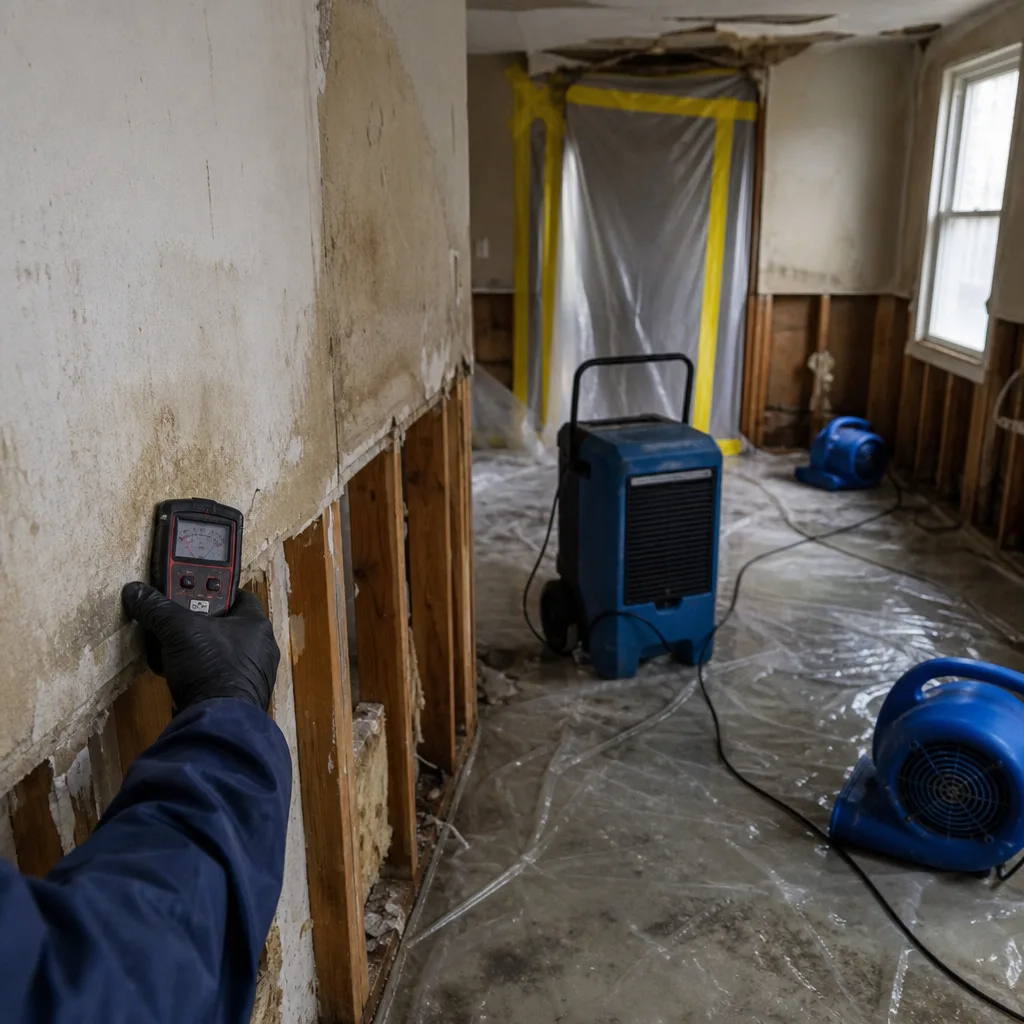 Before
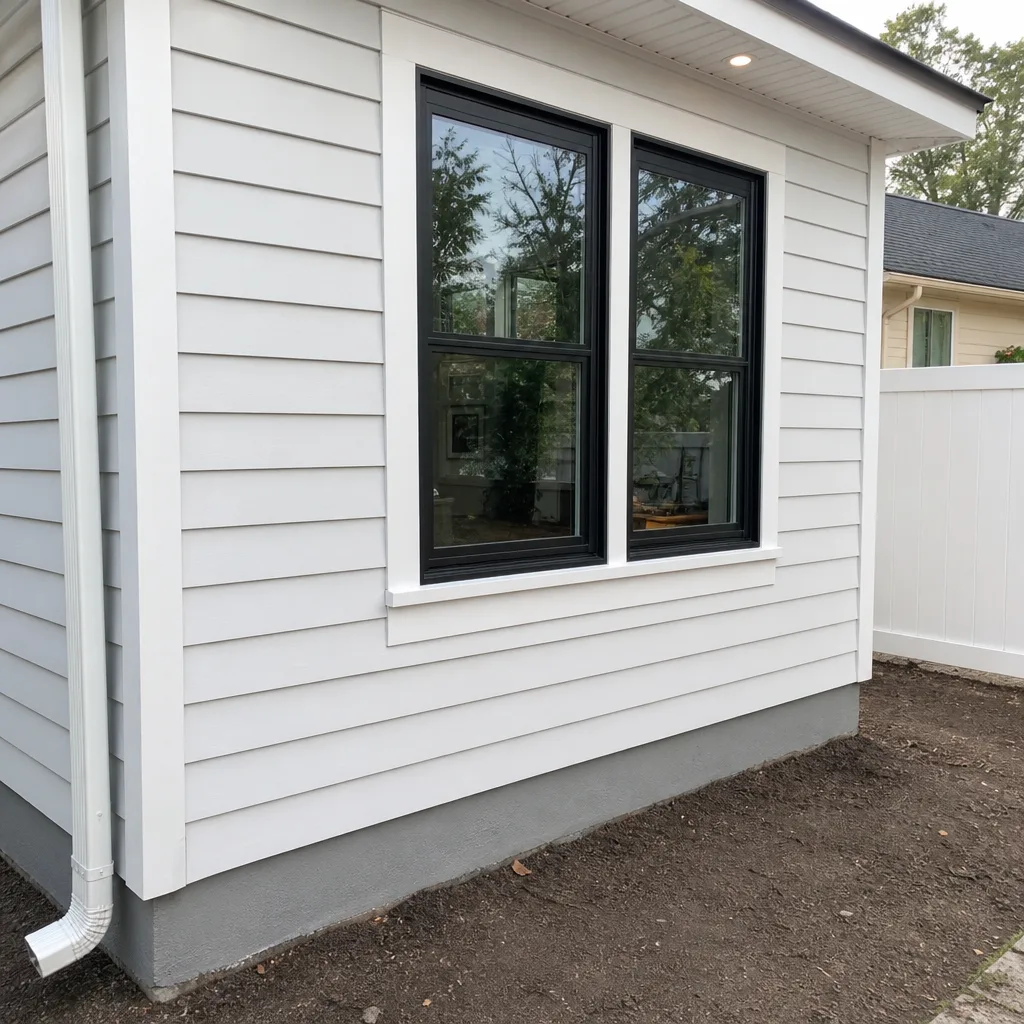 After
After24/7 Emergency Biohazard & Crime Scene Cleanup in Astoria
Biohazard and crime scene cleanup in Astoria typically costs $1,800-$6,500 depending on the scene’s complexity, square footage affected, and whether structural materials like plaster-and-lath walls or hardwood subfloors must be removed. A straightforward blood cleanup in one room of a pre-war apartment runs $1,800-$3,200, while an unattended death requiring subfloor removal and multi-unit containment falls between $4,000-$9,000. Our crews answer live at (363) 999-0829 around the clock, every day of the year, and we dispatch from the New York City office into Astoria within 45 minutes of your call. The first hour matters because blood and bodily fluids seep fast in old buildings: through plank subfloors, into shared brick wythe walls, and down into the ceiling cavities of the units below. We complete a free visual inspection first, give you a written scope before any work begins, and start containment the same visit.
Understanding Biohazard & Crime Scene Cleanup Severity in Astoria Properties
Astoria’s housing stock changes how biohazard events behave. Most buildings here were constructed between 1910 and 1950: attached two-to-four-family brick rowhouses and five-to-six-story walk-ups with plaster-and-lath interiors, original plank subfloors, and cast-iron or galvanized drain lines. In these buildings, a biohazard scene is rarely a single-room problem. Blood and bodily fluids follow gravity and the path of least resistance, seeping through tongue-and-groove subflooring that runs continuous under party walls. A trauma event on the third floor of a 1920s walk-up near 30th Avenue in ZIP 11102 required us to establish negative-air containment with XPOWER air movers, remove plaster-and-lath sections under an NYC DOB asbestos variance, and perform antimicrobial treatment before structural drying, working past midnight so the neighboring family could re-enter without exposure. We classify biohazard severity by the volume of biological material, the materials it has contacted (porous plaster, hardwood, brick wythes), and the elapsed time since the event. Porous materials saturated with bodily fluids are removed rather than cleaned; non-porous surfaces like tile and sealed hardwood receive full antimicrobial disinfection to IICRC standards. In Astoria’s attached buildings, severity assessments always include the adjacent unit and the floor assembly below. We moisture-map party walls with thermal imaging because what looks like a contained scene on one side is often a larger problem on the other.
Why Astoria Property Owners Choose Floodline Restoration Co.
- 45-minute response commitment: Our Astoria-dispatch crews reach the job in under an hour, any time of day. We start containment before fluids migrate further into adjacent units.
- Live answer, 24/7: A real dispatcher picks up at 2 a.m., not a recording. You’ll never leave a message when a biohazard scene needs immediate attention.
- IICRC-certified crews: Technicians hold WRT, FSRT, and AMRT credentials, trained to RIA and IFA standards, background-checked and uniformed on every job.
- Free visual inspection: We assess the scene, check the party walls and floor assemblies for lateral migration, and give you a written scope before any work begins.
- Direct insurance billing: We bill your carrier directly, photograph every stage, and handle adjuster communication so you don’t play messenger.
- One team, start to finish: From containment and disposal through antimicrobial treatment and structural repair, the same Floodline crew handles every phase. No mid-job handoff to an inherited crew.
Our Biohazard & Crime Scene Cleanup Process
Inspection & Assessment
We arrive in unmarked vehicles, inspect the scene, and use thermal imaging and moisture meters to map how far fluids have traveled through floors, walls, and subfloor cavities. In attached Astoria buildings, we check the adjacent units and the floor assembly below as part of the initial scope.
Containment & Stabilization
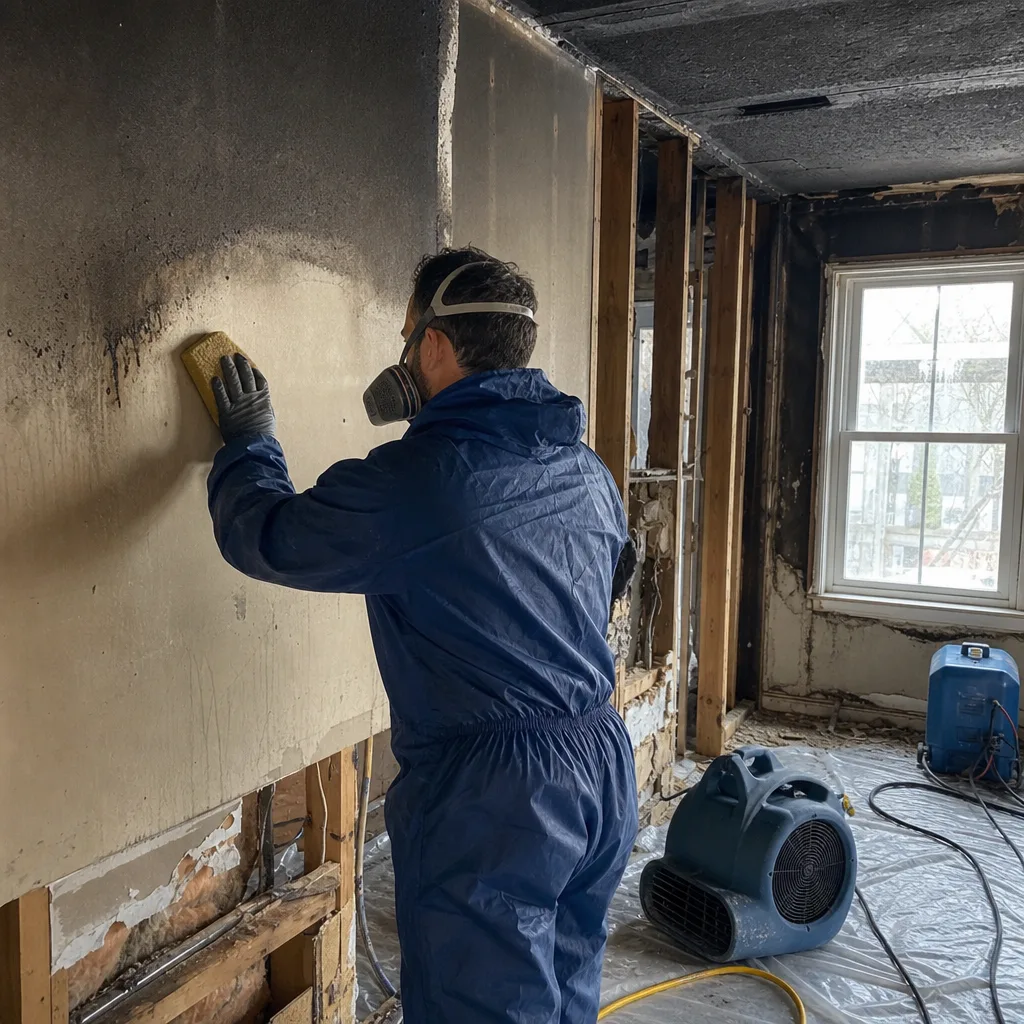
We establish negative-air containment with HEPA air scrubbers and XPOWER air movers, seal off affected areas with 6-mil polyethylene, and stop further migration. If asbestos or lead is present, the NYC DOB-mandated abatement protocols are triggered and the proper variances are obtained before tear-out continues.
Removal & Disposal
Porous materials saturated with biological material, including plaster-and-lath, insulation, carpet, and affected subfloor sections, are removed following OSHA bloodborne pathogen regulations and transported by licensed biohazard waste carriers. Non-porous surfaces are cleaned and prepped for disinfection.
Cleaning & Sanitization
All remaining surfaces receive hospital-grade antimicrobial and Sanitization Services - Astoria disinfectant treatment to IICRC and RIA standards. We use Dri-Eaz and Phoenix dehumidifiers to dry the structure to the dry standard, logging daily readings.
Odor & Air Quality Treatment
We run HEPA air scrubbers continuously during the job and use hydroxyl generators or ozone where appropriate to break down residual odor molecules embedded in plaster and old-growth framing. Clearance testing confirms the air quality is safe before we remove containment.
Repairs & Restoration
The same crew that handled the biohazard work rebuilds what was removed through our Commercial Restoration in Astoria: subfloor sections, plaster patches, paint, trim, and any damaged building systems. Every job is backed by the 90-Day Done Right Promise, our written guarantee. If it’s not done right, we make it right.
Need Emergency Biohazard & Crime Scene Cleanup in Astoria Now?
Crews minutes away, answering live 24 hours a day. The sooner we start, the less it costs.
Working With Your Insurance Company
Most biohazard and crime scene cleanup claims in Astoria are covered under homeowner’s or renter’s insurance, though policy language varies. We document everything from the first hour: photos of the original scene, moisture readings, thermal imaging scans of party walls and subfloors, and daily drying logs. Our team prepares industry-standard, line-item estimates that insurance carriers recognize. If your carrier needs to speak with someone who understands the technical details, we talk to them directly, including adjusters who want to walk the scene. You never have to play messenger between Floodline and the insurance company. For homeowners in attached Astoria rowhouses, documentation of lateral migration into adjacent units is essential, and most policies require proof that containment was established promptly to prevent further damage. We provide that proof in writing.
What We Provide Your Insurer
- Thorough documentation of the loss
- Photos of all damage, room by room
- Moisture readings and drying logs
- A detailed, line-item scope of work
- Direct coordination with your carrier
Built for Astoria’s Loss Calendar
Astoria’s aging combined sewer system regularly surcharges during heavy rain events, sending category 3 sewage backflow through basement drains into ground-floor units. We see these calls spike in spring and summer when thunderstorms roll through, and again during nor’easters when the western Astoria waterfront along the Hell Gate and East River confluence pushes storm surge into ZIP codes 11102 and 11105. January deep freezes burst original cast-iron supply lines in pre-war buildings, flooding basement storage rooms that have not been opened in years and requiring Water Damage Restoration in Astoria. Hoarding situations discovered by family members or building management tend to surface in winter when windows stay closed and neighbors notice odor. Trauma and unattended death calls follow no seasonal pattern, which is why we answer live at all hours. In Astoria’s attached brick rowhouses, every season brings a different failure mode, and the common thread is that damage rarely stays in one unit. We are on our Biohazard & Crime Scene Cleanup rotation locally, and when the call comes in, the crew that reads the moisture map on day one handles daily readings until the dry standard is met.
Biohazard & Crime Scene Cleanup Across Astoria’s Neighborhoods
Response routes in Astoria run from the rowhouse blocks of 11103 near Ditmars Boulevard down through the dense walk-ups around 30th Avenue and Broadway in 11102, then south toward the industrial edge along 21st Street where 11105 meets the East River. In the Ditmars-Steinway area, attached two-family brick houses built in the 1920s have shared wythe walls and continuous subfloors, so a blood spill in one unit often means we are scoping the neighbor’s ceiling cavity by day two. Near the 30th Avenue corridor, five-to-six-story walk-ups with steam-radiator heat and original cast-iron drain lines present a different challenge: category 3 sewage backflow through basement drains saturates plaster-and-lath walls, and tear-out of those walls triggers NYC DOB asbestos protocols before restoration can begin. Around Astoria Boulevard and the streets approaching the Hell Gate waterfront, older rowhouses and converted industrial buildings contend with higher flood exposure, and biohazard scenes in basements there frequently involve standing sewage mixed with biological material. In the blocks south of Grand Central Parkway, single-family rowhouses built in the 1940s and 1950s present still another profile, with oak strip flooring over plank subfloors that wick blood and fluids quickly. We know these building types because we work them weekly. Our Astoria crews plan routes by ZIP code and building age, not just by address.
Specialized Biohazard & Crime Scene Cleanup Services We Offer in Astoria
Crime Scene Cleanup
Crime scenes in Astoria’s attached buildings require immediate containment because blood and bodily fluids migrate through plank subfloors and shared brick wythes into neighboring units. We work with law enforcement and property owners, arriving after the scene is released, establishing negative-air containment the same visit, and removing affected porous materials under OSHA bloodborne pathogen regulations. Documentation of the full scope, including lateral migration to adjacent units, goes to your insurer.
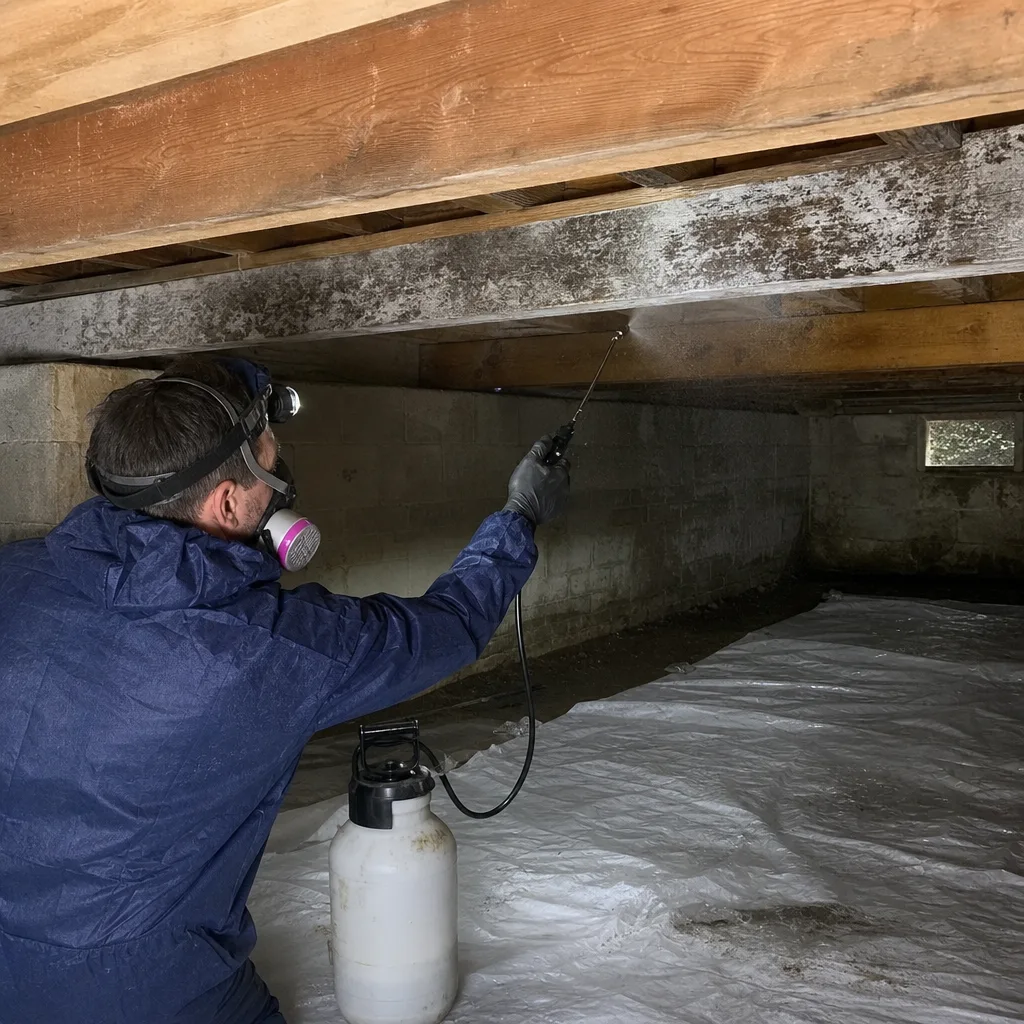
Trauma & Unattended Death Cleanup
In pre-war Astoria buildings, unattended deaths are the most technically demanding biohazard calls. Bodily fluids have often had days to soak through hardwood, plank subflooring, and plaster-and-lath ceilings before the scene is discovered. We remove affected structural materials, treat the framing beneath with antimicrobial agents, and run HEPA air scrubbers until clearance testing confirms the space is safe. The 90-Day Done Right Promise applies to every trauma cleanup we complete.
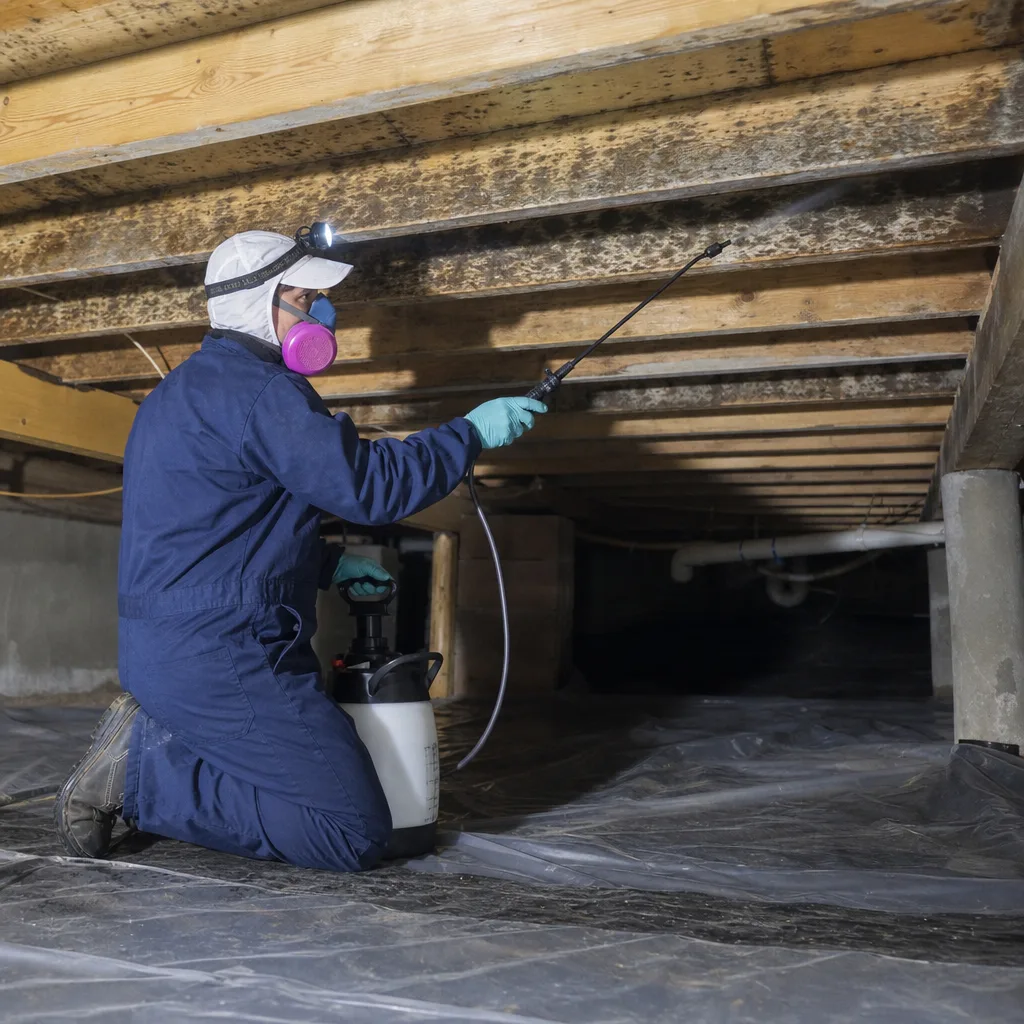
Blood & Bodily Fluid Cleanup
Blood spills in Astoria apartments and rowhouses are governed by OSHA’s bloodborne pathogen standard. Our IICRC-certified technicians are trained in proper removal, disinfection, and disposal protocols, and we have the equipment to handle porous masonry and old-growth framing that modern suburban homes do not present. We check party walls and subfloor assemblies with moisture meters and thermal imaging before we scope the job.
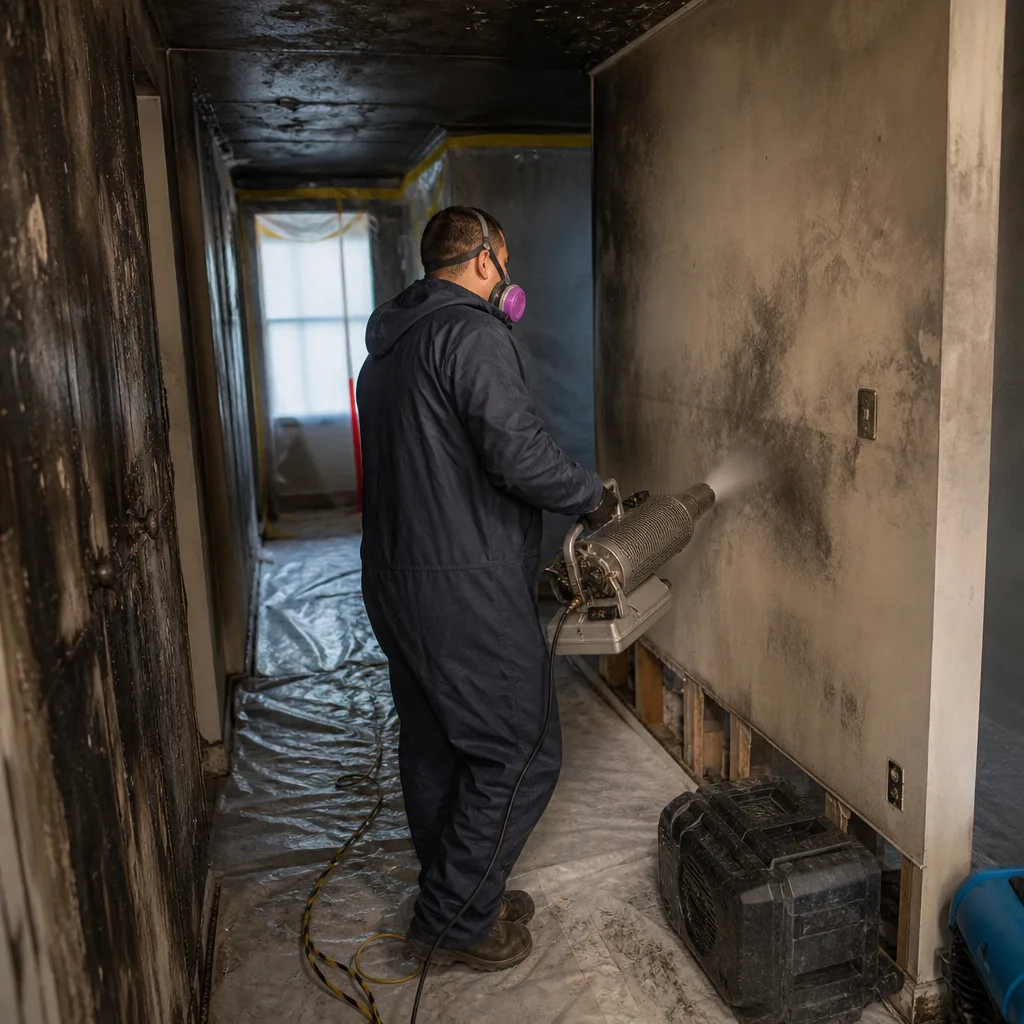
Hoarding Cleanup
Hoarding situations in 1920s Astoria walk-ups are complicated by weight loads on old floor joists, pest activity, and the fact that accumulated material often hides deteriorating original plumbing. We coordinate with building management and the NYC DOB when structural concerns or asbestos abatement are in play, and we remove contents, clean, disinfect, and restore the unit to habitable condition. A written scope is agreed before any work starts.
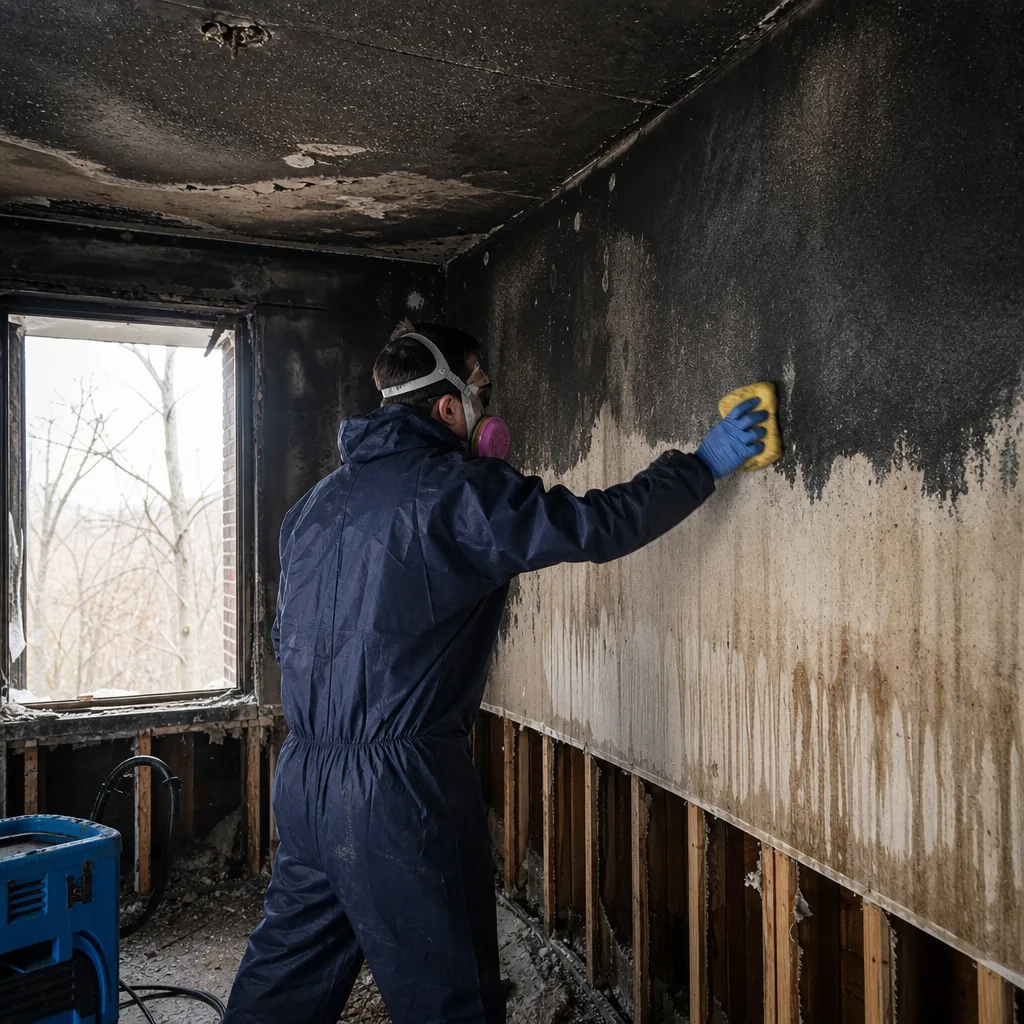
Infectious Disease Disinfection
When an infectious disease, including MRSA, C. difficile, hepatitis, or COVID-19, has contaminated surfaces in an Astoria property, we deploy hospital-grade disinfectants applied to IICRC standards. In attached buildings, shared stairwells, mail areas, and lobby spaces are included in the scope. We provide before-and-after documentation for building management and owners.
What happens when you call
- 1
A real person answersNo phone trees - you reach a local pro.
- 2
You get an upfront price rangeHonest numbers before anyone is dispatched.
- 3
A background-checked tech heads outLicensed & insured, dispatched right away.
- 4
You approve before work beginsNothing starts until you say go.
Biohazard & Crime Scene Cleanup Costs in Astoria, NY
Blood cleanup in a single room of an Astoria apartment typically runs $1,800-$3,200. Unattended death remediation where fluids have penetrated subflooring and affected a unit below falls between $4,000-$9,000 when plaster-and-lath removal, asbestos variance work, and multi-unit containment are required. Infectious disease disinfection of a two-bedroom pre-war unit averages $1,200-$2,200. Hoarding cleanup in a 1920s walk-up starts around $3,500 and rises with the volume of contents, structural issues, and pest remediation. If cast-iron drain lines crack during tear-out, releasing additional category 3 water behind walls, the scope expands accordingly, sometimes turning a single-room cleanup into a multi-unit pack-out. Insurance coverage varies by policy, but most homeowners and renters policies in Astoria cover biohazard remediation when the event is sudden and accidental. Our free visual inspection includes a written, line-item scope so you know the number before work begins. Call (363) 999-0829 for an exact quote.
We Also Serve Cities Near Astoria
Floodline Restoration Co. provides Biohazard & Crime Scene Cleanup in East Elmhurst, Jackson Heights, Elmhurst, and Maspeth. Our crews know the building stock in each neighborhood, from the attached brick rowhouses of East Elmhurst to the larger apartment blocks of Jackson Heights and the mixed housing of Elmhurst and Maspeth.
Serving Astoria, NY - Our Local Coverage Area
We’re based in the Astoria area and know this community well. Use the map below to see our service coverage - if you’re nearby, we can almost certainly help.
Astoria Biohazard & Crime Scene Cleanup Questions, Answered
Does Floodline Restoration handle NYC DOB asbestos abatement when removing plaster walls during a crime scene cleanup in Astoria?
Yes, we are experienced with NYC DOB-mandated asbestos abatement protocols and obtain the required variances when plaster-and-lath walls must be removed during a biohazard job in pre-war Astoria buildings. The DOB requires asbestos testing and abatement procedures before structural tear-out in most buildings constructed before 1987, and we coordinate that process so your restoration keeps moving. Call (363) 999-0829 and we will walk you through the timeline.
If an unattended death happened in one unit of an attached Astoria rowhouse, do we need to test the neighboring unit too?
Almost always, yes. Astoria’s attached rowhouses share continuous subfloors under party walls that are often just one brick wythe thick, so fluids from an unattended death frequently migrate into the adjacent property. We inspect the neighboring unit as a standard part of our initial scope, using moisture meters and thermal imaging to confirm whether remediation is needed next door. Your insurance adjuster receives documentation of everything we find.
What sewage category applies to basement backups in Astoria during a heavy rainstorm?
Basement backups from Astoria’s combined sewer system during heavy rain are category 3 water, meaning grossly contaminated with pathogens, bacteria, and raw sewage. Category 3 water in a pre-war basement saturates plaster-and-lath walls and requires full containment, removal of affected porous materials, and antimicrobial treatment, not just mopping and drying. Our Biohazard & Crime Scene Cleanup team handles category 3 remediation to IICRC standards. Contact us at Biohazard & Crime Scene Cleanup for immediate dispatch.
Can you remediate a hoarding situation in a 1920s Astoria walk-up without displacing other tenants?
Yes, in most cases we can contain the affected unit with negative-air systems and HEPA air scrubbers so neighboring tenants remain in their apartments throughout the job. In a 1920s walk-up, the main variable is whether the structural tear-out or weight loads require the building to be partially vacated, which we determine during the free visual inspection. We work with building management and the DOB when needed.
Does mold from a blood spill in an old Astoria building grow faster than in newer construction?
Yes, blood and bodily fluids supply nutrients that accelerate mold growth, and Astoria’s older buildings with plaster-and-lath walls and shared brick wythes hold moisture longer than newer drywall-and-stud construction. In the humid summer months near the Hell Gate waterfront, mold can establish within 48 to 72 hours if biological material is not fully removed. Our remediation includes antimicrobial treatment and structural drying to the dry standard.
How fast can a biohazard crew actually reach an Astoria building?
We commit to 45-minute response in Astoria, and our dispatch is live 24/7. When you call (363) 999-0829 at any hour, a real person answers and directs the nearest crew to your building. In attached rowhouse situations where fluids are migrating through party walls, that first hour determines whether the adjacent unit is affected.
Does insurance cover biohazard cleanup after a crime or unattended death in Astoria?
Most homeowners and renters policies cover biohazard remediation when the event is sudden and accidental, and crime scene cleanup may fall under vandalism or liability provisions. We handle direct communication with your carrier, provide line-item documentation, and photograph every stage. If a specific exclusion applies, we will tell you before work begins and give you the out-of-pocket number in writing.
What should I do in the first 30 minutes after discovering a biohazard scene?
Do not enter the affected area. Keep other people and pets out, close the door if possible, and call (363) 999-0829. Avoid cleaning anything yourself, opening windows onto shared air shafts, or walking through the area and tracking biological material into other rooms or the common stairwell. The less disturbance, the smaller and less expensive the cleanup scope.
Written by Curt Bowman, Owner at Floodline Restoration Co., providing Biohazard & Crime Scene Cleanup in Astoria, NY since 2010.