
Quick Summary
When unexpected pipe bursts, sewage backups, or flash flooding strike Elmhurst and Queens properties, securing rapid emergency water damage restoration is critical to prevent mold growth and deep structural decay in porous pre-war masonry. Floodline Restoration Co. resolves these urgent property crises by deploying IICRC-certified technicians within a guaranteed 45-minute window, utilizing specialized desiccant cavity drying systems and managing direct insurance billing. Readers will learn how targeted urban extraction protects historic structures and can immediately contact Floodline Restoration Co. for 24/7 live dispatch and a free visual damage inspection.
Emergency Water Damage Restoration: Fast 45-Minute Queens Dispatch
When water pours through a ceiling or backs up into a basement, every minute dictates how much of your building can be saved. Our emergency water damage restoration crews deploy directly across Elmhurst and surrounding Queens neighborhoods with a guaranteed 45-minute on-site response. We bill insurance carriers directly, which means covered structural drying jobs rarely require out-of-pocket payment upfront. After more than a decade managing water emergencies across New York, we know how fast standing water ruins subfloors, migrates through shared masonry party walls, and creates mold inside damp framing.
Floodline Restoration Co. skips the out-of-state call centers and subcontractor networks. We dispatch certified technicians straight from Queens with truck-mounted extractors, commercial desiccant dehumidifiers, and thermal imaging cameras. Handymen and generic cleaning services often place a few box fans on wet rugs, leaving water trapped behind baseboards and inside brickwork. We locate the hidden moisture, extract it under controlled conditions, and dry your structure properly from the first visit through final repairs. Call our local team anytime for 24/7 dispatch and a free visual damage assessment.
Immediate Response and Essential First Steps
Emergency restoration is about stabilization: extracting standing water, identifying moisture paths, and setting up industrial equipment to dry the building frame before mold takes hold. In dense Queens neighborhoods filled with pre-war co-ops and attached brick row houses, standard surface drying is not enough. Air movers aimed carelessly at walls can actually push humidity deeper into porous masonry and timber joists, causing rot out of sight.
What to Do in the First 60 Minutes
- Shut off the main water valve: Stop the flow immediately to prevent hundreds of gallons from compounding structural damage.
- Cut electrical power: Turn off breakers to affected zones before stepping into standing water to avoid shock or electrocution hazards.
- Call for professional extraction: Contact a dedicated 24 hour water damage repair team. Under the IICRC S500 standard, mold spores can activate within 24 to 48 hours of contact with moist drywall and wood subflooring.
- Document visible damage: Take quick photos and video of standing water, damaged furniture, and affected ceilings before moving items.
Key Details for Property Owners
- 45-Minute Arrival Window: Local dispatch means technicians arrive ready to work, not stuck in regional routing queues.
- Pre-War Masonry Protocols: We use specialized structural drying services designed for older New York plaster, lathe, and multi-wythe brick construction.
- Direct Carrier Billing: We submit moisture logs, scope sheets, and invoices directly to your insurance company.
Restoring Pre-War Brick Party Walls, Subfloors, and Basements
Need emergency water damage restoration?
We’re available now - call for a fast, free estimate.
Pre-war row houses and attached apartment buildings present unique restoration challenges. Shared brick party walls, tongue-and-groove subfloors, and below-grade foundations absorb water quickly and release it slowly. Without thermal cameras and focused desiccant dehumidification, trapped water stays inside masonry for weeks, slowly rotting joist pockets and warping hardwood floors across unit lines.
Why Generic Drying Fails in Dense Urban Buildings
In attached row houses, moisture from a pipe break does not stay in one room. Porous brick party walls act like sponges, pulling water horizontally into neighboring units. When unqualified contractors use standard floor fans, the rapid air movement evaporates surface moisture while driving deeper dampness straight into unvented wall cavities. That hidden dampness degrades original lime mortar and compromises the timber joist ends seated inside the brickwork.
Protecting Subfloors and Joist Pockets
According to Floodline Restoration Co., saving original subfloors requires positive and negative pressure drying systems rather than passive air circulation. We inject dry, heated air directly into wall bases and subfloor cavities while pulling moisture out under containment, keeping historic timbers sound.
| Drying Method | Depth of Moisture Removal | Impact on Structural Timbers |
|---|---|---|
| Standard Surface Fans | Surface finishes only (under 0.5 inches) | Traps moisture in cavities; risks joist rot and hidden mold |
| Targeted Cavity Injection & Desiccant Drying | Deep structural masonry (3.5+ inches) | Pulls moisture from brick, subflooring, and joist pockets safely |
Drywall, Ceilings, and Sewage Cleanup: Repair vs. Replace
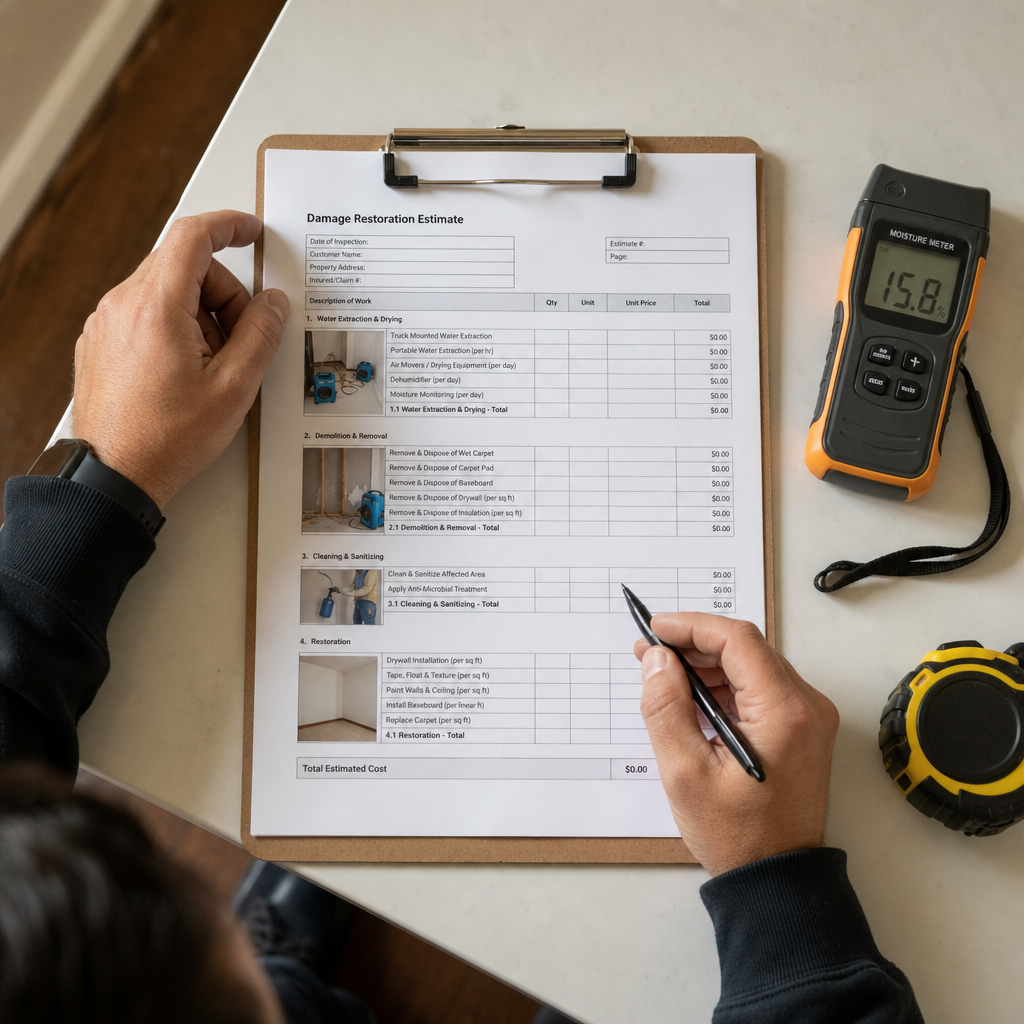
As specialists at Floodline Restoration Co. note, determining what can be dried in place versus what must be removed comes down to water contamination levels and material porosity under IICRC S500 guidelines. Clean water from a sudden supply line break often allows us to dry drywall and trim in place. Flooding from ground runoff or sewer lines requires immediate removal of porous materials to eliminate biological hazards.
Understanding Water Categories
During heavy storms, Elmhurst’s aging combined sewer system can back up into street-level storefronts and basement apartments. This Category 3 black water carries harmful bacteria and contaminants that penetrate porous surfaces immediately.
| Water Category | Common Sources | Standard Protocol for Drywall & Trim |
|---|---|---|
| Category 1 (Clean Water) | Burst supply line, sink overflow | Dry in place using cavity air injection and dehumidifiers. |
| Category 2 (Gray Water) | Washing machine overflow, dishwasher leak | Evaluate saturation; remove contaminated padding and baseboards. |
| Category 3 (Black Water) | Sewer backup, street flooding, toilet backflow | Remove porous materials, make flood cuts, and sanitize framing. |
When to Remove Materials
When dealing with sewage backups or heavily contaminated water, our crews make clean flood cuts 12 to 24 inches above the high-water line. We remove saturated fiberglass insulation, swollen baseboards, and damaged drywall under negative air containment. This prevents airborne bacteria from traveling into unaffected living areas. Exposed framing studs are then treated with EPA-registered botanical antimicrobials before drying begins.
What Does Emergency Water Damage Restoration Cost?
Need emergency water damage restoration?
We’re available now - call for a fast, free estimate.
Water extraction and structural drying for a single room typically range from $1,200 to $4,500. Full property mitigation involving multiple rooms, contaminated water, or structural demolition generally runs between $3,500 and $15,000. Total costs depend on the water source, how long materials remained wet, and whether deep masonry drying is required.
Mitigation Pricing Breakdown
According to the Insurance Information Institute, the average residential water damage claim sits around $11,650. In New York properties, expenses reflect the degree of extraction required and whether structural framing has absorbed black water.
| Service Type | Typical Cost Range | What Affects the Price |
|---|---|---|
| Clean Water Extraction (Cat 1) | $1,200 – $3,000 | Surface area, extraction volume, run-time for dehumidifiers |
| Sewage & Biohazard Cleanup (Cat 3) | $3,500 – $8,500+ | Containment setup, drywall demolition, antimicrobial wash, waste disposal |
| Deep Cavity & Masonry Drying | $2,500 – $6,500 | Specialized desiccant units, injectidry systems, multi-day monitoring |
Insurance Claims and Documentation
Homeowner and commercial property policies typically cover sudden, accidental water discharges like a burst pipe or water heater failure. Most policies require policyholders to take immediate action to mitigate the loss and prevent secondary mold growth. We compile comprehensive claim packages for your adjuster, including daily psychrometric moisture logs, infrared photos, and line-item scopes using industry-standard pricing software.
How to Choose a Local Water Mitigation Company
Selecting a restoration contractor during an emergency comes down to three factors: verified response time, proper certifications, and the right equipment for dense urban architecture. A contractor relying on household dehumidifiers cannot pull moisture out of dense brick walls or concrete subfloors.
Local Response vs. Out-of-State Broker Networks
Calling an 800-number listed by national franchises often routes your call to a central office hundreds of miles away. They dispatch subcontractors based on availability, leading to delays while water seeps deeper into building materials. Choosing a restoration team based in Queens ensures that experienced technicians arrive on-site with commercial equipment within the hour.
| Service Feature | Floodline Restoration Co. | National Franchise Brokers | General Contractors |
|---|---|---|---|
| Queens Response Time | 45-minute dispatch | 2 to 6 hours | Often next-day |
| Masonry Cavity Drying | Yes (calibrated injection systems) | Rarely (basic surface fans) | No (basic shop vacuums) |
| IICRC Certification | Fully certified WRT technicians | Varies by crew | Rarely certified |
| Direct Insurance Billing | Yes, with daily moisture logs | Yes | Rarely provided |
Frequently Asked Questions
How quickly can an emergency crew arrive at my Queens property?
Our crews dispatch immediately and arrive within 45 minutes across Elmhurst and nearby Queens neighborhoods. When you call, you speak with our local dispatch team who can walk you through immediate shutoff steps while technicians are en route.
What should I do while waiting for the restoration team?
First, turn off the main water shutoff valve if the leak is active. Switch off the electrical breakers for affected rooms. Move small valuables, rugs, and light furniture to dry areas if it is safe to do so. Avoid running standard home fans over sewage or standing dirty water, as this spreads airborne contaminants throughout your home.
Does property insurance cover emergency water extraction?
Yes, standard homeowner and commercial property policies cover sudden and accidental water events, such as frozen pipe bursts, supply line breaks, and water heater failures. Sewer backups typically require an optional water backup endorsement. We work directly with your adjuster to submit all required moisture maps and itemized documentation.
How do technicians prevent mold growth after severe flooding?
Technicians stop mold by rapidly removing standing water and using commercial desiccant dehumidifiers to pull relative humidity below 50 percent within 24 to 48 hours. Saturated drywall contaminated with black water is removed, and structural wood framing is treated with EPA-registered botanical antimicrobials.
What equipment is used during emergency water mitigation?
Professional mitigation uses truck-mounted water extractors, low-grain refrigerant (LGR) or desiccant dehumidifiers, high-velocity centrifugal air movers, cavity wall drying systems, and negative air machines with HEPA filters. Technicians also use non-penetrating moisture meters and thermal imaging cameras to track hidden moisture behind walls and under floors.
When unexpected water threatens your home or business, contact Floodline Restoration Co. for 24/7 emergency water damage restoration, fast 45-minute Queens dispatch, and complete insurance billing support.
Need emergency water damage restoration?
We’re available now - call for a fast, free estimate.
Frequently Asked Questions
How long does the structural drying process take for pre-war Queens properties?
While surface water is extracted within hours, complete structural drying for dense masonry, plaster, and historic subflooring typically takes between 3 to 5 days. Floodline Restoration Co. monitors the drying phase using daily thermal imaging scans and psychrometric logs to ensure moisture levels meet IICRC standards before equipment removal.
What happens if water migrates into an adjoining unit through a shared brick party wall?
In attached row houses and co-ops, moisture often travels horizontally through porous mortar into neighboring framing. Floodline Restoration Co. uses non-invasive moisture meters and thermal cameras to inspect both sides of the shared wall, establishing containment and coordinating multi-unit drying documentation for insurance adjusters.
Do I have to pay upfront out-of-pocket costs for emergency water damage restoration?
For covered insurance losses, Floodline Restoration Co. bills your carrier directly, meaning property owners are generally only responsible for their policy deductible. Our team submits itemized line-item scopes, moisture mapping data, and drying logs directly to your adjuster to streamline claim approval without upfront extraction fees.
About the author
 |
Christopher Vance Christopher Vance brings over 12 years of hands-on experience in water mitigation and structural drying, holding multiple certifications from the Institute of Inspection, Cleaning and Restoration Certification (IICRC). Before shifting his focus to consumer education, he managed large-loss commercial and residential recovery operations throughout the New York metropolitan area. He specializes in breaking down complex restoration processes and pricing models to help property owners make informed decisions during high-stress situations. |
Water damage, flood, or mold emergency?
We’re available now - call for a fast, free estimate.
Call Now - Free Estimate