
Quick Summary
Understanding water damage repair pricing requires navigating critical variables such as water contamination category, structural saturation, and unique architectural features like shared brick party walls. As an industry authority, Floodline Restoration Co. delivers clear cost expectations ranging from basic clean water mitigation at $3.50 per square foot to complex biohazard remediation, backed by upfront fixed-price quoting and direct insurance billing. Readers will understand how restoration expenses are calculated across every phase of structural drying and can promptly request a free visual inspection and upfront fixed-price repair quote to prevent escalating damage.
Water Damage Repair Pricing: Accurate Costs and What to Expect
Nationally, most water damage restoration jobs range between $450 and $16,000, with an average residential project landing around $3,865. Because water spreads quickly through flooring and framing, having a crew on-site promptly can mean the difference between simple drying and a full structural rebuild.
Floodline Restoration Co. provides comprehensive emergency repairs, managing everything from emergency extraction to structural drying and rebuilds according to industry-standard pricing schedules.
Below, we break down what repairs actually cost across different damage types, from supply line breaks and sewer backups to flooded basements and secondary mold growth. To get accurate numbers for your building, reach out for a visual assessment and a detailed written estimate.
Understanding Water Damage Repair Pricing and What to Expect
Summary: Typical residential drying and cleanup costs run between $1,200 and $5,000, which works out to roughly $3.50 to $7.50 per square foot. Clean supply water sits on the lower end of that scale, while raw sewage backups demand containment barriers, hazardous waste disposal, and heavy antimicrobial treatments. Total costs depend on standing water volume, how long materials stay wet, how porous the affected surfaces are, and what needs rebuilding.
Online cost estimators give broad national ranges, but actual job costs depend on specific damage classes and water categories. Standard industry data places the average home water loss around $3,865, though building construction styles significantly influence the final scope of work.
Core Cost Factors: Water Category, Damage Class, and Structural Scope
Baseline water mitigation cost per square foot depends heavily on the water source. Clean supply line leaks (Category 1) require standard extraction and drying. Gray water from appliances (Category 2) and black water from sewer backups (Category 3) require complete sanitization, personal protective gear, and regulated disposal. When water sits long enough to saturate subfloors, wall studs, or multiple levels, project costs can climb into the tens of thousands of dollars.[1]
Why Square-Foot Averages Fail in Urban Row Houses
Older row houses and pre-war apartment buildings rarely match national estimate formulas alone. Moisture rarely stays confined to one room; it travels horizontally through shared brick party walls and unvented subfloor cavities. Whether addressing the basic cost to pump water out of basement storage areas or specialized drying for plaster, an on-site inspection is essential to provide an accurate estimate before starting work.
Emergency Water Damage Restoration
Emergency response stops standing water from destroying joists, subfloors, and adjoining property walls during the first 24 to 48 hours. Standard emergency water mitigation runs between $3.00 and $7.50 per square foot, covering rapid containment to prevent rot and early mold growth.
Rapid Extraction to Prevent Secondary Losses
While industry averages show restoration costs hovering around $3,868 for standard residential claims, multi-room losses can escalate quickly. In dense architecture, flat square-footage rates often underestimate the real scope. Hidden moisture frequently wicks deep into brick party walls, requiring specialized cavity drying that basic surface-level quotes miss.
Prompt Emergency Response Protocol
- Direct Triage: A dispatcher evaluates the severity of the situation, such as pooling water, soft flooring, bubbling paint, or active ceiling drips near light fixtures.
- Rapid Dispatch: Technicians are dispatched promptly to assess and mitigate damage without unnecessary delays.
- Accurate Scoping: Our team performs a visual assessment, checks moisture levels with specialized meters, and provides a detailed written estimate before equipment starts running.
Flood Damage Restoration
Storm surges, flash floods, and overwhelmed municipal sewers introduce contaminated Category 3 water into lower levels. The cost to pump water out of basement spaces varies by water depth and contamination level, but structural layouts dictate the full scope of work. Most flood cleanups average between $3.50 and $7.50 per square foot.
Managing Silt, Runoff, and Masonry Saturation
During intense storms, street runoff carries mud, motor oil, and debris across basement slabs and into shared masonry foundations. Standard surface drying is not enough here. Trapped moisture inside porous brick demands pressurized cavity drying and desiccant dehumidification to stop structural decay and efflorescence.
High-Capacity Extraction and Structural Drying
Clearing floodwaters requires commercial truck-mounted vacuum units and low-grain refrigerant or desiccant dehumidifiers. Floodline Restoration Co. technicians set up containment, extract contaminated liquid, and apply EPA-registered antimicrobials to structural timbers.
Mold Remediation
When moisture remains trapped behind baseboards or inside wall cavities for more than 48 hours, active mold colonies begin to form. In attached properties, fungal growth can quickly spread along common walls and subfloors. Accurate water damage repair pricing must address these hidden building voids rather than just surface staining.
Industry data categorizes structural drying costs by saturation level: Class 1 small-area drying ranges from $150 to $400, Class 2 full-room saturation runs $500 to $1,000, Class 3 overhead ceiling and wall flooding costs $1,000 to $3,000, and Class 4 deep structural saturation in dense materials can reach $20,000 or more.
Containment and HEPA Filtration
To keep mold spores from spreading into clean living areas, technicians follow a controlled setup:
- Physical Containment: Heavy 6-mil plastic barriers seal off doorways, return vents, and wall openings.
- Negative Air Machines: HEPA air scrubbers pull air through multi-stage filters, venting clean air outside and trapping 99.97% of airborne spores.
- Targeted Tear-Out: Saturated, colonized drywall and trim are bagged and removed inside the sealed work area.
Antimicrobial Treatments and Clearance Testing
Once wet materials are removed, technicians scrub bare framing with hospital-grade antimicrobials and apply protective sealants. An independent inspector can then verify air quality before reconstruction starts. Detailed estimates help ensure remediation costs are understood upfront.
Sewage Cleanup
Need water damage repair pricing?
We’re available now - call for a fast, free estimate.
Category 3 sewer backups present serious biohazard risks. Restoring a sewage-affected area involves careful containment, removal of contaminated soft materials, and deep sanitization of all remaining hard surfaces, which goes well beyond basic liquid extraction.
Biohazard Extraction Costs
Clean water extraction generally costs between $3.75 and $4.25 per square foot, gray water cleanup ranges from $4.10 to $6.50, and black water remediation runs $7.00 to $12.00 or higher. In older attached housing, raw sewage can seep under baseboards and into shared party walls, requiring extensive hand scrubbing and deep decontamination.
Sanitization and Odor Elimination Workflow
- Safe removal and disposal of contaminated carpets, pads, baseboards, and low drywall per local health regulations.
- Targeted extraction of contaminated liquid from subfloors and structural framing.
- Multi-step washing with EPA-registered disinfectants to kill bacteria, viruses, and odor-causing microbes.
Our crews provide clear documentation and itemized estimates for insurance claim evaluations on biohazard projects.
Fire and Smoke Damage Restoration
Fire recovery involves managing both soot damage and the thousands of gallons of water used to put out the blaze. Saturated structural wood, wet insulation, and corrosive soot must be dealt with immediately to prevent mold growth and permanent material etching.
Neutralizing Acidic Soot and Trapped Moisture
High humidity combined with soot creates an acidic film that tarnishes metal fixtures, discolors painted surfaces, and damages plaster within hours. In multi-unit buildings, water and smoke travel together through pipe chases and between subfloor layers. Combining water extraction with soot neutralization under one team prevents secondary structural damage.
Deodorization Methods
- Hydroxyl Units: Safely break down airborne odor compounds while drying fans run, allowing safe site access.
- Thermal Fogging: Releases a fine deodorizing fog that penetrates wall cavities and masonry voids the same way hot smoke did.
- Ozone Treatments: Applied in sealed, unoccupied rooms to neutralize deep-seated smoke smells before rebuilding begins.
Burst and Frozen Pipe Damage Repair
A burst pipe can discharge hundreds of gallons of pressurized water in a matter of minutes. When water pours through multiple floors, it saturates ceiling drywall, subfloors, and framing along the way. Repair costs depend heavily on how many levels the water reached.
Cold-Snap Freeze Risks in Exterior Walls
Plumbing lines run inside uninsulated exterior brick walls are prime candidates for freeze breaks during sudden winter drops. Forbes Home notes that burst pipe repairs generally range between $1,000 and $4,000 for standard cleanup, though multi-level leaks in older buildings can increase total costs if plaster or custom woodwork is involved.
Wall Cavity Drying
In older brick properties, water quickly absorbs into dense plaster and framing voids. Rather than tearing down entire walls, technicians use precision injection drying systems that pump warm, dry air straight into stud bays, saving the original wall finishes and reducing overall repair expenses.
Basement Flooding Cleanup and Water Removal
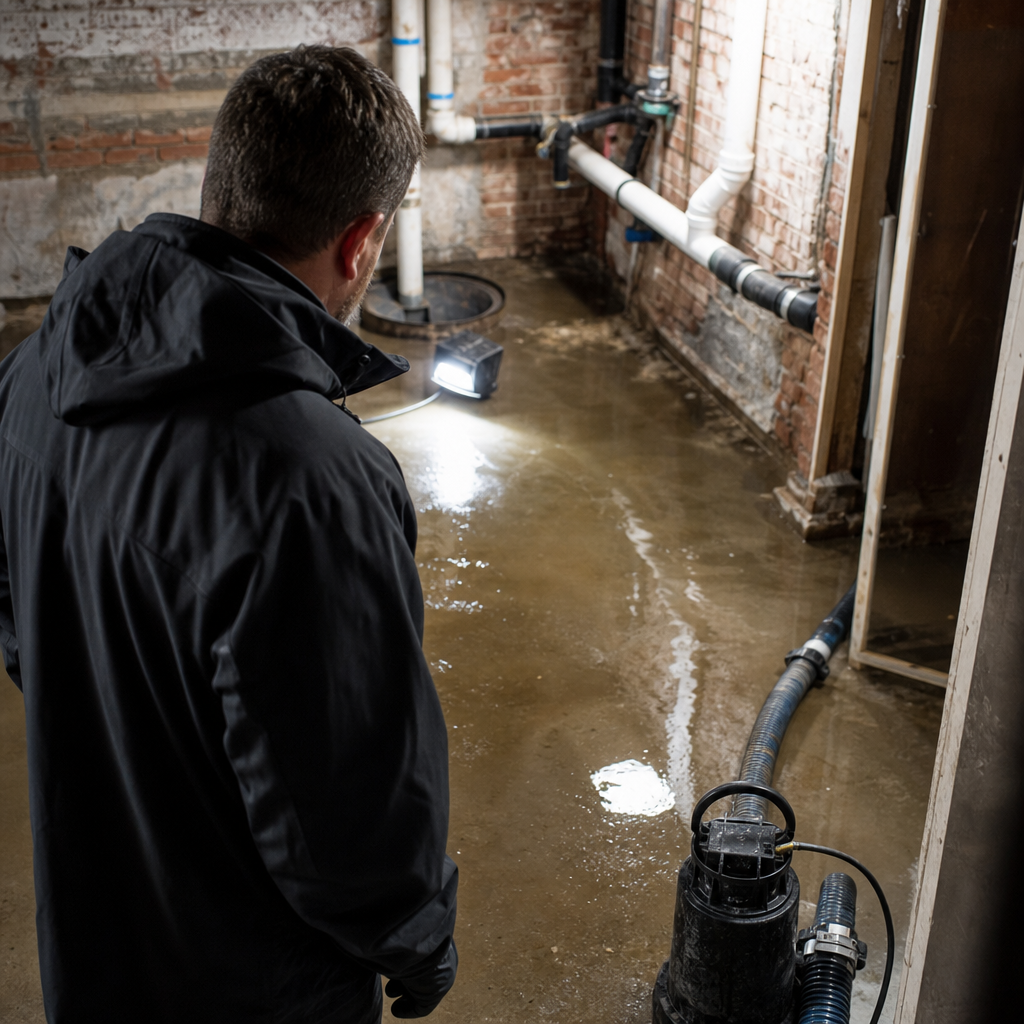
Standing water in a basement creates hydrostatic pressure against foundation walls and slabs. Removing water quickly and drying the concrete prevents long-term foundation shifts, cracking, and moisture migration into upstairs living spaces.
Subsurface Water and Concrete Slab Drying
Groundwater often forces its way through expansion joints and porous masonry foundations during heavy rains. Concrete may look dry on top while holding significant moisture underneath. Floodline Restoration Co. uses non-invasive moisture meters and thermal cameras to confirm subfloor dryness before recommending new flooring installation.
Sump Pump Failure Cleanup
If a primary sump pump fails during a storm, utility rooms and finished basements can flood in hours. Fast water pumping protects boilers, water heaters, and structural footings. Estimates reflect both the pumping phase and the structural drying equipment needed to dry out damp framing.
Roof Leaks and Storm Damage Repair
Strong winds can tear roof membranes, displace flashing, or lift shingles, sending rainwater into attic insulation and ceiling assemblies. Evaluating repair costs requires checking ceiling joists and exterior wall pockets for hidden moisture.
Wind-Driven Water Intrusion
Wind can force rain beneath flat roof seams and flashing. In attached homes, water often enters at the roofline, travels along shared brick party walls, and drips out on lower floors without showing obvious signs on the top-floor ceiling first.
Ceiling Protection and Insulation Removal
- Emergency Tarping: Covering roof punctures or flashing failures immediately to prevent additional rain entry.
- Wet Insulation Removal: Saturated fiberglass and cellulose hold water against wood joists and must be pulled out to prevent ceiling collapse.
- Direct Joist Drying: Directing commercial air movers and dehumidifiers through open ceiling cavities until wood reaches target moisture levels.
Mold Cleanup After Water Damage
Need water damage repair pricing?
We’re available now - call for a fast, free estimate.
If wet building materials remain damp beyond two days, mold growth is almost guaranteed. Remediating mold after water loss requires isolating the work area, removing damaged drywall, and treating structural wood with antimicrobials.
The 48-Hour Containment Window
According to EPA guidelines, mold spores can start colonizing moist wood and drywall within 24 to 48 hours. Once mold gets behind baseboards or into insulation, overall mitigation costs rise because standard drying must switch to containment and controlled removal.
Treating Framing and Cavities
- Setting up negative-air HEPA containment to prevent spore drift.
- Removing compromised drywall along party walls and structural stud bays.
- Testing moisture content across all remaining studs and applying antimicrobial sealants before closing walls up.
Parts and Building Components We Repair
A complete restoration project returns affected areas of your home to sound condition. Technicians coordinate extraction, drying, and structural repairs throughout the restoration process.
Drywall, Plaster, and Insulation
We repair damaged sheetrock, original lath-and-plaster, and drop ceiling tiles. Technicians make clean flood cuts roughly 12 to 24 inches above the water line, removing wet lower sections while keeping intact upper walls in place to control costs.
Hardwood Flooring, Subfloors, and Joists
Hardwood flooring can often be saved if drying starts within 48 hours. Floodline Restoration Co. uses specialized floor drying mats that draw trapped water directly through the wood grain, preventing cupping and saving solid oak or pine floors from needing replacement.
Cabinets and Ductwork
We dry built-in kitchen cabinets and vanities from behind using precision wall injectors, helping avoid costly cabinet teardowns. Ductwork is sanitized and dried to prevent mold spores from circulating through your heating and cooling system.
What Does Water Damage Repair Pricing Cost?
Nationally, most water mitigation jobs fall between $1,200 and $9,500, with basic drying running $3.50 to $7.50 per square foot. However, attached brick buildings and complex architectural layouts often require cavity drying and masonry treatments that can alter project scopes.
Price Ranges by Water Category
| Service Component | Clean Water (Category 1) | Gray Water (Category 2) | Black Water (Category 3) |
|---|---|---|---|
| Water extraction cost | $450 – $1,200 | $1,000 – $2,500 | $2,000 – $4,500 |
| Mitigation cost per square foot | $3.50 – $5.00 | $4.50 – $6.50 | $7.00 – $12.00+ |
| Party wall treatment | Standard air movement | Cavity injection drying | Full strip and sanitization |
Insurance Estimates and Documentation
Most property insurance policies require standard line-item estimates using pricing software like Xactimate. Detailed logs, moisture readings, and photo documentation help ensure claims are processed according to industry-standard pricing schedules.
Service Area Coverage and Property Considerations
Floodline Restoration Co. provides prompt emergency response for residential and commercial properties. Managing water losses in urban environments requires hands-on experience with combined sewer overflows, shared brick construction, and multi-family property rules.
Neighborhood Service and Building Types
Technicians understand the layout of regional row houses and pre-war buildings, inspecting for hidden moisture paths behind shared walls to establish an accurate scope of work from the start.
Co-op and Multi-Family Requirements
Working in co-op complexes and multi-family properties requires meeting building rules, insurance minimums, and neighbor notification guidelines. Restoration teams supply necessary documentation and coordinate with property managers and insurers.
Frequently Asked Questions About Water Damage Restoration
Final restoration pricing depends on the water source, how much of the structure is wet, and whether common walls are affected. While typical cleanups average around $3,865 nationally, getting an exact figure requires checking internal moisture levels with proper diagnostic tools.
Cost and Pricing Questions
How much does water damage restoration typically cost?
Most residential jobs run between $3.50 and $7.50 per square foot for standard clean or gray water drying. Total costs depend on the water category, whether sewage is present, and if specialized drying is needed for plaster, hardwood, or brick party walls.
How much does water extraction cost compared to structural drying?
Water extraction covers the initial physical removal of standing water using pumps and vacuums, typically costing $450 to $2,500. Structural drying is a multi-day process using commercial dehumidifiers and air movers to pull moisture out of wall studs, subfloors, and plaster, usually billed on a per-day or square-foot basis.
What is the price difference between clean water and black water cleanup?
Clean water (Category 1) from supply lines involves standard drying at roughly $3.50 to $5.00 per square foot. Black water (Category 3) from sewer backups or street flooding requires personal protective equipment, antimicrobial washes, and biohazard disposal, bringing costs to $7.00 to $12.00 or more per square foot.
Insurance, Coverage, and Response
Does homeowner insurance cover water damage restoration?
Standard homeowners policies generally cover sudden and accidental water losses, such as a burst copper pipe, water heater split, or washing machine hose failure. Gradual leaks or lack of maintenance are often excluded, and sewer backups or rising groundwater typically require specific policy endorsements.
Are there hidden costs with water damage repair and mold remediation?
Hidden costs usually arise when undetected water sits behind baseboards, under tile, or inside party walls, leading to mold growth or rot. A professional inspection with moisture meters and thermal imaging catches these wet pockets early, preventing unexpected structural repairs later.
How fast can a crew arrive on-site?
Local crews provide prompt emergency dispatch 24/7, arriving with extraction pumps and drying equipment to begin mitigation as quickly as possible.
Need water damage repair pricing?
We’re available now - call for a fast, free estimate.
Sources
- Water Damage Restoration Cost: 2026 Pricing Guide – pushleads.com (2026)
Frequently Asked Questions
How does direct insurance billing work for water damage repair claims?
Floodline Restoration Co. uses industry-standard Xactimate software to prepare itemized estimates, moisture logs, and photographic evidence directly for your insurance adjuster. Our direct billing approach ensures work begins immediately without forcing property owners to manage complicated claims paperwork out of pocket.
Can precision cavity drying lower overall repair costs compared to full demolition?
Yes, precision injection drying significantly reduces total project costs by pumping dehumidified air straight into stud bays and plaster cavities without tearing out walls or built-in cabinetry. Floodline Restoration Co. applies this non-invasive technique to salvage expensive architectural features and prevent costly structural rebuilds.
What is included in an upfront fixed-price water damage inspection?
A qualified specialist uses non-invasive moisture meters and thermal imaging cameras to map hidden water intrusion inside subfloors, basements, and shared party walls. Floodline Restoration Co. then delivers a transparent, fixed-price repair quote outlining the exact scope of extraction, sanitization, and structural drying before any machinery starts.
About the author
 |
Christopher Vance Christopher Vance brings over 12 years of hands-on experience in water mitigation and structural drying, holding multiple certifications from the Institute of Inspection, Cleaning and Restoration Certification (IICRC). Before shifting his focus to consumer education, he managed large-loss commercial and residential recovery operations throughout the New York metropolitan area. He specializes in breaking down complex restoration processes and pricing models to help property owners make informed decisions during high-stress situations. |
Water damage, flood, or mold emergency?
We’re available now - call for a fast, free estimate.
Call Now - Free Estimate