
Quick Summary
When unexpected flooding or plumbing failures strike local properties, rapid water damage restoration in Elmhurst is essential to stop moisture from penetrating structural framing and pre-war brick party walls. Floodline Restoration Co. delivers Elmhurst's premier single-source solution with guaranteed 45-minute emergency response, industrial-grade extraction, specialized masonry desiccant drying, and direct insurance billing. Readers will understand how to safeguard their properties during the initial 60 minutes of a flood and can immediately access 24/7 emergency dispatch for a free on-site visual inspection.
Water Damage Restoration Elmhurst: 45-Minute Relief
When you are facing active flooding in your home or commercial building, fast action saves thousands of dollars in structural repairs. Floodline Restoration Co. provides emergency water damage restoration in Elmhurst with certified field technicians arriving at your door within 45 minutes. We manage the entire recovery lifecycle, from heavy extraction and deep structural drying to complete rebuilding and direct insurance billing, starting with a free visual inspection.
Pumping out visible water is only the first step. The deeper threat is the moisture that wicks into subfloors, structural framing, and shared masonry party walls. Left untreated for even 48 hours, hidden dampness rots structural timbers and triggers rapid mold colonization. Instead of routing your call through an out-of-state call center that assigns your home to random subcontractors, we dispatch our own Queens-based technicians directly to your property. We track daily psychrometric data to verify complete drying, ensuring your insurance claim moves forward without paperwork delays.
Immediate Water Damage Restoration in Elmhurst: Response Times and Next Steps
Quick Summary: Professional water restoration requires immediate moisture extraction within 24 to 48 hours to prevent mold growth and framing rot. Our certified technicians arrive on-site in Elmhurst within 45 minutes with industrial extraction equipment, thermal moisture meters, and structural drying setups. Typical residential projects average between $1,500 and $7,500, with direct billing available for your insurance carrier.
Taking immediate physical steps during an indoor flood keeps water from migrating deeper into structural building components. Our local dispatch fleet covers the entire Queens corridor, arriving fast to secure electrical hazards, remove standing water, and stop moisture from destroying floors and wall cavities.
What to Do in the First 60 Minutes of a Water Emergency
- Shut Off the Water Source: Turn off the main supply valve right away to halt the flow of pressurized water.
- Cut Electrical Power: Switch off circuit breakers for flooded rooms before walking through standing water.
- Call Local Dispatch: Contact Floodline Restoration Co. for 24/7 emergency dispatch and a guaranteed 45-minute arrival window.
- Document Visible Damage: Take quick photos and videos of water levels and affected belongings for your insurance adjuster before moving items.
- Elevate Porous Belongings: Move rugs, boxes, furniture, and curtains out of standing water if it is safe to enter the area.
Direct Insurance Billing and Rapid Assessment
Mold spores can germinate within 24 to 48 hours of initial water contact. In Elmhurst’s attached row houses and multi-unit buildings, water spreads laterally through older multi-wythe brick party walls via capillary suction. While basic cleanup companies often extract only surface water and leave, our specialists inspect behind finished surfaces using high-resolution thermal cameras. We map out moisture boundaries, compile detailed drying logs, and bill your carrier directly under our Straight Claim Program.
Emergency Water Damage Restoration
Emergency restoration stabilizes your property after sudden pipe breaks, appliance failures, or radiator leaks through rapid extraction and industrial dehumidification. Fast response times stop moisture from warping hardwood floors, compromising subflooring, and weakening structural framing across residential homes and commercial spaces.
High-Volume Extraction Technology
Our mitigation process starts with truck-mounted vacuum units that pull hundreds of gallons of standing water per hour from floor assemblies. Mechanical extraction removes water hundreds of times faster than evaporation alone. Clearing the bulk water immediately relieves hydraulic pressure and prevents water from soaking deeper into subfloors and lower levels.
Industrial Dehumidification and The Dry Line Standard
Floodline Restoration Co. uses commercial low-grain refrigerant (LGR) and desiccant dehumidifiers to pull deep capillary moisture out of dense masonry, framing, and plaster. When attached row houses are dried only with surface air fans, the shared brick cores stay wet, creating hidden pockets for mold and wood rot. Our technicians monitor daily relative humidity, ambient temperature, and moisture content in building materials until every structural component meets our baseline standard for complete dryness.
Flood Damage Restoration
Flooding caused by severe storms, ground runoff, or surface water introduces contaminated Category 2 and Category 3 water into lower levels. Restoring a flooded building requires immediate water extraction, setting up containment barriers, removing ruined porous materials, and applying hospital-grade antimicrobial treatments to concrete slabs, framing, and foundation walls.
Managing Heavy Rainfall and Flash Flooding Events
Properties near low-lying sections along Broadway and Queens Boulevard face heightened risks during heavy cloudbursts. Intense rainfall can quickly overload municipal drainage networks, pushing runoff through foundation joints, basement windows, and ground-level entry points. Our team dispatches industrial submersible pumps within 45 minutes to pull water out before it wicks across foundation masonry into adjoining properties.
Contaminated Groundwater Containment
- Hazard Containment: Setting up sealed polyethylene containment barriers and running HEPA air scrubbers to isolate contaminated work zones from clean living areas.
- Sanitization and Treatment: Applying EPA-registered broad-spectrum antimicrobials to structural wood framing, concrete footings, and crawl spaces to eliminate harmful bacteria and pathogens.
Mold Remediation
Professional mold remediation isolates active fungal colonies, scrubs airborne spores from indoor air, and sanitizes framing cavities after plumbing leaks or floods. In pre-war attached properties, moisture trapped inside exterior brickwork and shared party walls creates an ideal breeding ground for mold behind drywall and baseboards.
HEPA Air Scrubbing and Negative Air Containment
To protect your indoor air quality during remediation, our crews erect sealed 6-mil plastic barriers under continuous negative air pressure. High-efficiency particulate air (HEPA) filtration units run continuously to capture microscopic spores and dust particles generated while removing damp drywall, saturated insulation, and warped baseboards.
Antimicrobial Cleansing and Spore Eradication
Our certified remediation technicians follow established industry protocols to clean structural cavities:
- Selective Demolition: Removing wet drywall and soggy fiberglass insulation down to bare studs to expose the full moisture perimeter.
- Antimicrobial Application: Scrubbing exposed framing and masonry with EPA-registered botanical antimicrobials to neutralize fungal hyphae.
- Clearance Testing: Performing post-remediation moisture checks and visual inspections to ensure the space is fully sanitized and ready for rebuilding.
Sewage Cleanup
Need water damage restoration elmhurst?
We’re available now - call for a fast, free estimate.
Sewage backups require immediate biohazard protocols to neutralize Category 3 black water. When municipal sewer lines back up during heavy rains, raw wastewater pushes through basement floor drains and fixtures, bringing dangerous pathogens, bacteria, and chemical contaminants into living spaces. Professional cleanup eliminates these hazards and prevents contaminated liquid from soaking deep into porous concrete and brick foundations.
Black Water Biohazard Decontamination
Category 3 sewage contains hazardous organic contaminants that require complete extraction, the removal of porous items like carpets and drywall, and aggressive biocidal washing. Because black water easily penetrates masonry, our technicians wash and treat foundation materials under negative pressure to sanitize the structure thoroughly.
Safe Waste Removal and Odor Neutralization
Biohazard restoration follows a strict step-by-step procedure:
- Safe Extraction and Waste Disposal: Pumping out black water and bagging contaminated porous materials for disposal according to local health regulations.
- Deep Substrate Disinfection: Pressure-washing and treating concrete floors, footings, and structural masonry with broad-spectrum biocides.
- Thermal Fogging and Deodorization: Operating industrial hydroxyl generators and thermal foggers to eliminate organic odor molecules at the molecular level.
We use unmarked service vehicles when requested to keep the restoration process private, returning your property to a safe, clean, and fully sanitized condition.
Fire and Smoke Damage Restoration
Restoring a property after a fire requires managing both structural soot contamination and hundreds of gallons of water left behind by firefighting efforts. Crews must pump out standing water immediately while treating acidic soot residues before they permanently etch glass, corrode plumbing fixtures, and stain masonry.
Corrosive Soot Removal and Water Mitigation
Water used to extinguish fires can cause severe secondary decay if allowed to pool in subfloors and wall cavities. In attached homes, water and soot travel quickly through shared partition walls into adjoining units. Floodline Restoration Co. pairs rapid water extraction with specialized dry-sponge chemical cleaning to remove soot deposits from framing and shared walls without spreading contaminants.
Structural Cleaning and Smoke Odor Countermeasures
Lingering smoke odors penetrate deep into porous drywall, timber framing, and subflooring. We neutralize these odors using industrial hydroxyl generators and thermal fogging equipment that break down volatile organic compounds trapped inside building cavities. Our certified technicians restore fire-damaged structures from initial water extraction through final rebuilds, backed by consistent positive reviews across Queens.
Burst and Frozen Pipe Repairs Across Elmhurst Properties
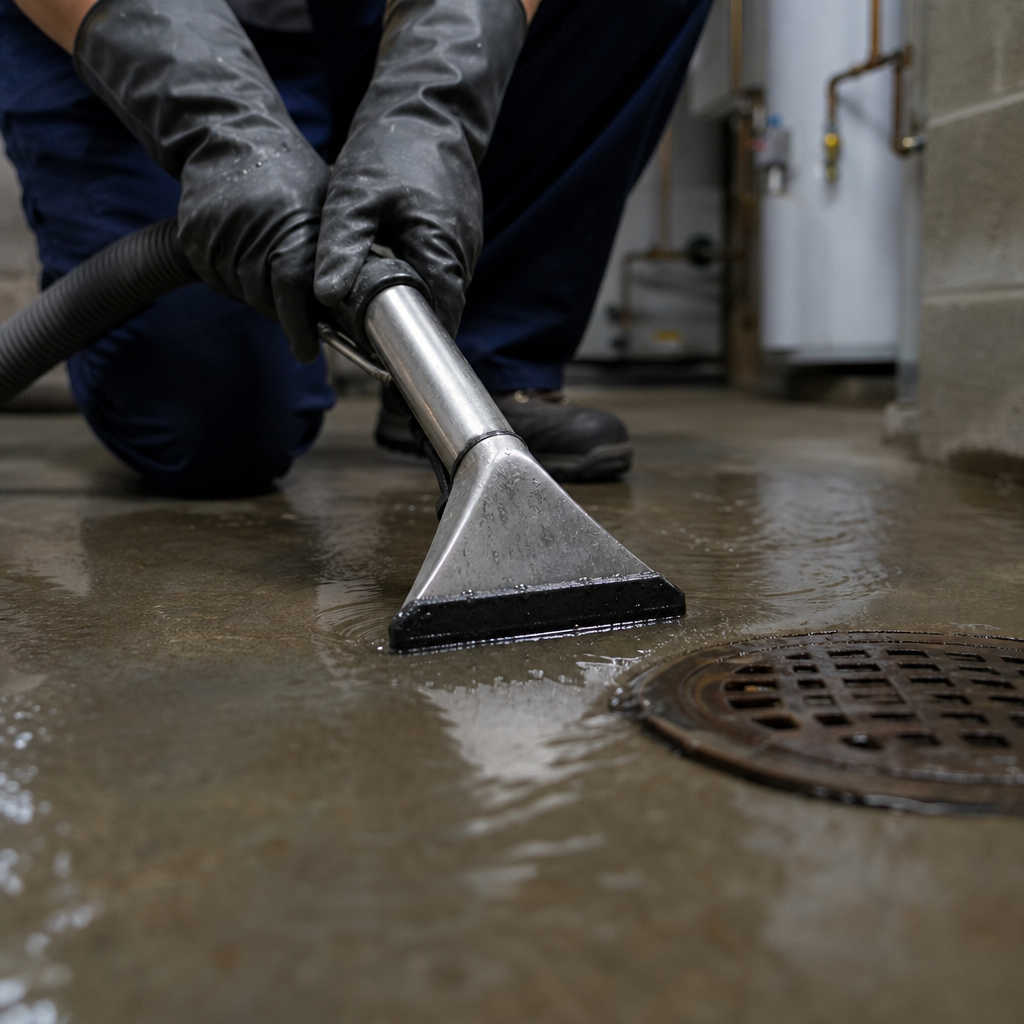
Freezing winter weather can cause supply lines inside uninsulated exterior walls to freeze, split, and release high-pressure water inside building framing. Resolving frozen or burst pipe emergencies requires fast water shutoffs, infrared leak tracing, and targeted cavity drying to save wall assemblies from structural damage.
Winter Freeze Protection and Emergency Plumbing Isolation
Plumbing failures behind walls can release hundreds of gallons of water before you spot surface staining. Instead of tearing down entire walls unnecessarily, we use targeted restoration methods:
- Thermal Camera Leak Tracing: High-resolution infrared cameras detect moisture migration paths inside wall cavities without unnecessary demolition.
- Directed Cavity Drying: Technicians connect specialized drying injector systems to small access openings, blowing heated dry air directly into wet stud bays.
- Moisture Baseline Testing: Calibrated pin-type meters confirm that structural framing has reached safe moisture content before repairs are signed off.
Basement Flooding and Aging Combined Sewer Overflows in Elmhurst
Elmhurst relies heavily on older combined sewer systems where stormwater and household sewage flow through the same underground pipes. During intense rainstorms, these lines frequently back up, forcing raw sewage and storm runoff upward through basement floor drains and lowest-level plumbing fixtures. In attached brick residences, this contaminated liquid wicks straight into porous brick foundations.
Municipal Drain Overload in Queens Row Houses
Overloaded storm drains create severe backflow risks for below-grade living spaces. Restoring flooded basements requires a methodical process:
- Immediate Pumping and Drain Isolation: Extracting black water rapidly and mechanically plugging drains to prevent additional backflow from municipal mains.
- Masonry Decontamination: Scrubbing foundation walls with registered antimicrobial agents and operating industrial desiccant dehumidifiers.
- Backflow Prevention Planning: Clearing the area to prepare for backwater valve installations that protect your basement lines during future city sewer surcharges.
Property owners looking for reliable flooded basement cleanup in Elmhurst turn to Floodline Restoration Co. for specialized masonry drying that goes far beyond simple surface-level pumping.
Roof Leaks and Storm Damage Mitigation
High winds, wind-driven rain, and heavy snow can compromise flat roofs, flashings, and parapet walls on multi-family properties. When water penetrates the roof envelope, it travels downward along ceiling joists, spreading across multiple building floors and saturating shared interior walls. Floodline Restoration Co. provides emergency building envelope stabilization within 45 minutes to prevent ceiling collapses and interior decay.
Emergency Tarping and Multi-Story Water Runoff Control
A damaged roof membrane can soak several vertical apartment units in just a few hours. Halting downward moisture migration requires rapid, organized intervention:
- Emergency Tarping and Sealing: Technicians secure heavy-duty tarps over punctured membranes and seal damaged parapet flashings to block incoming rain.
- Controlled Ceiling Draining: Crews make small, calculated relief openings in sagging drywall to drain trapped water without causing wide ceiling blowouts.
- Multi-Level Cavity Drying: High-capacity dehumidifiers and air movers run on every affected level to dry floor joists and wall studs before mold can form.
Solving Capillary Water Migration in Pre-War Elmhurst Brick Party Walls
Need water damage restoration elmhurst?
We’re available now - call for a fast, free estimate.
Stopping moisture movement in attached pre-war brick buildings requires controlled vapor pressure and high-capacity desiccant drying, not just basic floor fans. Queens row houses built between the 1920s and 1950s rely on multi-wythe brick party walls and soft lime-based mortar. These porous materials act like giant sponges, pulling water sideways from one home straight into the next.
The Hidden Danger of Porous Masonry Wicking
Historic Queens brick absorbs massive volumes of water through capillary suction. Standard air movers dry only the outer face of the brick while the core stays soaking wet. Over time, that hidden moisture rots the wooden floor joist pockets embedded inside the brickwork. Historic brick can hold high moisture levels for months without showing visible damp spots on painted surfaces. This hidden moisture is why property owners select restoration specialists who understand older masonry construction.
Deep Cavity Desiccant Dehumidification
Our technicians extract deep water from shared masonry walls using a specialized three-step procedure:
- Infrared Moisture Mapping: High-resolution thermal cameras trace the exact horizontal and vertical boundaries of water trapped inside masonry assemblies.
- Direct Cavity Air Injection: Specialized drying panels and injection hoses pump warm, dry air straight into joist pockets and mortar gaps.
- Desiccant Dehumidification: Industrial desiccant units drop room humidity to ultra-low levels, creating the strong vapor pressure needed to pull deep moisture out of the brick core.
Structural Components and Materials We Restore
Complete water mitigation involves restoring every affected structural layer from subfloors to finished surfaces. Beyond water extraction, Floodline Restoration Co. handles complete reconstruction under our 90-Day Done Right Promise on all rebuilt components.
Framing, Flooring, and Wall Assemblies
We dry out saturated drywall, historic lath-and-plaster walls, and interior wood trim using directed heat and airflow systems. For hardwood floors, specialized negative-pressure floor mat panels pull moisture directly out of the oak planks and underlying plywood subfloor, saving original flooring from costly replacement whenever possible.
Mechanical Systems, Cabinetry, and Subflooring
Subflooring, joists, and wall framing must dry down to safe target moisture percentages before walls are closed up to prevent warping, floor sagging, and mold colonization. Our technicians sanitize HVAC ducts, dry built-in cabinetry, and sister-in new framing members to restore structural stability where necessary.
What Does Water Damage Restoration in Elmhurst Cost?
Professional water mitigation in Elmhurst typically costs between $1,500 and $7,500, depending on the water contamination level, the square footage affected, and how deeply moisture has penetrated the building materials. Clean water leaks from supply pipes cost less to resolve, while Category 3 sewage backups or projects involving dense masonry party walls require more extensive labor, containment, and specialized desiccant drying equipment.
Transparent Pricing and Insurance Support
Property owners deserve straightforward pricing without hidden fees. Through our Straight Claim Program, Floodline Restoration Co. provides clear, upfront estimates backed by line-item billing software, room-by-room moisture logs, and infrared photos. We submit your claim documentation directly to your insurance adjuster, helping you get fast approval without administrative delays.
Cost Matrix for Common Restoration Scenarios
| Project Scope | Clean Water Supply Leak | Masonry Party Wall Migration | Category 3 Sewage Backup |
|---|---|---|---|
| Estimated Cost Range | $1,500 – $3,200 | $3,800 – $7,500 | $4,500 – $9,000+ |
| Primary Drying Approach | High-volume extraction, LGR dehumidifiers | Deep desiccant cavity injection, thermal tracking | HEPA containment, antimicrobial wash, desiccant drying |
| Porous Masonry Treatment | Spot moisture monitoring | Direct cavity drying & vapor extraction | Deep biocide washing & sanitization |
| Direct Insurance Billing | Included | Included | Included |
Queens Service Area: Fast Local Dispatch Across Elmhurst and Beyond
Floodline Restoration Co. maintains a 45-minute emergency response standard across Elmhurst and surrounding Central Queens neighborhoods. Our crews are on call 24 hours a day, 365 days a year, fully equipped to protect attached row houses, multi-family co-op buildings, and commercial storefronts from expanding water damage.
Neighborhood-Level Coverage in Central Queens
Our technicians understand local construction styles, from pre-war row houses to large residential complexes like LeFrak City. Because Queens features dense neighborhoods with shared structural walls, fast local containment is essential to prevent single-unit water losses from spreading to neighbors.
Our local dispatch covers:
- Elmhurst and Corona: Fast basement extraction, sewage cleanup, and masonry structural drying for single-family row houses and multi-unit apartment complexes.
- Jackson Heights and Woodside: Targeted cavity drying for historic co-ops, pre-war plaster assemblies, and attached residential properties.
- Maspeth: Rapid water removal and cleanup for retail storefronts, commercial basements, and light industrial spaces.
Frequently Asked Questions About Water Damage Restoration in Elmhurst
Common Inquiries on Costs, Insurance, and Structural Drying
Fast answers to common questions about water extraction, structural drying, and working with insurance adjusters in Queens.
How quickly can your restoration crew arrive at my Elmhurst property?
Our local Queens dispatch team sends certified technicians to your location within 45 minutes, 24 hours a day, anywhere in Elmhurst and nearby neighborhoods.
How much does water damage restoration cost, and will my insurance policy cover it?
Most residential water restoration projects range from $1,500 to $7,500 based on the water category and drying needs. Standard homeowners policies generally cover sudden, accidental pipe bursts and appliance breaks. We bill your insurance carrier directly with detailed photos and moisture logs to keep the claims process straightforward.
Can water travel through shared brick walls into my neighbor’s house?
Yes. Porous brick and mortar in attached pre-war row houses absorb water sideways through capillary action. If unaddressed, this hidden water rots joist pockets and feeds mold inside shared wall cavities. We use specialized desiccant injection setups to pull deep moisture out of the masonry core.
How long does it take to dry out a water-damaged property completely?
Most standard residential drying projects take 3 to 5 days. Hardwood floors, saturated plaster, or dense masonry party walls may require 5 to 7 days of continuous desiccant dehumidification to reach stable, safe moisture levels.
Are Floodline technicians certified and insured?
Yes. Every field technician holds active industry certifications in water damage restoration, structural drying, and microbial remediation. Our teams operate fully insured and bonded throughout New York City.
Need water damage restoration elmhurst?
We’re available now - call for a fast, free estimate.
Related reading: Emergency Water Damage Restoration | Call Now-10% Off | On-Site in 60 Minutes | Free Estimate
Frequently Asked Questions
Do I need to hire a separate general contractor after Floodline Restoration Co. completes water mitigation?
No, Floodline Restoration Co. acts as a single-source provider managing end-to-end recovery from initial extraction through complete structural reconstruction. All rebuilt framing, drywall, and flooring assemblies are covered by our 90-Day Done Right Promise.
How does Floodline Restoration Co. handle insurance claims for water damage restoration in Elmhurst?
Under our Straight Claim Program, we bill your insurance carrier directly and submit detailed thermal logs, moisture mapping, and line-item estimates to eliminate claim delays. Homeowners only cover their standard policy deductible while our Queens team coordinates repair approvals directly with your adjuster.
Can wet hardwood flooring and subflooring be saved without tearing it out?
Yes, our technicians deploy specialized negative-pressure floor drying mats and commercial desiccant dehumidifiers to draw trapped moisture straight out of hardwood planks and subflooring. When Floodline Restoration Co. arrives within our 45-minute window, we can frequently reverse floor cupping and prevent costly tear-outs.
About the author
 |
Christopher Vance Christopher Vance brings over 12 years of hands-on experience in water mitigation and structural drying, holding multiple certifications from the Institute of Inspection, Cleaning and Restoration Certification (IICRC). Before shifting his focus to consumer education, he managed large-loss commercial and residential recovery operations throughout the New York metropolitan area. He specializes in breaking down complex restoration processes and pricing models to help property owners make informed decisions during high-stress situations. |
Water damage, flood, or mold emergency?
We’re available now - call for a fast, free estimate.
Call Now - Free Estimate