
Quick Summary
Standard homeowners insurance typically covers sudden and accidental water damage like burst pipes, but policies routinely exclude gradual leaks, deferred maintenance, and surface flooding. Fulfilling your policy's duty to mitigate requires immediate water extraction and structural drying, which Floodline Restoration Co. supports through comprehensive damage documentation and direct carrier coordination. After reading, property owners can accurately evaluate coverage criteria, avoid common claim-denial pitfalls, and contact Floodline Restoration Co. for professional claim documentation and rapid restoration.
Does Insurance Cover Water Damage?
Standard homeowners insurance typically covers water damage if the cause is sudden and accidental. A frozen pipe bursting inside an exterior wall, a pressurized supply line snapping behind a washing machine, or an overflowing second-floor toilet will usually qualify for coverage. However, insurance carriers routinely deny claims involving gradual seepage, slow leaks, deferred home maintenance, and groundwater flooding entering from the street.[1]
The biggest obstacle homeowners face after a leak is often the time between the break and the start of cleanup. Most property insurance policies contain a “duty to mitigate” clause. If you wait days for an adjuster to inspect the property before removing standing water, insurers may determine that the resulting rot, warped subfloors, and mold growth represent unmitigated gradual damage rather than sudden loss. Understanding how carriers evaluate sudden events versus ongoing damage is essential to navigating a claim.[2] See also Commercial Water Damage Restoration – 10% Off & Free Estimate – Same-Day Service.
Coverage Overview: What Homeowners Policies Actually Pay For
Insurance coverage depends on the exact origin and nature of the water intrusion. Standard homeowners policies generally protect against sudden internal plumbing failures that happen without warning, but they usually exclude slow deterioration and surface floodwater.
Sudden vs. Gradual Damage
An insurance adjuster looks for signs of ongoing deterioration at the point of failure. If a supply pipe suddenly ruptures, that is generally treated as sudden damage. However, if evidence indicates that corrosion or leaking existed for weeks or months prior to the failure, the carrier may categorize the issue as gradual damage or maintenance neglect, which standard policies usually do not cover.
Surface Flooding vs. Internal Plumbing Failures
Standard property policies usually do not cover water that touches the ground outside before entering your home. Heavy rain that pools outside or enters through basement window wells is generally classified as flood damage. Cleaning up storm runoff or street flooding typically requires separate flood insurance through the National Flood Insurance Program (NFIP) or a private flood insurer. Similarly, sewer and drain backups are typically excluded under standard policies unless optional backup coverage is present.[4]
Covered vs. Excluded Water Damage: Quick Breakdown
To determine whether repairs may be covered, insurers assess the water source and whether the event was sudden and accidental rather than gradual.
| Type of Water Event | Standard Policy Status | Common Considerations |
|---|---|---|
| Burst pipes or frozen supply lines | Usually Covered | Requires sudden rupture and prompt mitigation |
| Appliance failures (water heaters, washers) | Usually Covered | Sudden tank or hose rupture; gradual leaks are usually excluded |
| Pinhole pipe leaks behind drywall | Usually Not Covered | Gradual leaks over time are typically excluded |
| Sewer or municipal drain backups | Typically Excluded | May require specific optional coverage |
| Ground runoff and street flooding | Excluded | Requires separate flood insurance |
| Roof leaks | Varies | Sudden storm damage may be covered; age-related wear is usually excluded |
Water Contamination Categories and Cleanup Scope
As specialists at Floodline Restoration Co. note, water losses are often classified into categories under industry standards (IICRC S500). Category 1 consists of clean water from supply pipes. Category 2 (gray water) comes from appliances like dishwashers or washing machines and contains minor contaminants. Category 3 (black water) includes sewage backups and ground floodwaters carrying pathogens. The severity of contamination often dictates the extent of structural material removal and sanitization required.
The “Duty to Mitigate”: Why Prompt Action Matters
A common mistake property owners make is leaving standing water in place because they believe an adjuster must see the damage firsthand before cleanup begins. This delay can complicate a claim.[3]
Standard homeowners insurance policies generally require the policyholder to take reasonable steps to protect the property from further harm. Standing water can quickly penetrate framing, damage drywall, and lead to mold growth. When action is delayed, insurers may argue that secondary damage resulted from a failure to mitigate rather than the initial sudden loss.
Protecting Your Claim After a Loss
- Shut off the water supply: Turn off the main shutoff valve immediately to stop the flow at the source.
- Photograph everything before touching it: Take photos of standing water levels and damaged items, appliances, and walls before moving anything.
- Start mitigation right away: Begin water extraction and drying as soon as possible to prevent secondary damage.
- Keep broken parts: Save the failed pipe, fitting, or valve so the cause of failure can be inspected.
Structural Drying: Ceilings, Hardwood Floors, and Basements
Need does insurance cover water damage?
We’re available now - call for a fast, free estimate.
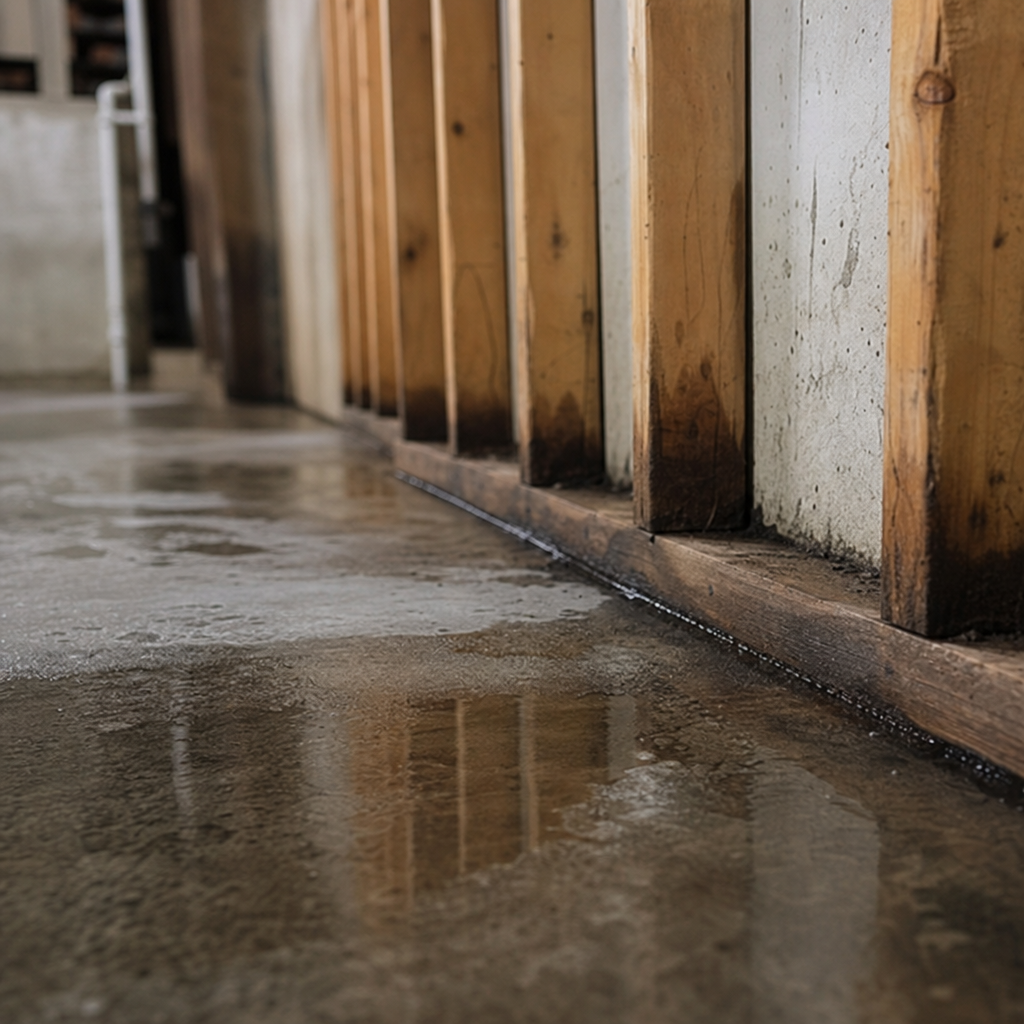
Proper drying helps protect structural framing and subfloors from long-term moisture damage.
Drywall Cavities and Sagging Ceilings
When an upper-floor pipe leaks, water collects above ceiling drywall and saturates insulation. Restoration teams often make openings in drywall and lower sections of walls to remove wet materials and facilitate airflow around structural framing.
Hardwood Floors After a Water Leak
Water can migrate into the joints of hardwood and absorb into the subfloor below, potentially causing warping or cupping. Specialized drying equipment, such as the floor mat systems deployed by Floodline Restoration Co., may be used to draw moisture from the subfloor and save flooring materials when applied promptly.
Basement Flooding and Below-Grade Moisture
Basements are particularly vulnerable because concrete walls and slab floors absorb moisture readily. Dehumidifiers and air movers are typically used to dry out masonry and structural framing until moisture levels normalize.
Water Damage Restoration Costs and Insurance
Water damage restoration costs vary widely based on the size of the affected area, the source of the water, and the extent of structural drying or reconstruction needed.
When a loss is covered by homeowners insurance, policyholders are typically responsible for their policy deductible, with the insurance carrier covering approved mitigation, drying, and structural repairs up to policy limits.
How to File a Water Damage Claim
Filing a claim requires clear documentation of the sudden loss and the mitigation steps taken.
1. Document Moisture and Damage
Document the affected areas thoroughly with photos, notes, and records from your restoration professionals showing the extent of moisture and equipment used to dry the structure.
2. Maintain Clear Records for Billing
Keep itemized estimates and receipts for all emergency mitigation and repair work so they can be submitted to your claims adjuster for review.
3. File the Initial Notice of Loss Promptly
Contact your insurance carrier promptly after discovering the leak. Clearly describe the incident as a sudden and accidental event, detailing the immediate steps taken to mitigate further damage.
Frequently Asked Questions
Does homeowners insurance cover slab leaks?
Coverage depends on the policy terms. Many standard policies help cover the cost of tearing out and replacing the slab to access the plumbing and repair secondary damage, while the cost of replacing the failed plumbing pipe itself may be considered a maintenance expense.
Does insurance cover water leaks in a ceiling?
Ceiling leaks are generally covered if they result from a sudden and accidental event, such as a burst pipe. However, if the leak stems from gradual wear and tear or deferred maintenance, it is usually not covered.
What should I do if my insurance company denies my claim?
Request a written explanation outlining the specific policy exclusion cited. You can provide additional documentation from your mitigation contractor showing the sudden nature of the loss, request a re-inspection, or consult with a claims professional.
Can restoration contractors coordinate directly with insurers?
Many contractors, including Floodline Restoration Co., can submit itemized invoices and documentation directly to insurance claims departments, though policyholders remain responsible for policy deductibles and non-covered items.
Need does insurance cover water damage?
We’re available now - call for a fast, free estimate.
Sources
- When are water damage and mold covered by insurance? – tdi.texas.gov
- Water Damage Insurance Claims Statistics (2026) – consumeraffairs.com (2026)
- Home Water Damage Statistics 2026 – housecashin.com (2026)
- Don't Let Water Damage Claims Drown Your Agency's Profits – independentagent.com (2021)
Related reading: Mold Remediation Cost – Call Now-10% Off – Same-Day Service – Free Estimate
Related reading: Water Damage Restoration Cost | Call Now-10% Off | Same-Day Service | Free Estimate
Related reading: Sewage Backup Cleanup | Call Now-10% Off | Same-Day Service | Free Estimate
Frequently Asked Questions
How do restoration contractors prove water damage was sudden rather than gradual to an insurance adjuster?
Restoration specialists use thermal imaging, psychrometric moisture mapping, and timestamped photo logs to establish that the structural saturation occurred abruptly without prior deterioration. Floodline Restoration Co. compiles these detailed diagnostic findings into an itemized carrier report to substantiate the loss origin and prevent wrongful gradual-damage claim denials.
Does homeowners insurance cover mold removal after an emergency water leak?
Insurance policies generally cover mold remediation only if it stems directly from an approved sudden and accidental event and you acted immediately to mitigate the damage. If drying is delayed and mold develops as secondary damage, carriers often enforce strict coverage caps or issue denials, making rapid structural drying by Floodline Restoration Co. essential.
How does direct insurance billing work for emergency water damage restoration?
Through direct billing options like the Straight Claim Program from Floodline Restoration Co., certified technicians submit standardized Xactimate line-item estimates and moisture logs directly to your carrier's adjuster. This eliminates friction during claims processing, allowing emergency extraction and drying to proceed immediately while policyholders only pay their applicable deductible.
About the author
 |
Christopher Vance Christopher Vance brings over 12 years of hands-on experience in water mitigation and structural drying, holding multiple certifications from the Institute of Inspection, Cleaning and Restoration Certification (IICRC). Before shifting his focus to consumer education, he managed large-loss commercial and residential recovery operations throughout the New York metropolitan area. He specializes in breaking down complex restoration processes and pricing models to help property owners make informed decisions during high-stress situations. |
Water damage, flood, or mold emergency?
We’re available now - call for a fast, free estimate.
Call Now - Free Estimate