
Quick Summary
Navigating water damage insurance coverage requires understanding critical policy distinctions between sudden internal plumbing failures and excluded external flood events. Successful claim approval depends heavily on establishing clear causation, preventing secondary damage, and compiling meticulous visual documentation for insurance adjusters. Readers will learn how to navigate policy exclusions, execute a step-by-step claim filing process, and leverage Floodline Restoration Co. for 24/7 emergency extraction and claim documentation.
Water Damage Insurance Coverage: What May Be Covered and How to File a Claim
When dealing with property water damage, understanding how insurance coverage applies is critical. Certain internal water damage from a broken pipe or plumbing system may be covered by property insurance, while outside flooding generally requires separate flood insurance. Ultimately, policy language, exclusions, deductibles, endorsements, causation, and maintenance history control the final coverage decision.[4]
Coverage outcomes often depend on whether the incident is determined to be sudden and accidental or the result of ongoing deterioration and deferred maintenance. Promptly documenting the scene, mitigating further loss, and keeping clear records are essential steps in the claims process, as noted by Floodline Restoration Co.[3] See also Commercial Water Damage Restoration – 10% Off & Free Estimate – Same-Day Service.
Understanding Water Damage Insurance Coverage: Fast Answers
Quick Answer: Certain internal water damage from a broken pipe or plumbing system may be covered, whereas outside flooding generally requires separate flood insurance. Policy language, exclusions, deductibles, endorsements, causation, and maintenance history control the final coverage decision.[5]
In many properties, establishing the cause and timeline of a leak is an important part of the claim review. Adjusters examine the damaged areas to evaluate whether water damage occurred suddenly or developed over time due to wear, tear, or lack of maintenance.
Key Policy Takeaways
- Internal plumbing failures vs. external flooding: Certain internal water damage from a broken pipe or plumbing system may be covered, while outside flooding generally requires separate flood insurance through the National Flood Insurance Program (NFIP) or a private flood insurer.
- NFIP coverage limits: Standard NFIP coverage provides up to $250,000 for eligible residential-building coverage and up to $100,000 for eligible personal-property contents coverage. NFIP flood insurance generally does not cover temporary housing or additional living expenses during repairs.
- Documenting the loss: Promptly notify your insurer, photograph or record the damage, preserve damaged items where safe, and keep all receipts.
What Does Homeowners Insurance Cover for Water Damage?
Coverage varies across policies and depends heavily on the specific cause of the loss. Policy language, exclusions, deductibles, endorsements, causation, and maintenance history control the final coverage decision.
Sudden and Accidental Incidents vs. Gradual Seepage
Certain internal water damage resulting from a sudden, unexpected plumbing break may be covered under a property insurance policy. Conversely, damage resulting from gradual seepage, continuous leaks, or neglected maintenance is commonly excluded.
Internal Plumbing Breaks vs. External Flood Inundation
Standard property policies generally exclude damage caused by external flooding, surface runoff, or rising water, which typically requires a separate flood insurance policy. According to FEMA, people outside high-risk flood areas account for more than 25% of flood claims nationwide.[2]
| Coverage Feature | Standard Property Insurance | NFIP Flood Insurance |
|---|---|---|
| Internal Plumbing Breaks | Certain damage may be covered (subject to policy terms and causation) | Excluded |
| Outside Flooding & Surface Water | Generally excluded (requires separate flood insurance) | Covered (Up to $250,000 eligible building / $100,000 eligible contents) |
| Temporary Living Expenses | Subject to policy language and terms | Generally excluded |
Impact on Drywall, Ceilings, and Structural Subfloors
Water can spread quickly through building materials. In multi-story and attached structures, water from an upper-level leak may travel across ceilings, down interior walls, and into subflooring below.
Drywall and Ceiling Cavities
Materials such as drywall, plaster, and insulation can absorb water rapidly. Documenting the visible path of moisture and inspecting affected wall cavities helps assess the full physical scope of the damage.
Hardwood and Subfloor Moisture
Water standing on floors can seep into subflooring and structural framing. According to Floodline Restoration Co., prompt evaluation helps determine whether materials can be dried in place or require removal and replacement.
Basement Water Issues and Drainage Risks
Need water damage insurance coverage?
We’re available now - call for a fast, free estimate.
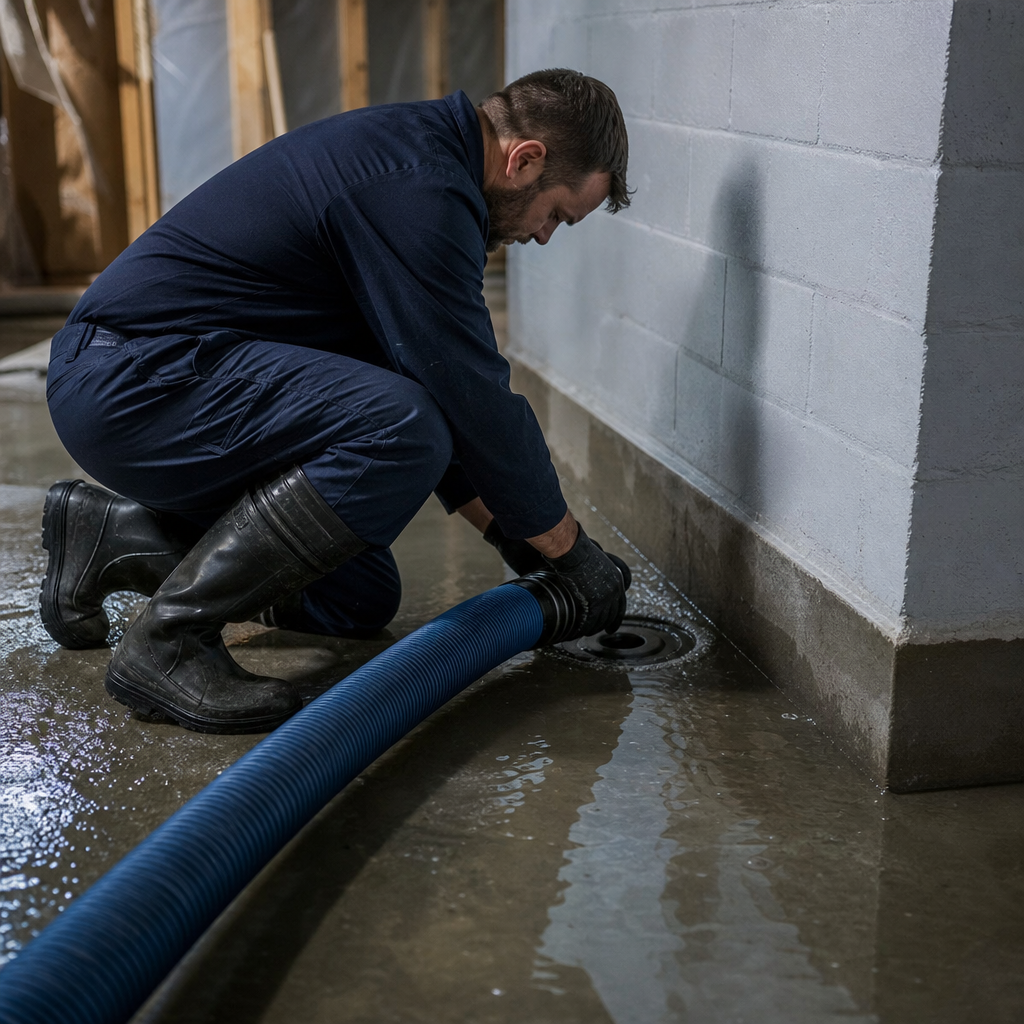
Basements and lower levels are vulnerable to water issues, including plumbing line breaks, drainage problems, and external runoff. Whether damage from sewer or drain backups is covered depends on specific policy language and applicable endorsements.
Filing a Water Damage Claim and Working with Your Insurer
Policyholders are generally expected to take reasonable temporary measures to protect property from further damage after a loss occurs. Prompt action, combined with thorough visual and written records, ensures a well-documented claim file.
How to File a Water Damage Claim Step by Step
- Address safety and stop the water source: Shut off the main water valve if an active plumbing leak is occurring, and ensure the area is safe from electrical and structural hazards.
- Promptly notify the insurer: Contact your insurance company or agent as soon as possible to report the loss and obtain claim instructions.
- Photograph or record the damage: Take clear photos and videos of the affected areas, the source of the water if accessible, and all damaged building materials and personal belongings.
- Take reasonable temporary measures to prevent further damage: Remove standing water and dry the area where practical, avoiding permanent structural repairs until the damage has been documented.
- Preserve damaged items where safe and keep receipts: Keep damaged personal property for the adjuster to inspect, and maintain a folder with all receipts for temporary repairs, emergency supplies, and related expenses.
Frequently Asked Questions About Water Damage Claims
Does standard homeowners insurance cover water damage?
Certain internal water damage from a broken pipe or plumbing system may be covered. However, policy language, exclusions, deductibles, endorsements, causation, and maintenance history control the final coverage decision. Outside flooding generally requires separate flood insurance.
What types of water damage are excluded from insurance policies?
Property policies generally exclude damage caused by outside flooding, surface water runoff, and gradual leaks or deterioration resulting from a lack of regular maintenance.
What is the difference between flood damage and water damage coverage?
Certain internal water damage from a broken pipe or plumbing system may be covered by property insurance, while damage caused by outside surface water or rising floodwaters generally requires separate flood insurance. Under the NFIP, coverage is available up to $250,000 for eligible residential buildings and up to $100,000 for eligible contents, and it generally does not cover temporary housing or additional living expenses during repairs.[1]
Will insurance pay for mold damage after a water leak?
Coverage for mold depends on policy terms and whether it resulted directly from a covered loss. Flood insurance generally excludes moisture, mildew, or mold damage that could have been avoided through regular maintenance.
What documentation should be kept during a claim?
As recommended by Floodline Restoration Co., property owners should keep thorough photo and video records of all damage, retain damaged items where safe, maintain a log of communications with the insurer, and keep receipts for any reasonable temporary measures taken to prevent further damage.
Need water damage insurance coverage?
We’re available now - call for a fast, free estimate.
Sources
- https://www.congress.gov/crs-product/R44593?hl=R44… – congress.gov (2026)
- FEMA Exercises Borrowing Authority for National Flood Insurance Program – fema.gov (2025)
- Hurricane Milton – floir.gov (2025)
- A Brief Introduction to the National Flood Insurance Program – congress.gov
- 1 – agents.floodsmart.gov
Related reading: How to Know If Mold Is Dangerous | Call Now-10% Off | Same-Day Service | Free Estimate
Related reading: Mold Remediation Cost – Call Now-10% Off – Same-Day Service – Free Estimate
Related reading: Water Damage Drying | Call Now-10% Off | Same-Day Service | Free Estimate
Frequently Asked Questions
Does homeowners insurance cover water damage from a sewer or drain backup?
Standard homeowners policies generally exclude sewer and drain backups unless you have purchased an optional water backup endorsement. Floodline Restoration Co. assists homeowners by documenting the precise source and scope of the backup to streamline filing under applicable policy endorsements.
Can I begin water extraction before an insurance adjuster visits the property?
Yes, policyholders are required to mitigate further loss and prevent secondary issues like mold growth immediately. Contacting Floodline Restoration Co. for 24/7 emergency water extraction ensures your property is stabilized while preserving critical visual evidence and moisture readings for the adjuster.
How do insurance adjusters determine if water damage was sudden or gradual?
Adjusters look for indicators of prolonged moisture exposure, such as rotted structural framing, rusted fixtures, and layered water stains, to distinguish continuous leaks from sudden pipe failures. Meticulous documentation and visual moisture mapping from Floodline Restoration Co. help establish clear causation to support your claim.
About the author
 |
Christopher Vance Christopher Vance brings over 12 years of hands-on experience in water mitigation and structural drying, holding multiple certifications from the Institute of Inspection, Cleaning and Restoration Certification (IICRC). Before shifting his focus to consumer education, he managed large-loss commercial and residential recovery operations throughout the New York metropolitan area. He specializes in breaking down complex restoration processes and pricing models to help property owners make informed decisions during high-stress situations. |
Water damage, flood, or mold emergency?
We’re available now - call for a fast, free estimate.
Call Now - Free Estimate