
Free visual inspection and a written scope of work before any mitigation begins - photos, moisture readings, and drying logs go in your claim file
The scope we write is the scope we bill. Anything new gets shown to you, in writing, before we touch it.
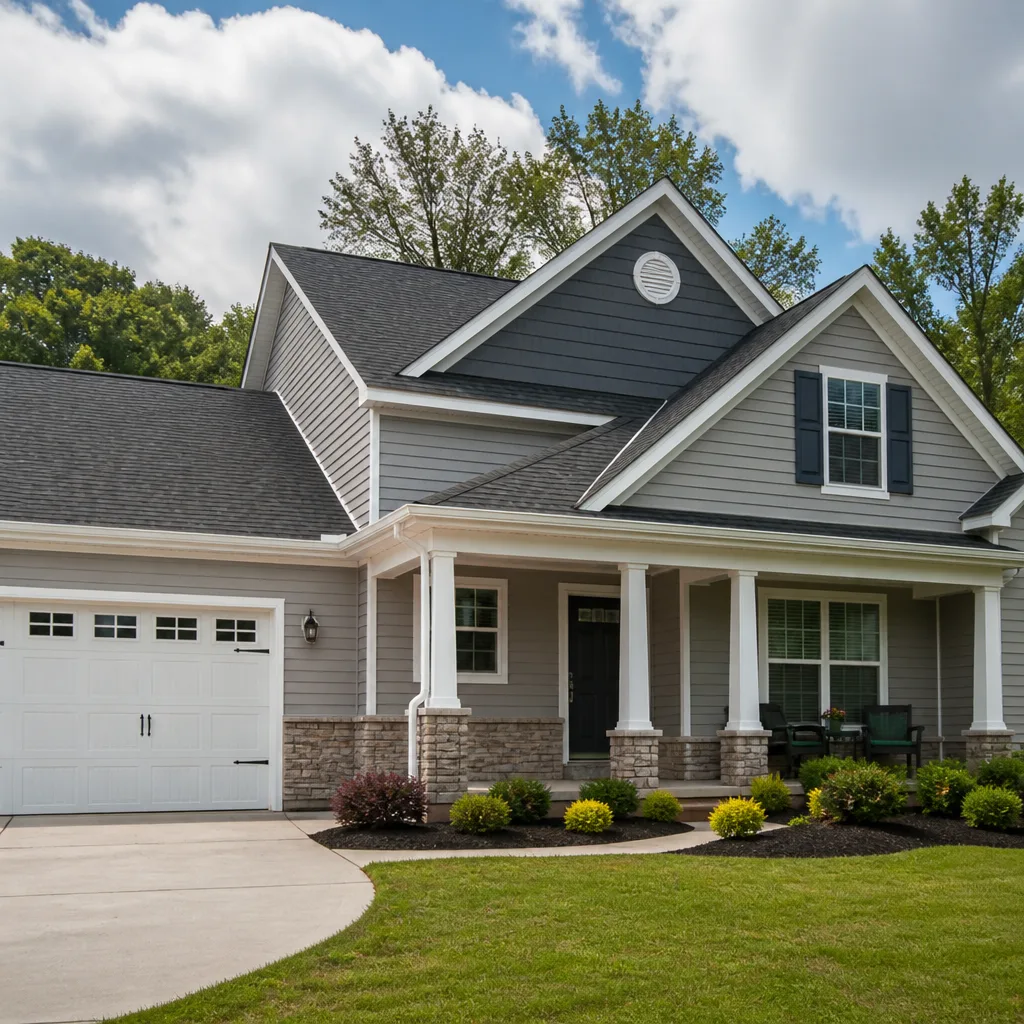
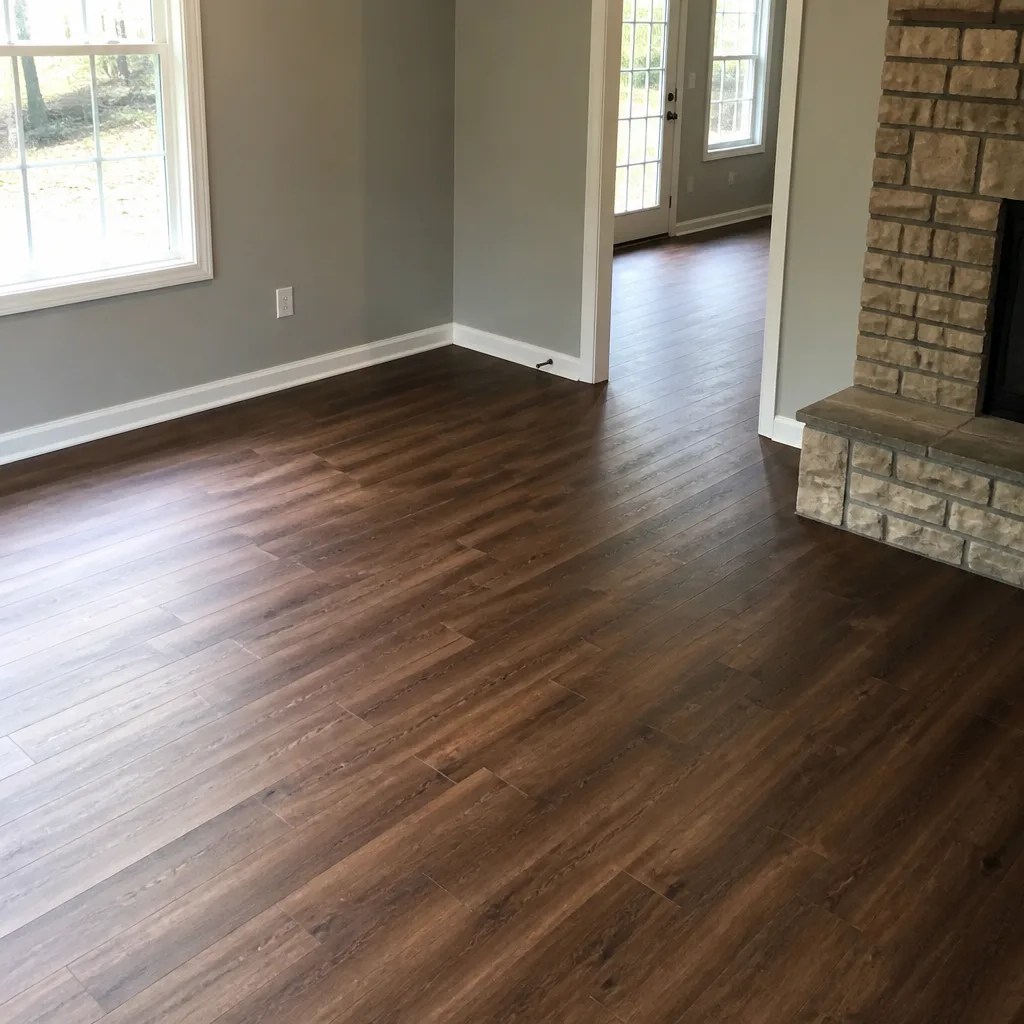
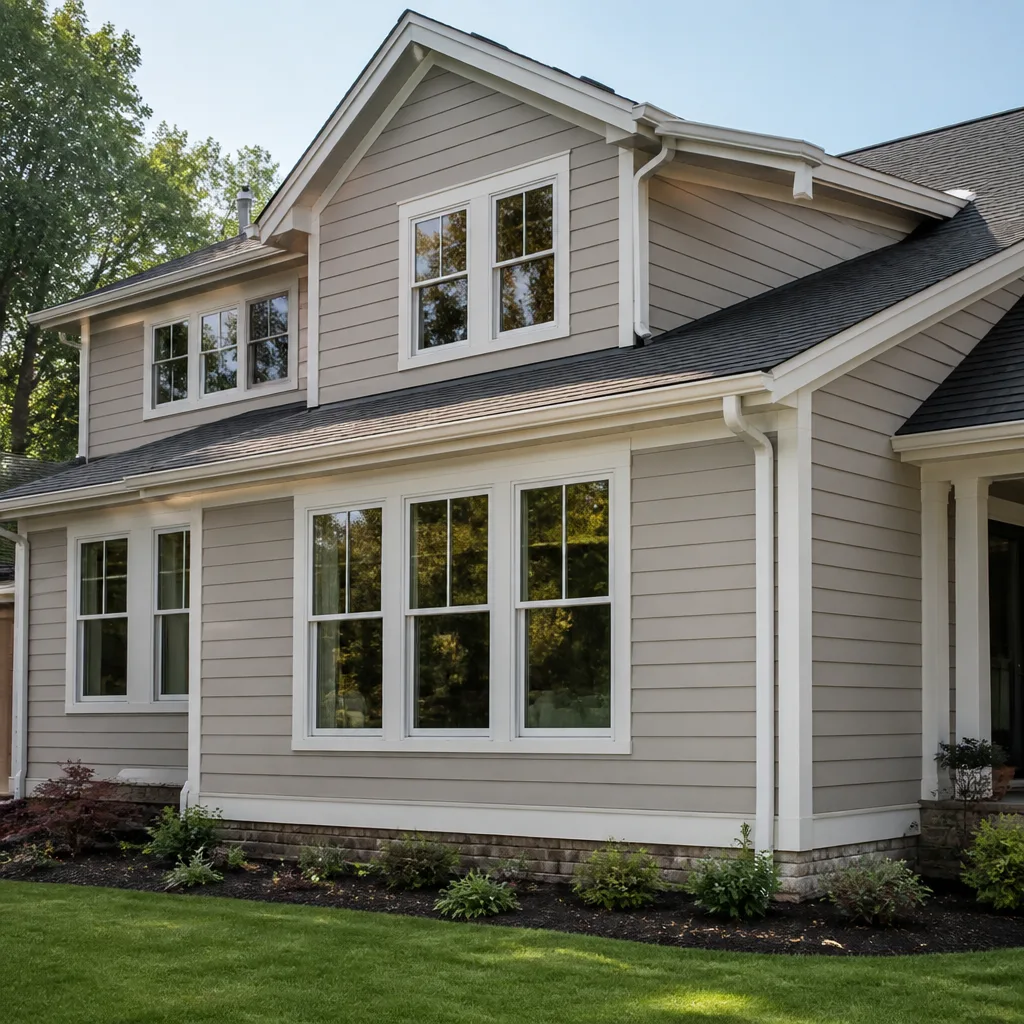
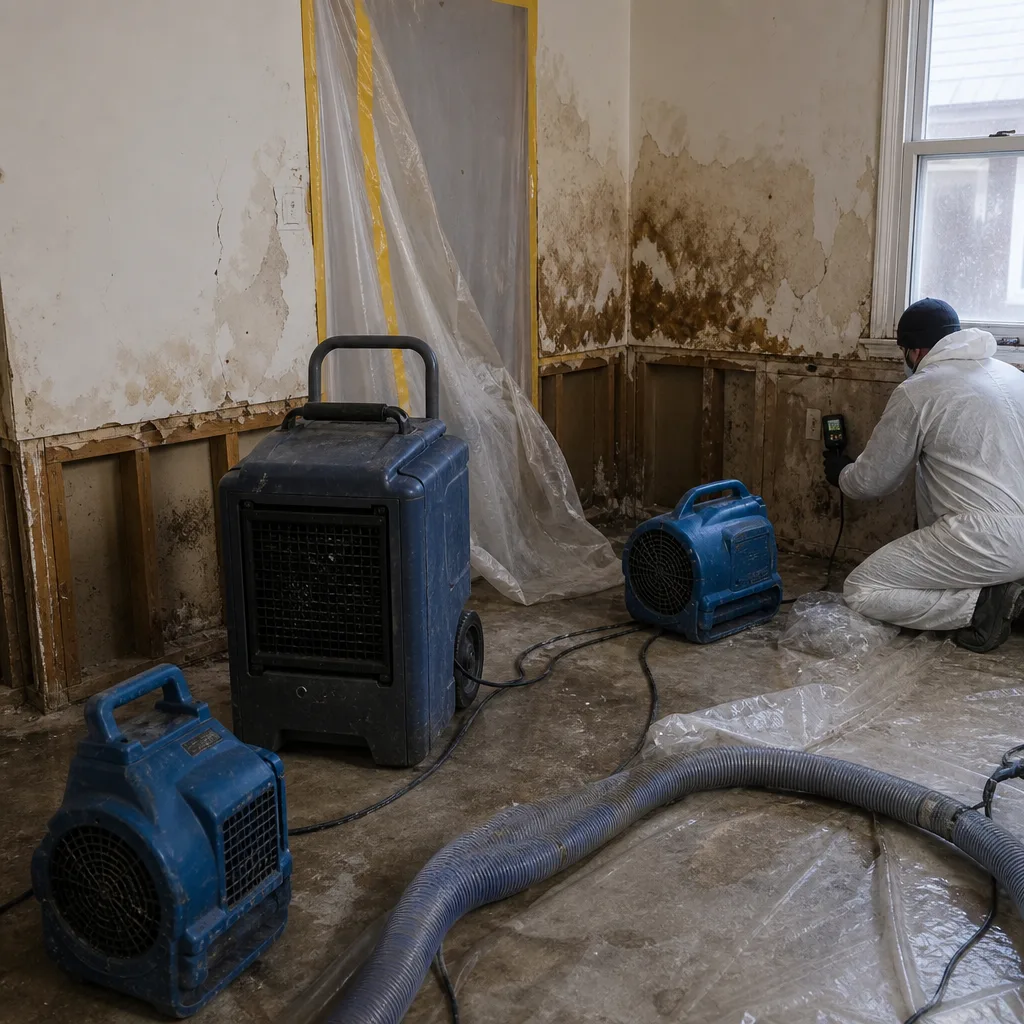 Before
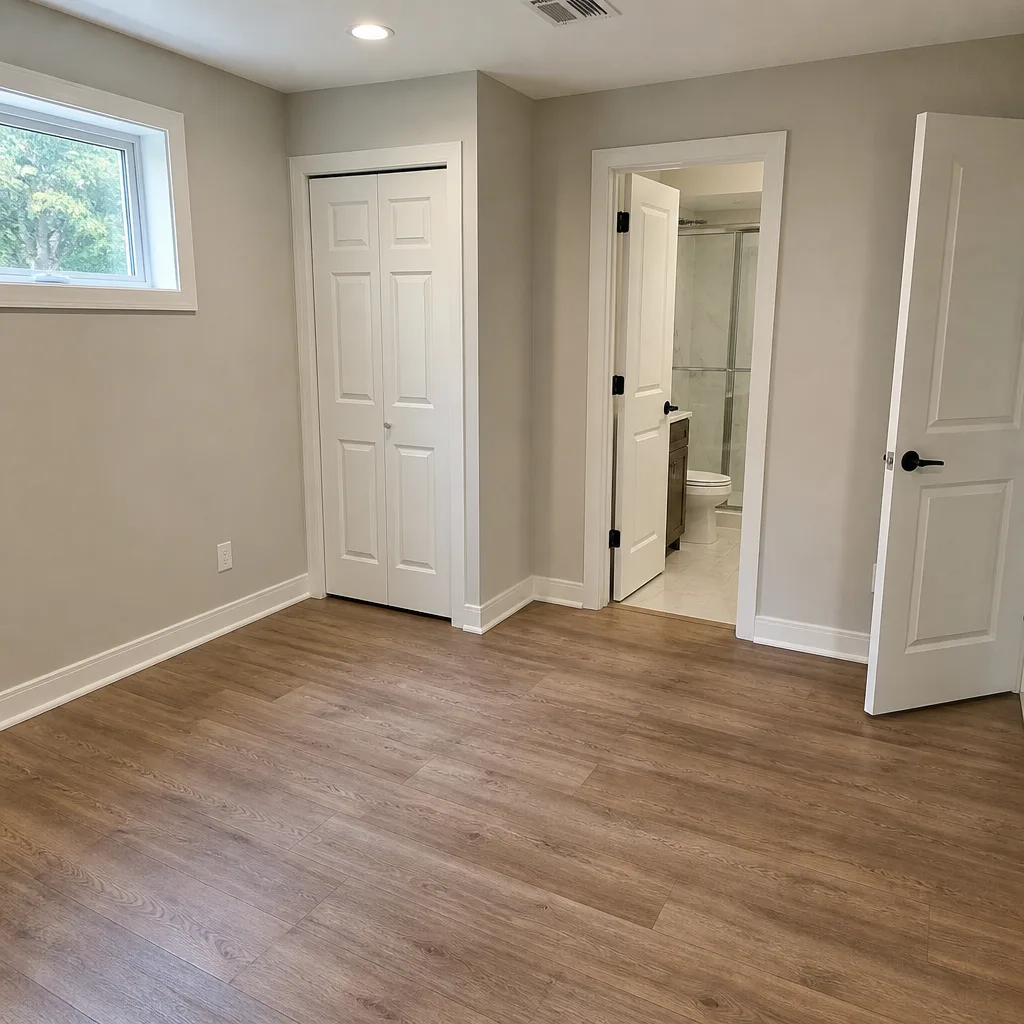 After
After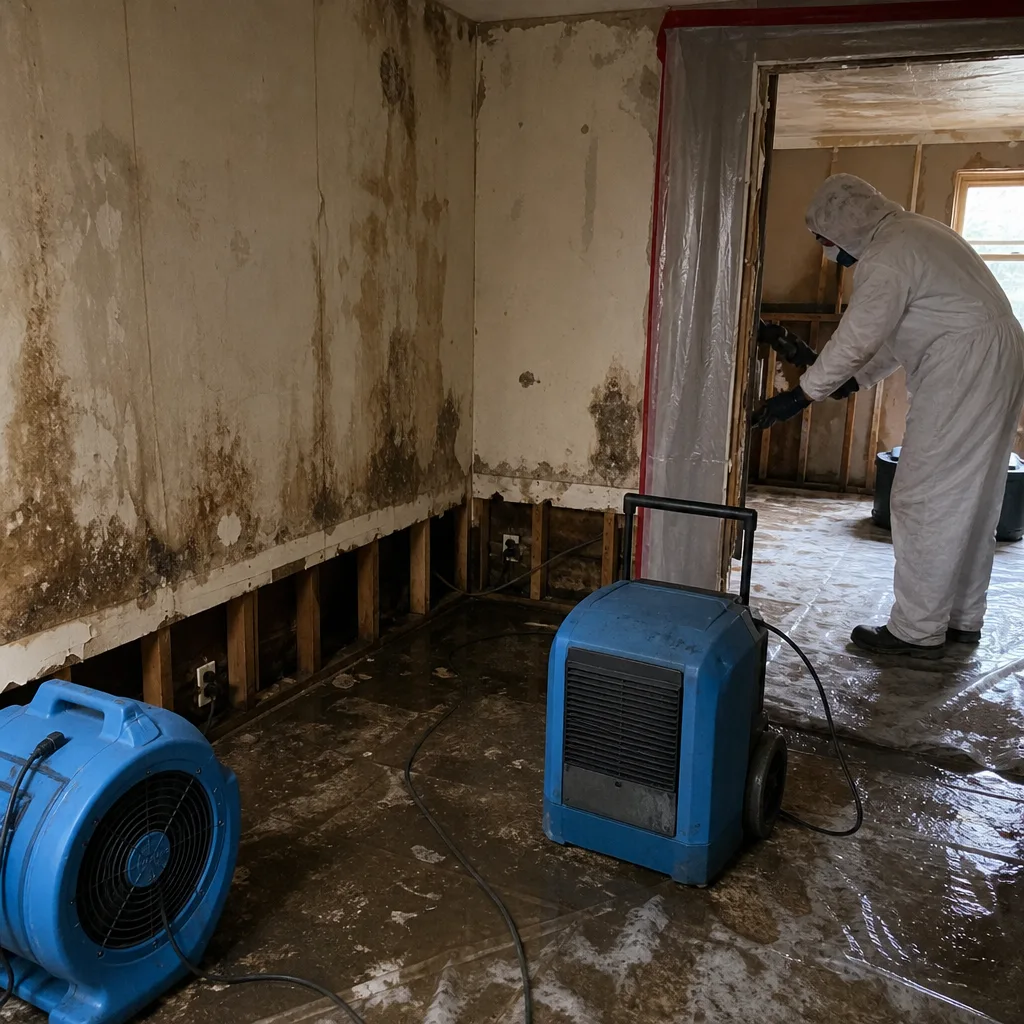 Before
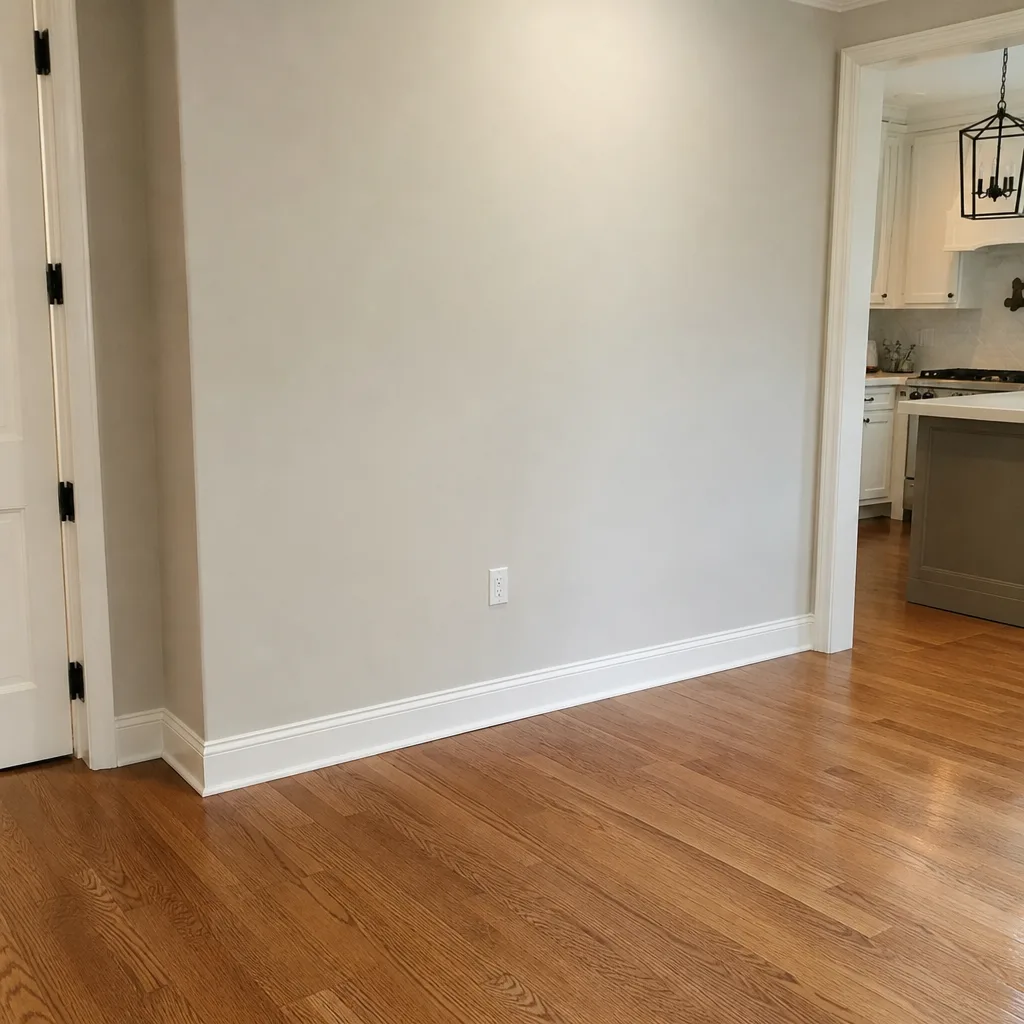 After
After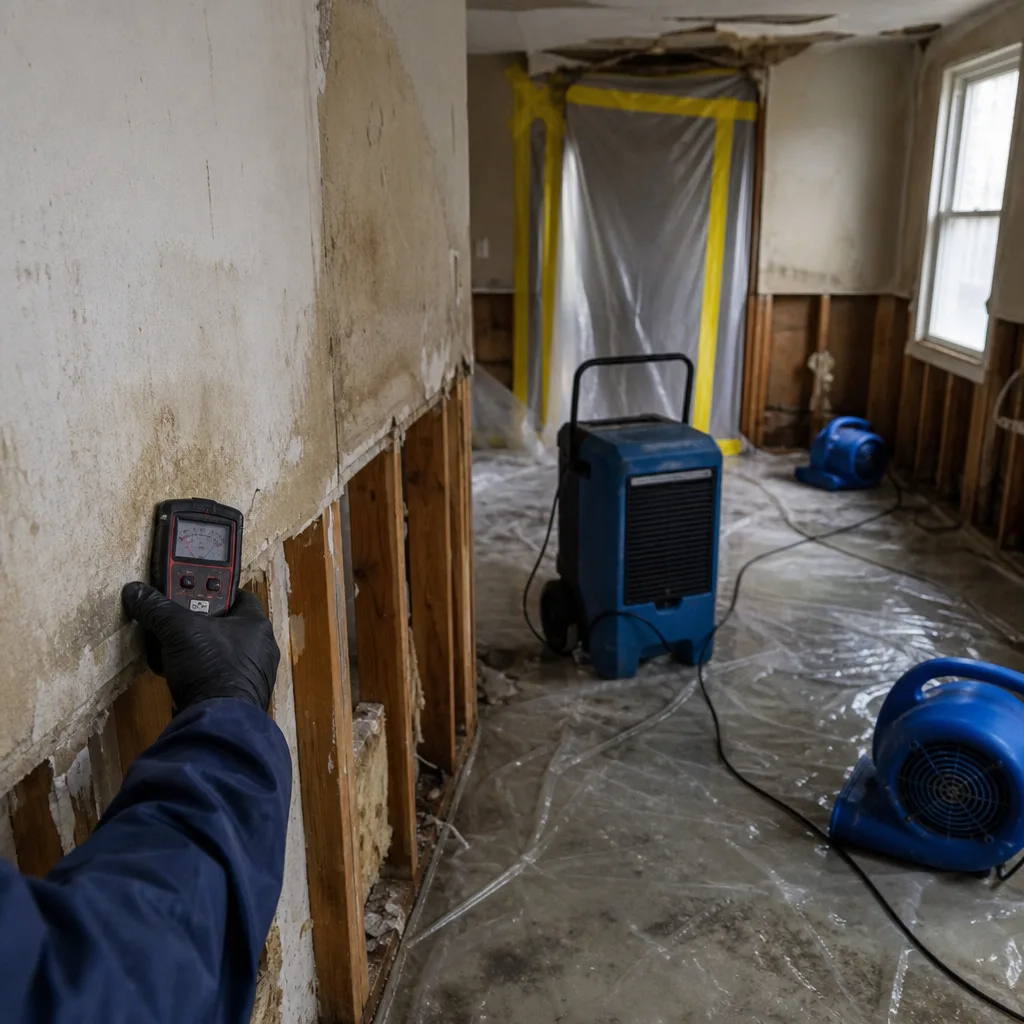 Before
 After
After24/7 Emergency Mold Remediation in Middle Village
Mold remediation in Middle Village typically costs $1,200-$4,800 for a finished basement, and we answer the phone at (363) 999-0829 at any hour with a live person, not a recording. When you call, a background-checked crew is dispatched from our New York City office into Middle Village neighborhoods like Juniper Valley Road or 69th Street, usually within 45 minutes. The first hour matters because mold in a wet finished basement begins colonizing gypsum drywall and subfloor within 24 to 48 hours, and every hour of delay means the containment area grows. We take that seriously enough to keep a live dispatcher on the line at two in the morning, because we know the person on the other end just found a wet wall and needs someone steady to tell them what happens next.
What you get with Floodline Restoration Co. is one crew that stays from the first moisture reading to the finished repair. No mid-job handoff. No inherited strangers. The 90-Day Done Right Promise goes in your hands in writing before we start, and we stand behind it.
Understanding Mold Remediation Severity in Middle Village Properties
Mold remediation isn’t one-size-fits-all, and in Middle Village the dividing line is usually whether the water came from a clean supply line or from the city sewer. Clean water from a burst copper line is Category 1. Gray water from a dishwasher or washing machine overflow is Category 2. Sewage backup, the kind that pours up through a basement floor drain during a cloudburst, is Category 3, and that means full containment, antimicrobial treatment, and removal of porous materials down to the studs. We classify every loss before we touch a wall, and we moisture map the cavities behind the drywall with probes, because surface meters alone miss what’s hiding behind a 1940s cast-iron stack chase.
Middle Village’s housing stock makes severity assessments harder than in newer Queens construction. Most homes here were built between roughly 1940 and 1965. Semi-detached brick houses share a party wall, sometimes a cinderblock wall with a 2-inch cavity between the two units. When Category 3 water wicks into that cavity, it doesn’t stop at the property line. We’ve read elevated moisture 18 inches up the shared wall on Juniper Valley Road, on the side we weren’t originally called to. That’s why our assessment always includes a check of the adjoining side when the owner gives us access. If they don’t, the mold can recolonize through the same wall cavity within weeks.
Summer humidity here routinely exceeds 70%, which means a wet cavity in August becomes visibly moldy faster than the same leak in January. We log daily readings with Dri-Eaz and Phoenix equipment until the dry standard is met, and those logs go to your insurance carrier and to you.
Why Middle Village Property Owners Choose Floodline Restoration Co.
- 45-minute response commitment. Crews are dispatched from our NYC office into Middle Village immediately after your call, and we hold to a 45-minute arrival window for emergency water and mold calls in the 11379 zip code.
- 24/7 live answer, every time. A real dispatcher picks up at 2 a.m., not a voicemail. You’ll never be told to leave a message and wait for a callback when there’s water rising.
- IICRC-certified crews. Our technicians are trained to IICRC standards including WRT (Water Damage Restoration Technician) and AMRT (Applied Microbial Remediation Technician), plus RIA and IFA protocols. They’re uniformed, background-checked, and they carry photo ID.
- Free visual inspection of mold damage. Before we quote anything, we walk the loss with you, explain what we’re seeing, and give you an honest read on severity. No scare tactics, no upselling.
- Direct insurance billing. We bill your carrier directly and speak with your adjuster so you don’t have to translate construction paperwork into insurance language at midnight.
- One team from extraction to reconstruction. The same crew that sets containment and dries the cavity handles daily readings, hands you the moisture log, and rebuilds what needs rebuilding. One name to hold accountable.
Our Mold Remediation Process
Inspection & Assessment
We start with a thorough visual walk of the affected area, including the shared party wall when access is possible in semi-detached Middle Village homes. Thermal imaging and cavity probes tell us where the water actually went, not just where it pooled. The assessment is documented for you and your insurer.
Containment & Air Flow Control
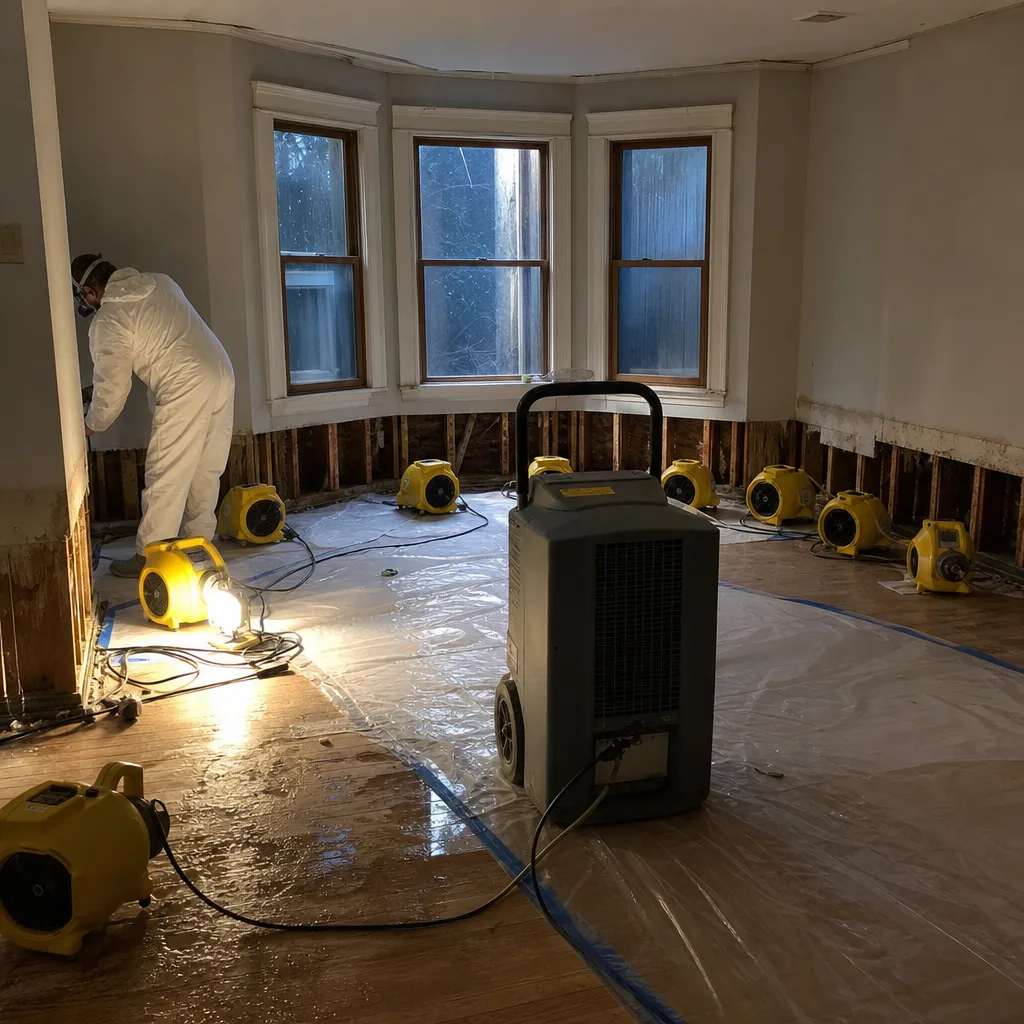
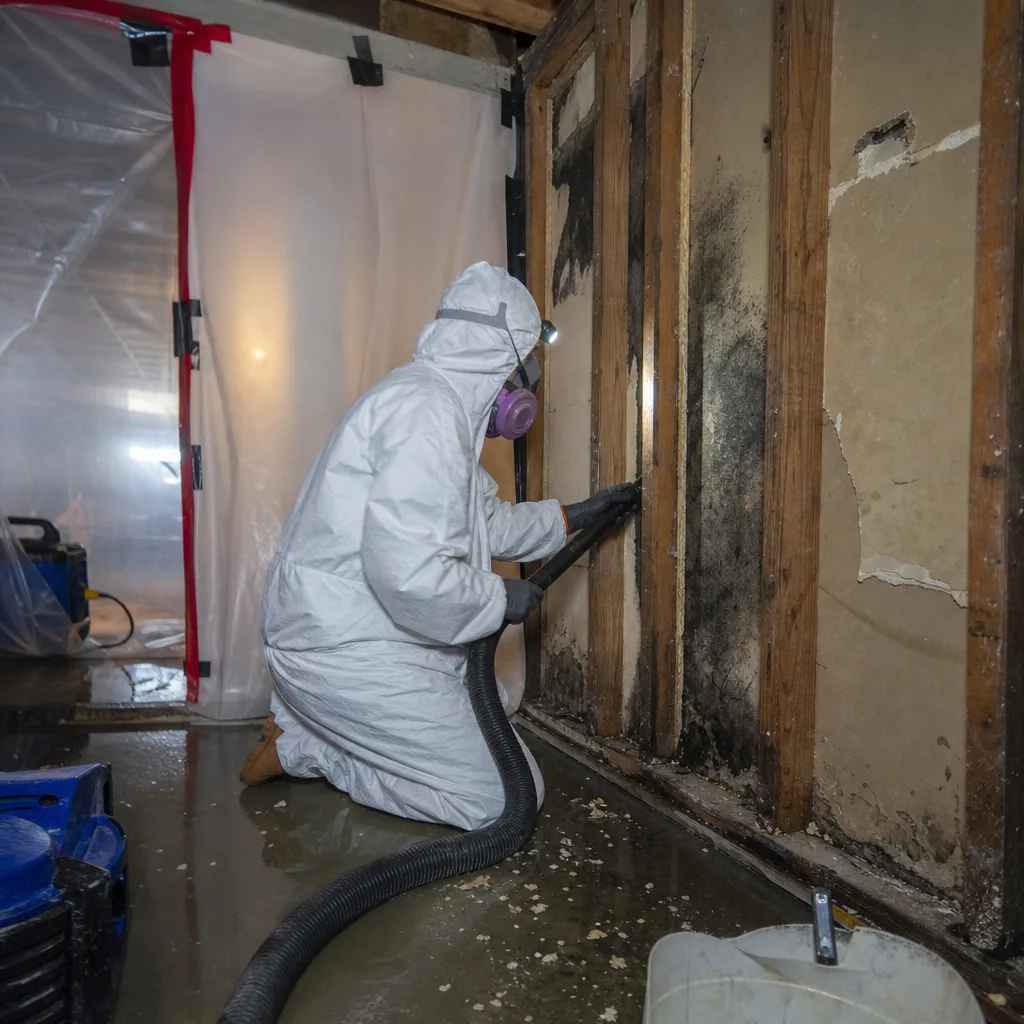
Before any drywall is cut, we seal the containment area with polyethylene and establish negative air pressure using HEPA-filtered air scrubbers. This prevents mold spores from traveling into adjacent living spaces and ductwork during demolition. In finished basement home offices, this step is non-negotiable.
Moisture Extraction & Removal
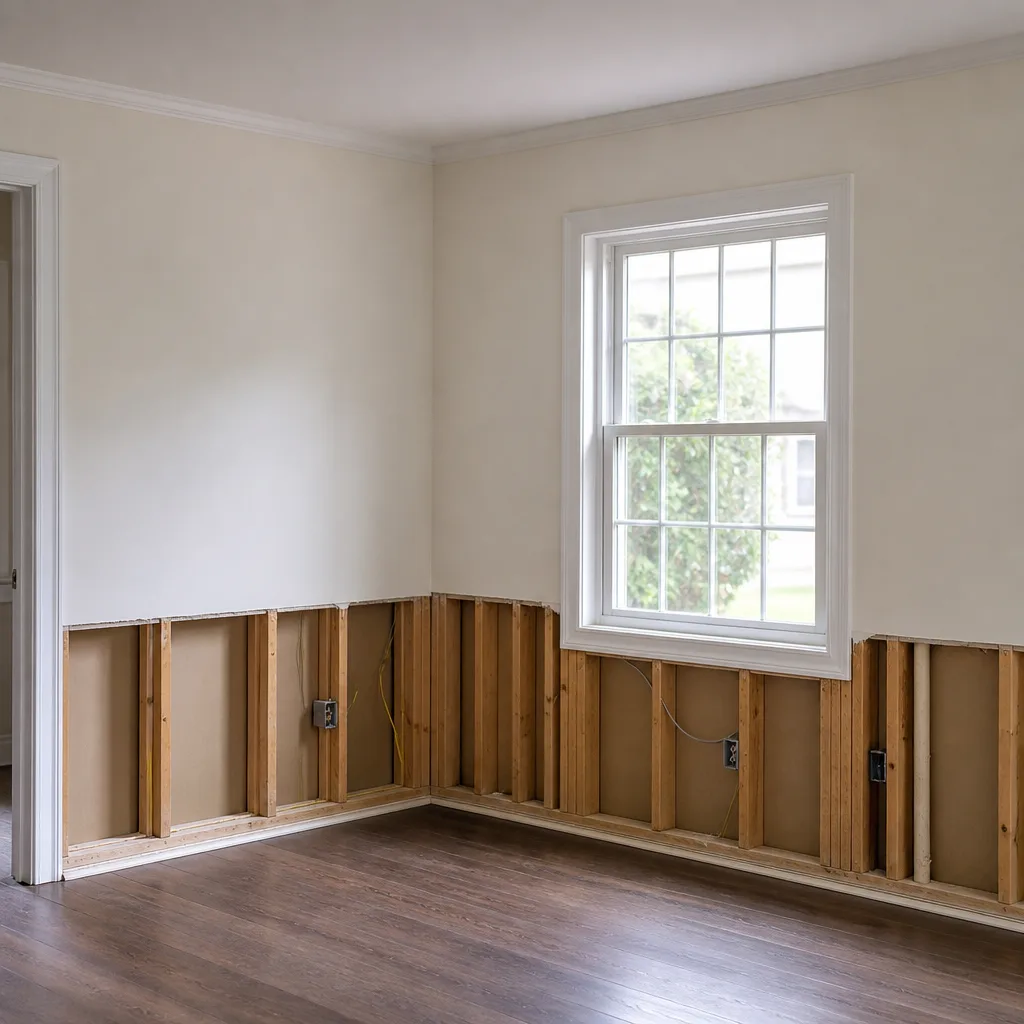
Standing water is extracted with professional-grade pumps, and saturated porous materials-drywall, carpet, padding, insulation-are removed and bagged within containment. Solid wood framing that can be saved is exposed for drying. We cut drywall at a clean line well above visible water staining.
Drying & Dehumidification
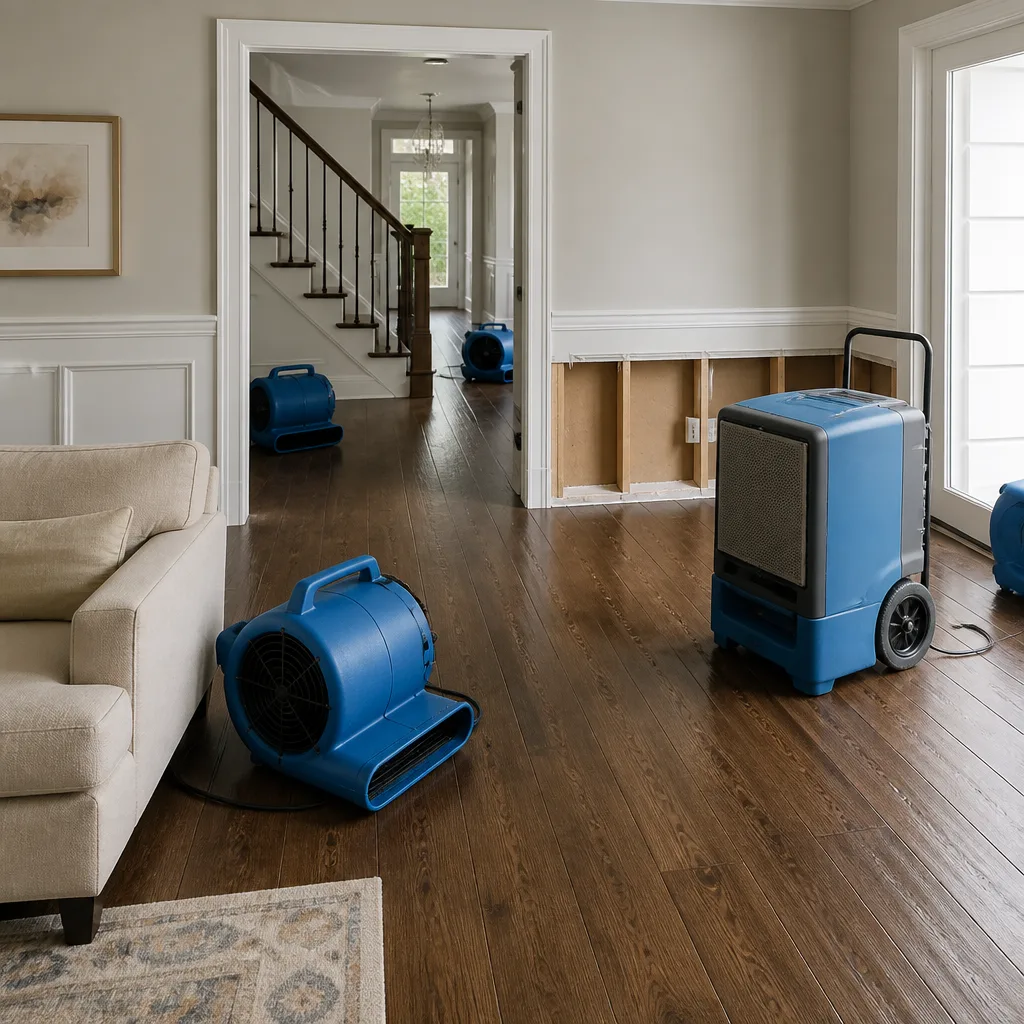
Dri-Eaz dehumidifiers and XPOWER air movers are placed according to a measured drying plan, not scattered randomly. Daily moisture readings track progress in walls, floors, and the party wall cavity. We stay until the dry standard is met, not until the equipment rental clock runs out.
Antimicrobial Treatment & Cleaning
Exposed framing and saved surfaces are treated with EPA-registered antimicrobial products to kill remaining mold root structures. HEPA vacuuming and air scrubbing remove settled spores. In Category 3 sewer losses, this step includes treating the open wall cavity before any new drywall goes up.
Repairs & Restoration
When readings confirm the dry standard, we rebuild. That includes drywall, trim, flooring, paint, and electrical if the original scope calls for it. Every repair is covered by the 90-Day Done Right Promise, in writing, before we leave the first time.
Need Emergency Mold Remediation in Middle Village Now?
Crews minutes away, answering live 24 hours a day. The sooner we start, the less it costs.
Working With Your Insurance Company
Insurance carriers are part of nearly every Middle Village mold job we handle. Finished basements in this neighborhood double as family rooms, offices, and guest quarters, so a Category 3 sewer backup produces contents claims, flooring claims, and sometimes structural claims all at once. We document everything from the first hour: photos room by room, moisture readings, containment setup, and the drying log. The line-item scope we write is built to industry standards your adjuster recognizes, which means fewer back-and-forth calls between you and the carrier.
We speak directly with your adjuster and don’t ask you to carry messages. When a permit question comes up on a party-wall repair, we handle that conversation too. The goal is a straightforward claim and a restored basement, not a paperwork battle.
What We Provide Your Insurer
- Thorough documentation of the loss
- Photos of all damage, room by room
- Moisture readings and drying logs
- A detailed, line-item scope of work
- Direct coordination with your carrier
Built for Middle Village’s Loss Calendar
Middle Village has a predictable rhythm of water and mold loss, shaped by Queens weather and aging infrastructure. January and February bring deep freezes that split copper supply lines inside unheated basement walls. We’ve opened walls on Harold Avenue in February where the leak ran inside the stud cavity for days before anyone noticed a wet baseboard. Spring thaw saturates the ground, and that water finds its way down basement stairwells and through window wells. Nor’easters in March and April back up street drains and push water over the curb line, and Middle Village’s impermeable surface coverage means the water chooses the basement.
Summer is the mold season. Cloudburst thunderstorms in July and August overwhelm the combined sewer system, and the same storm that floods a Maspeth street corner backs waste into Middle Village basements. When humidity sits above 70% for a week, a small leak becomes a mold colony fast. Autumn’s nor’easter season brings the same street-drain issues, and by the time a homeowner notices a musty smell in a finished basement office, the cavity behind the paneling has been wet for weeks.
The old cast-iron drains and early copper supply lines in 1940s and 1950s homes fail quietly, often inside a finished wall, and by the time you see the stain the drywall is already colonized. We see every one of these patterns by the block and by the season. That’s why our Middle Village crews stock equipment for tight 6-foot basement clearances and understand how to dry a party wall cavity without opening your neighbor’s living room.
Mold Remediation Across Middle Village’s Neighborhoods
The tighter blocks near Metropolitan Avenue and 69th Street are packed with semi-detached brick homes where finished basements share a party wall, so our containment setups there always include checking the cavity on the neighbor’s side when access is allowed. Around Juniper Valley Road, homes sit slightly back from the street, and basement stairwells become drainage channels during heavy rain. Stairwell containment and sump pump extraction matter as much as the drying plan there. On the streets ringing Lutheran Cemetery, where development is dense and basements are often the primary family room, we regularly remove contents, flooring, and drywall before the drying plan starts. The tight 25-foot lot lines mean equipment has to fit through side-passage doors, and our crews know which Dri-Eaz dehumidifiers and XPOWER air movers get through a 24-inch doorway.
Near Juniper Boulevard and the blocks off Eliot Avenue, semis have similar 1940s construction but more variation in basement finish level. We’ve handled unfinished basement sewage backups there where the dry-out was straightforward, and finished home-office remediations that required full containment, HEPA air scrubbing, and rebuild. The difference in scope on the same block is exactly why a site walk comes before any quote.
In 11379 overall, the response routes run down Metropolitan Avenue, Cooper Avenue, and Woodhaven Boulevard. Our crews know which corners flood and which blocks had cast-iron stack failures in the 1950s original build. That’s knowledge you can’t get from a national franchise call center.
This page shows exactly how finished, party-wall basements in Middle Village’s dense brick semi-detached homes demand different mold remediation steps than a standalone suburban house, because the wall you share is the wall you save. When a Category 3 backup flooded a finished basement on Juniper Valley Road, our crew set containment across the stairwell and ran XPOWER air movers and Dri-Eaz dehumidifiers inside the tight 6-foot ceiling clearance, while moisture mapping tracked elevated readings 18 inches up the shared party wall. We coordinated with the neighbor to open a 2-foot inspection port on their side, treated the cavity with antimicrobial, and documented drying logs until readings matched the pre-loss condition.
Specialized Mold Remediation Services We Offer in Middle Village
Mold Inspection & Testing
Before any remediation starts, we identify the mold type, the moisture source, and the extent of the colony. In Middle Village’s semi-detached homes, that means cavitation probes into party walls and a check of the cast-iron stack chase, because hidden mold behind those chases is the most common recontamination source after a basement remediation. Inspection includes moisture mapping, visual documentation, and air sampling when needed for your insurer or your own records.
Mold Removal
We don’t spray visible mold and call it done. In Middle Village’s finished basements, removal means cutting drywall to a clean line, removing saturated insulation, bagging and disposing of porous materials inside containment, and physically scrubbing or replacing affected framing. The work is done under negative air so spores don’t drift into the upstairs living space or the neighbor’s side of the party wall.
Black Mold Remediation
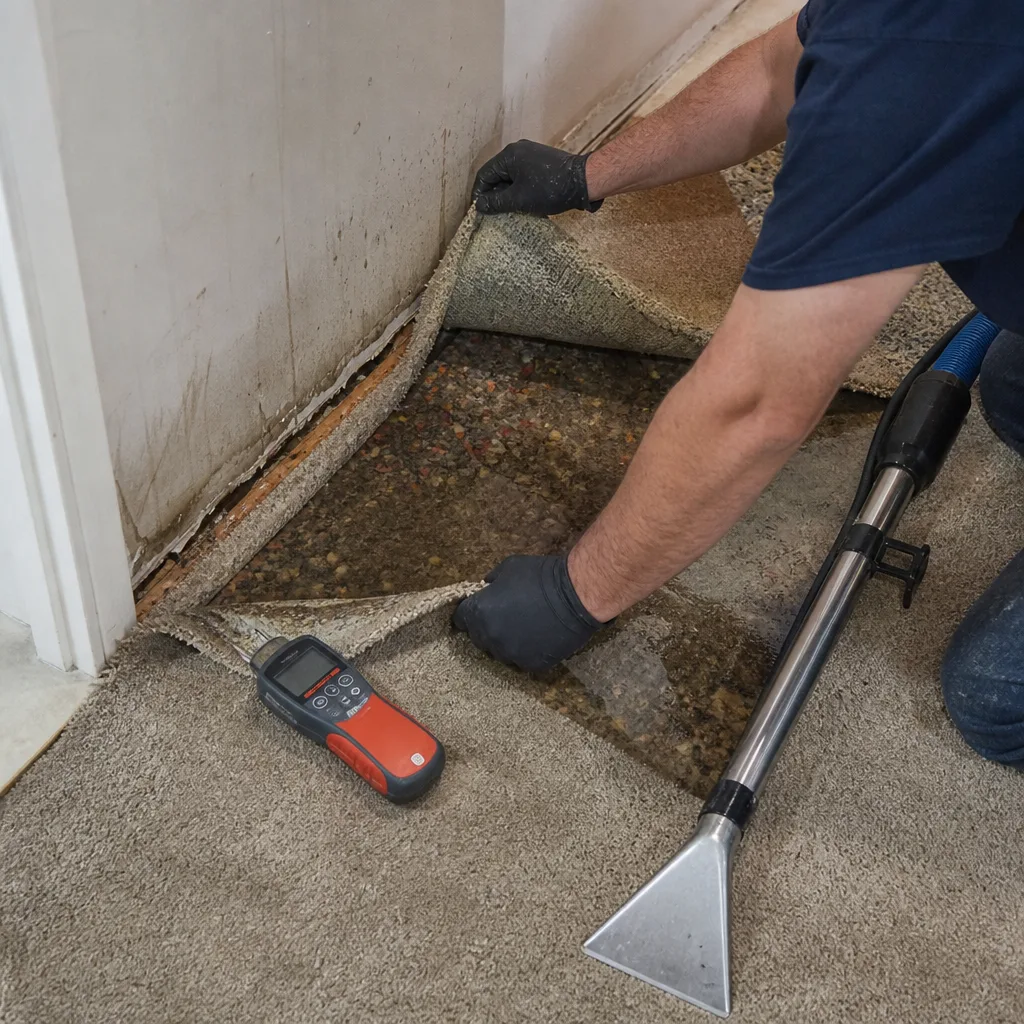
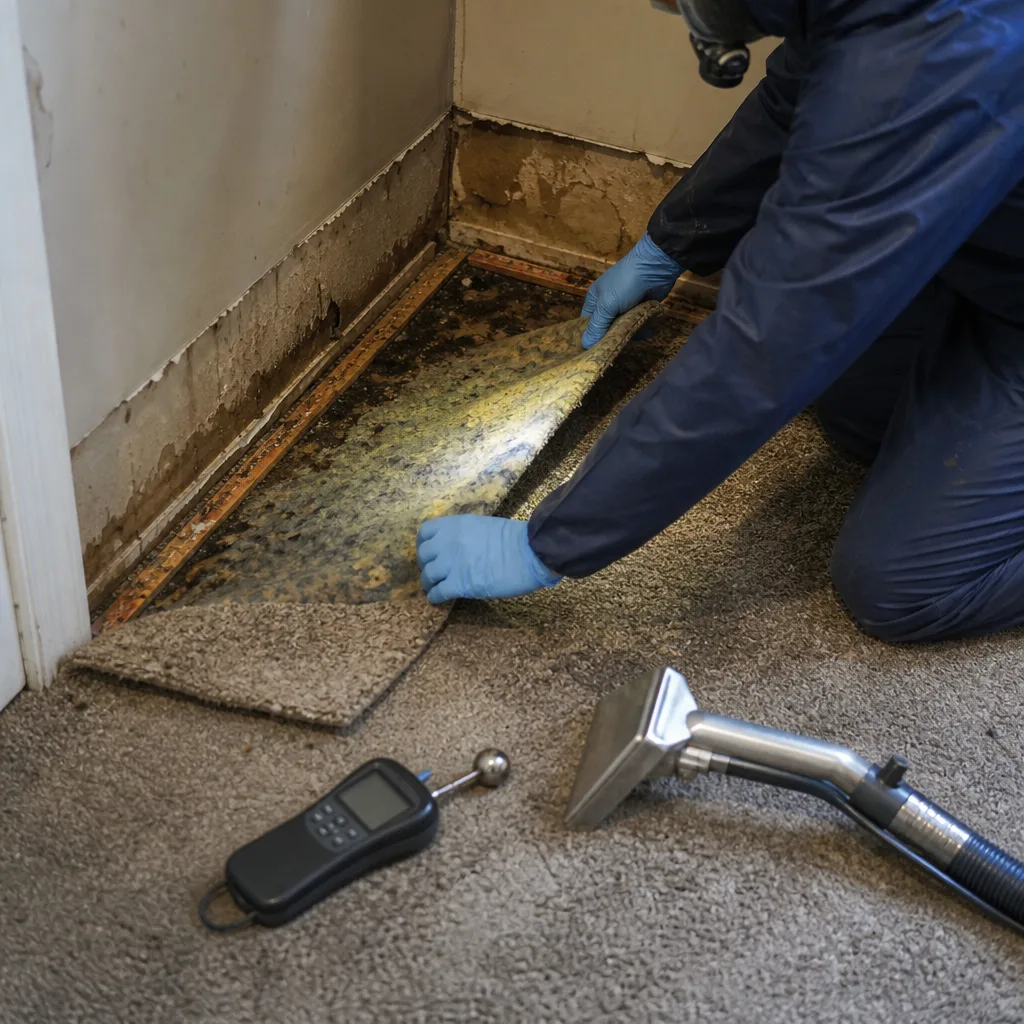
Stachybotrys chartarum, the mold people call black mold, colonizes cellulose materials like drywall paper and ceiling tile after prolonged water saturation. It’s common in Middle Village basements that had a slow leak inside a finished wall for weeks before discovery. Black mold remediation here always includes full containment, HEPA air scrubbing, and clearance verification, because a semi-detached house shares air pathways with the home next door.
Air Quality Restoration
After a basement mold remediation, airborne spore counts can remain elevated inside the home for weeks if the air isn’t scrubbed. We run HEPA-filtered air scrubbers during demolition and drying, and we can test air quality after the rebuild to confirm spore counts have returned to the outdoor baseline. For Middle Village homeowners with allergies, asthma, or grandchildren in the house, this step is worth the small added cost.
Crawl Space Treatment
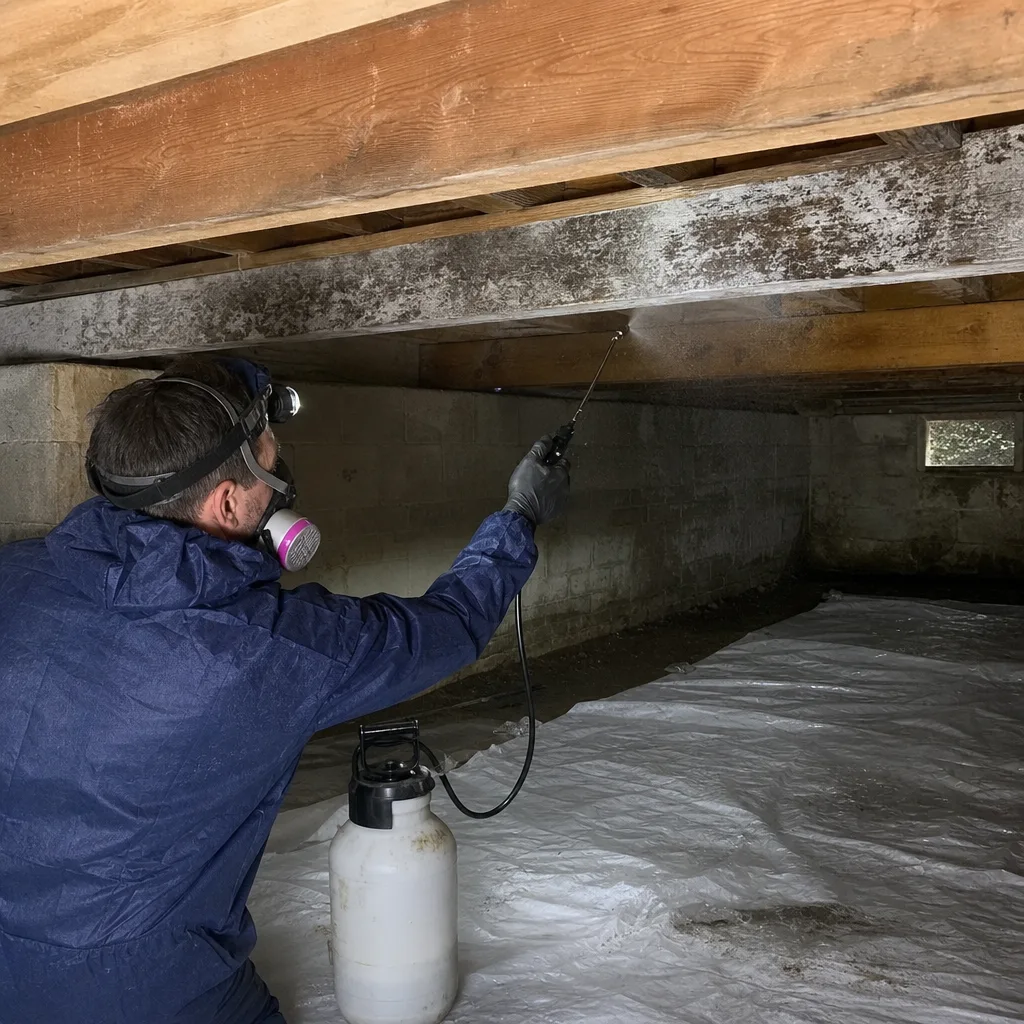
Some older Middle Village homes have partial crawl spaces adjacent to the basement, often under a bump-out or rear extension. These spaces trap humidity against the foundation wall and feed mold into the joist ends above. We treat crawl spaces with vapor barriers, dehumidification strategy, and antimicrobial application to stop ground moisture from driving mold into the finished basement wall.
What happens when you call
- 1
A real person answersNo phone trees - you reach a local pro.
- 2
You get an upfront price rangeHonest numbers before anyone is dispatched.
- 3
A background-checked tech heads outLicensed & insured, dispatched right away.
- 4
You approve before work beginsNothing starts until you say go.
Mold Remediation Costs in Middle Village, NY
A straight mold removal in an unfinished Middle Village basement, single room, no rebuild, runs $1,200-$2,800. A finished semi-detached basement with Category 3 sewage backup, full containment, cavity treatment on both sides of the party wall, and rebuild of drywall, flooring, and trim typically runs $3,500-$4,800. Add coordination through a shared wall into the neighbor’s unit, and permit-required structural work on a party wall pushes the higher end above that. Crawl space treatment alone is usually $1,500-$2,600 depending on square footage and access. Mold inspection and testing starts around $350-$550 without remediation.
What moves the price in Middle Village is the party wall. If we need to open an inspection port on the neighbor’s side, seal the cavity, and document drying on both addresses, the scope grows by labor and time. Finished basements also cost more because contents protection and rebuild are part of the job. Our free visual inspection gives you a written line-item scope before any work starts, so there are no surprises on the bill. Call (363) 999-0829 and we’ll walk the loss with you, talk plainly about what we see, and write down exactly what it takes to fix it.
We Also Serve Cities Near Middle Village
Our crews respond to Middle Village and the surrounding Queens neighborhoods: Maspeth, Elmhurst, Ridgewood, and Forest Hills. Insurance coordination, the 90-Day Done Right Promise, and the same Mold Remediation team cover every home we serve.
Serving Middle Village, NY - Our Local Coverage Area
We’re based in the Middle Village area and know this community well. Use the map below to see our service coverage - if you’re nearby, we can almost certainly help.
Middle Village Mold Remediation Questions, Answered
Can mold spread from my Middle Village basement into the semi-detached house next door?
Yes, it absolutely can. Mold spores and moisture travel through the shared party wall cavity between semi-detached homes in Middle Village. That’s why a proper scope always includes checking the neighbor’s side when access is allowed. If the cavity stays wet and untreated on their side, the mold can recolonize your side within weeks of the rebuild. We coordinate with the neighbor, open a small inspection port when needed, and document drying across both addresses.
How quickly does mold take hold in a finished Middle Village basement after a sewer backup?
Within 24 to 48 hours in Middle Village’s summer humidity, which routinely exceeds 70%. Mold starts colonizing gypsum drywall, carpet backing, and wood subfloor as soon as moisture sits in the material. That’s why we answer live and dispatch within 45 minutes for water events. The faster extraction and drying start, the smaller the containment area and the lower the final cost.
Do I need a permit for mold remediation in Middle Village if the work touches a shared wall?
If the work involves structural changes to a party wall, such as removing and replacing studs or modifying the shared masonry, New York City Department of Buildings likely requires a permit. Mold remediation itself, including containment and cavity treatment, does not require a permit. Contractors who skip the permit check on party-wall demolition can get a DOB stop-work order that leaves the cavity open and recolonizing. We check permit requirements before any structural work starts and handle the paperwork as part of the scope.
Why do finished basements in Middle Village cost more to remediate than unfinished ones?
Finished basements here have drywall, flooring, insulation, and often built-in cabinetry or home office fixtures that absorb water and harbor mold. Unfinished basements let us remove standing water and dry exposed concrete and framing quickly. Finished basements require containment, selective demolition, contents protection, and eventual rebuild of every surface removed. The party wall adds another cost layer when moisture wicks into the shared cavity. Call (363) 999-0829 for a free visual inspection and a written scope that tells you exactly what your situation costs.
What kind of dehumidification is needed for a Middle Village basement in summer?
A Middle Village basement in July or August needs low-grain refrigerant dehumidifiers like Dri-Eaz units, sized to the cubic footage of the space and placed according to a drying plan with daily moisture readings. In a tight 6-foot ceiling clearance, we use smaller footprint units and XPOWER air movers to maintain airflow without blocking pathways. The goal is to bring the wall cavity and subfloor to the dry standard before rebuild, not just lower the room humidity. Get the full drying plan in writing before the work starts.
How fast can someone actually get to Middle Village for mold remediation?
We commit to a 45-minute response for emergency water and mold calls in the 11379 zip code. The dispatcher who answers at (363) 999-0829 is live, 24 hours a day, every day. They’ll confirm the address, explain what to do in the next few minutes, and tell you exactly which crew is en route and how far out they are.
Will my insurance cover mold remediation in Middle Village?
Most Middle Village mold losses are covered when they result from a sudden, accidental water event like a sewer backup, burst pipe, or overflow. Mold caused by long-term neglect or maintenance failure is typically not covered. We document the source, the path of the water, and the microbial growth from the first hour, and we speak directly with your adjuster to justify the scope. Having a line-item written scope with daily drying logs makes coverage approval far more likely than a hand-written invoice for a blurry number.
Do I really need full remediation, or just a cleaning?
If visible mold covers more than about 10 square feet, or if the mold is inside a wall cavity, full remediation is the correct answer. Cleaning surface mold on painted drywall looks fine for a month and then the colony regrows from the backside. In Middle Village’s semi-detached basements, a hidden cavity behind a cast-iron stack chase or inside a party wall almost always requires opening the wall. We’ll tell you plainly if cleaning is enough, and we won’t sell you a bigger scope than the moisture map shows.
Written by Curt Bowman, Owner at Floodline Restoration Co., serving Middle Village, NY with certified mold remediation, water damage restoration, and full reconstruction.