
Quick Summary
The typical basement flood cleanup cost ranges from $2,000 for basic clean-water extraction to over $20,000 for severe sewage backups, with total expenses escalating the longer moisture sits against drywall and masonry. Floodline Restoration Co. eliminates cost uncertainty by providing transparent, upfront fixed-price written estimates and managing direct insurance billing throughout emergency structural drying. Property owners can request a free visual inspection and fixed-price cleanup quote to halt lateral moisture migration immediately and prevent costly secondary mold damage.
Basement Flood Cleanup Cost: Save Walls and Cut Costs
If you are dealing with standing water in your basement right now, the typical basement flood cleanup cost averages around $4,000. Most standard extraction and drying jobs fall between $2,000 and $7,000, while severe contaminated finished-basement cases can reach $15,000 to $20,000+. In practical terms, the final bill comes down to two variables: how deep the water got and how many hours it sat against your walls.[2]
Every hour water sits, it wicks upward into drywall, framing, and masonry. In attached buildings and row houses, delays can significantly increase structural damage and cleanup complexity. Getting clear pricing upfront helps you make fast, practical decisions before secondary damage multiplies your repair costs. See also Water Damage Repair Pricing | Call Now-10% Off | On-Site in 60 Minutes | Free Estimate.
Average Basement Flood Cleanup Cost: Fast Answers and Timelines
Average Basement Flood Cleanup Cost in brief: Most basement flood cleanup jobs run between $2,000 and $7,000, averaging roughly $4,000 nationwide. Basic clean water extraction in an unfinished basement ranges from $1,200 to $2,500. When severe contaminated finished-basement cases occur, extensive drywall cuts, deep disinfection, and commercial structural drying can reach $15,000 to $20,000+.
Across the restoration industry, standard mitigation pricing reported by firms like Floodline Restoration Co. generally sits between $4 and $12 per square foot. However, standard square-foot estimates only give part of the picture. The porosity of your building materials and the contamination level of the water dictate the real scope of work.
Key Cost Ranges at a Glance
- Clean Water (Category 1): $1,200 to $3,000 for standard pumping, moisture mapping, and structural drying equipment.
- Contaminated Water (Category 2 and Category 3): $3,000 to $10,000+ due to required biohazard sanitization, controlled demolition, and hazardous waste disposal. Severe contaminated finished-basement cases can reach $15,000 to $20,000+.
- Delayed Drying Penalty: Mold spores can begin colonizing damp materials within 24 to 48 hours after water intrusion. If drying is delayed, basement mold remediation typically adds substantial extra expense to the total bill.
Why Fast Extraction Lowers Total Invoices
National online calculators often fail property owners in dense urban areas like Queens because they assume a detached home with isolated concrete walls. In attached brick row houses, water moves sideways. Moisture wicks straight through shared masonry party walls into adjoining framing. Pumping out standing water within the first few hours stops this lateral travel, protects structural studs, and keeps your overall water mitigation cost per square foot from doubling.
What Does Basement Flood Cleanup Cost? (Standard Pricing Breakdown)
Need basement flood cleanup cost?
We’re available now - call for a fast, free estimate.
A typical flooded basement cleanup handled by Floodline Restoration Co. covers initial water removal, antimicrobial application, and commercial dehumidification. The details below reflect standard industry considerations for professional mitigation.[1]
Key Service Components
Standard restoration projects encompass several essential mitigation steps:
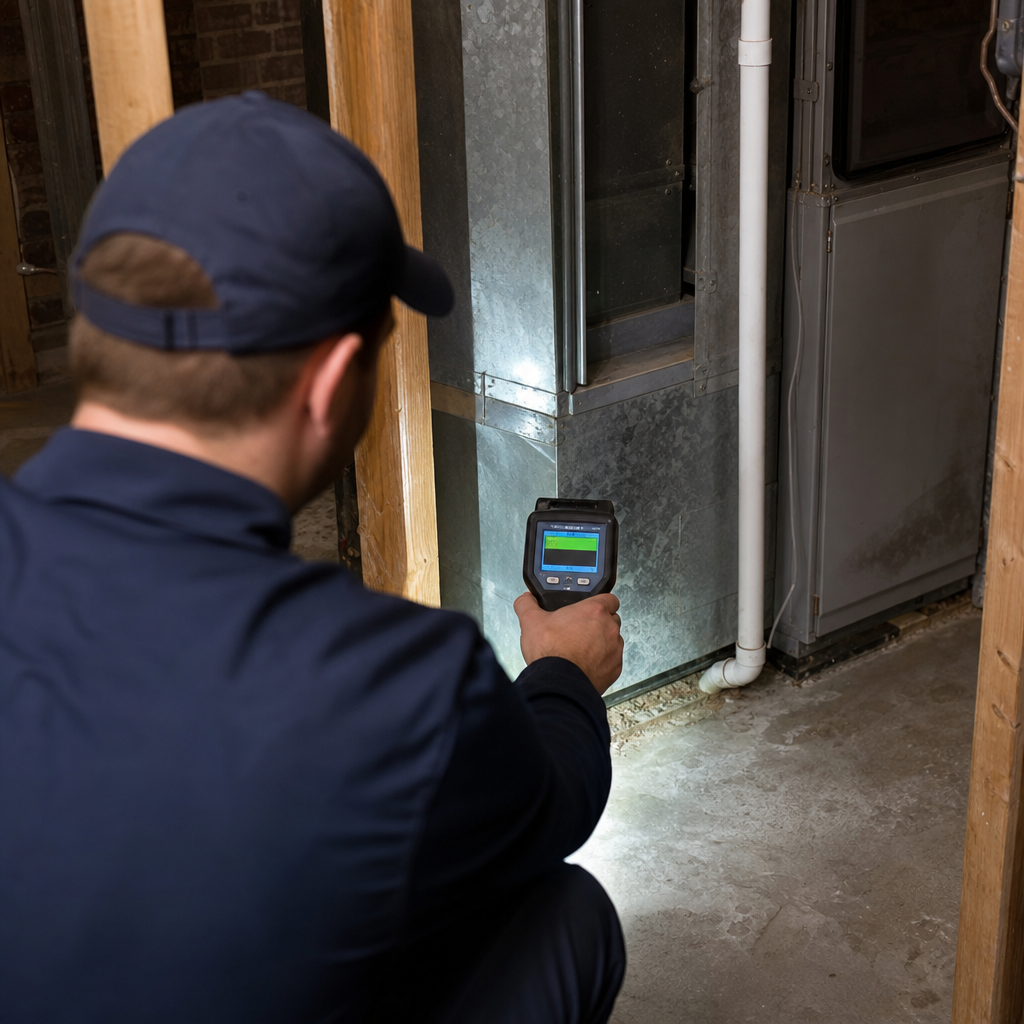
- Moisture assessment and thermal imaging: Identifying the full perimeter of moisture migration behind walls and beneath flooring.
- Water extraction and structural drying: Pumping out standing water and deploying industrial dehumidifiers and air movers.
- Sewage cleanup and sanitation: Applying broad-spectrum antimicrobial treatments to eliminate biohazards.
- Targeted mold remediation: Treating or removing materials with active fungal growth if drying is delayed.
How Water Classification Dictates Extraction and Disposal Costs
Per-square-foot pricing scales with the amount of damaged material and the water’s contamination level. The category of water determines which equipment runs, what can be saved, and what must be hauled away as hazardous waste.
| Feature | Category 1: Clean Water | Category 2: Gray Water | Category 3: Black Water |
|---|---|---|---|
| Source | Supply line break, fresh rainwater | Sump pump overflow, appliance discharge | City sewer backflow, street storm runoff |
| Porous Material Salvage | High (if dried within 24 hours) | Partial (pads discarded, framing treated) | None (all porous items removed and discarded) |
| Disinfection Level | Standard wash and dry | Targeted antimicrobial treatment | Hospital-grade broad-spectrum biocide |
| Typical Cost Range | $1,200 – $3,500 | $2,500 – $6,000 | $15,000 – $20,000+ (severe finished spaces) |
To avoid runaway costs, insist on a clear, itemized written estimate based on standard insurance pricing software before demolition begins.
Why Urban Properties Face Unique Costs: Masonry Wicking and Sewer Backups
Basements in older, attached urban neighborhoods cost more to dry out than standard suburban basements. Shared party walls, aging municipal infrastructure, and limited street staging create specific cleanup challenges that generic cost calculators ignore.
The Danger of Lateral Brick and Mortar Moisture Migration
In attached 1920s to 1950s row houses throughout Elmhurst and Queens, basement foundations share common brick party walls. Brick is porous and functions like a sponge. When water pools on a basement floor, it does not just sit there; it wicks laterally through the mortar and into the wood sills of both your property and the neighboring home. Resolving this requires deep cavity drying, high-capacity desiccant dehumidifiers, and regular moisture meter monitoring to prevent hidden rot behind plaster and brick.
Aging Municipal Sewer Overflows and Biohazard Protocols
During severe cloudbursts, older municipal combined sewer systems become overwhelmed. Storm runoff mixes with raw domestic sewage and forces its way backward through basement floor drains and utility sinks. This creates an immediate Category 3 hazard. As technicians at Floodline Restoration Co. emphasize, crews cannot simply run standard fans, because blowing air across raw sewage aerosolizes harmful bacteria and viruses throughout the building. The cleanup requires full personal protective equipment, negative air machines with HEPA filtration, regulated biohazard disposal, and industrial-grade sanitizing washes.
Component Breakdown: Drywall, Subfloors, and HVAC Restoration Costs
Need basement flood cleanup cost?
We’re available now - call for a fast, free estimate.
Your overall water mitigation cost per square foot depends heavily on the finished materials inside the space. Restoring an unfinished storage cellar requires basic pumping and air movers, whereas a finished basement with living space requires controlled demolition and specialized mechanical care.
Drywall and Insulation: The 2-Foot Flood Cut Decision Rule
Drywall absorbs moisture upward like a wick. When contaminated water touches drywall, technicians perform a flood cut: cutting away the sheetrock and insulation exactly two feet above the highest water line. This opens the wall cavity, allows trapped air to circulate around damp framing studs, and prevents hidden colonies of mold from growing out of sight.
Subfloor, Joists, and Finished Flooring Salvageability
Laminate, vinyl plank, and engineered hardwood trap water beneath their underlayment. In almost every flooded basement scenario, these floor coverings must be removed to expose the concrete slab beneath. Concrete might look dry on the surface, but it retains large amounts of moisture deep inside its pores. Technicians use commercial LGR (low-grain refrigerant) or desiccant dehumidifiers to pull moisture out of the slab before new flooring can be installed safely.
HVAC Ductwork Sanitization and Mold Prevention
If floodwaters reach low-lying ductwork or floor registers, sanitizing and sealing the HVAC system is critical. Running a heating or air conditioning system after a basement flood without proper duct cleaning risks circulating fungal spores and bacterial odors into upper-level bedrooms and living areas.
Insurance Coverage and Basement Flooding
Understanding policy coverage is essential when dealing with flood damage. Standard homeowners policies generally exclude external floodwater, and separate flood insurance is typically required.
Managing the Claims Process Efficiently
When navigating an insurance claim, keeping thorough records helps streamline the process:
- Document Immediately: Take clear, wide-angle photos and videos of water levels, serial numbers on flooded appliances, and damaged personal property before anything is discarded.
- Demand Daily Moisture Logs: Professional restoration teams should record daily psychrometric readings (temperature, relative humidity, and moisture content in structural framing) to document equipment progress.
- Opt for Direct Billing: Working with a restoration contractor who bills the carrier directly saves you from paying substantial amounts out of pocket while waiting for reimbursement.
Frequently Asked Questions About Basement Flood Cleanup
How much does it cost to clean up a flooded basement on average?
The average cost across the United States is approximately $4,000, with typical jobs ranging between $2,000 and $7,000. Minor clean water extraction jobs in unfinished spaces start near $1,200, while severe contaminated finished-basement cases can reach $15,000 to $20,000+.
What factors affect the total cost of basement flood restoration?
The final price is determined by water category (clean vs. sewage), water volume, square footage of the space, material porosity (unfinished concrete vs. drywall and carpeting), and how quickly drying begins to prevent secondary mold growth.
Does homeowners insurance cover basement flood cleanup costs?
Standard homeowners policies generally exclude external floodwater, and separate flood insurance is typically required to cover flood-related damage.
How much does emergency water mitigation cost per square foot?
Standard water mitigation pricing across the industry, according to Floodline Restoration Co., generally ranges between $4.00 and $12.00 per square foot, depending on the contamination level and materials involved.
What is the difference in cost between clean water and sewage backup cleanup?
Clean water cleanup is less costly because materials can often be dried in place without hazardous waste protocols. Severe contaminated finished-basement cases involving sewage backups can reach $15,000 to $20,000+ due to required safety gear, material removal, and hospital-grade sanitizers.
How much does mold prevention or remediation cost after a flooded basement?
Applying preventative antimicrobial wash during active water extraction helps prevent growth. If drying is delayed beyond 48 hours and active mold colonies develop inside walls or under subfloors, professional mold remediation adds substantial extra expense to the total restoration bill.
Need basement flood cleanup cost?
We’re available now - call for a fast, free estimate.
Sources
- Flooded Basement Cleanup: Cost, Steps & Safety (2026) – foundationsage.com (2026)
- Flood Restoration Cost and Cleanup Services (2026) – insidercost.com (2026)
Related reading: Water Mitigation Cost | Call Now-10% Off | Same-Day Service | Free Estimate
Related reading: Ceiling Water Damage Repair Cost | Call Now-10% Off | On-Site in 60 Minutes | Free Estimate
Related reading: Sewage Cleanup Cost – 10% Off & Free Estimate – Same-Day Service
Frequently Asked Questions
How long does it take to completely dry out a flooded basement?
Complete structural drying of framing, drywall cavities, and porous concrete slabs typically takes three to five days using industrial dehumidifiers and air movers. Floodline Restoration Co. tracks daily psychrometric logs and moisture meter readings to ensure all building materials reach safe moisture levels before reconstruction begins.
How does direct insurance billing work for emergency basement flood cleanup?
Direct insurance billing allows your restoration contractor to submit standardized, itemized claims directly to your carrier with complete photo logs and daily drying documentation. Floodline Restoration Co. coordinates directly with adjusters and offers upfront fixed-price written quotes to protect property owners from unexpected out-of-pocket costs.
What happens during a professional visual inspection for basement water damage?
Technicians use thermal imaging cameras and deep-penetrating moisture meters to map moisture migration behind drywall, inside masonry walls, and beneath subfloors. Floodline Restoration Co. provides a free visual inspection to assess contamination levels and outline an upfront, transparent scope of work before mitigation starts.
About the author
 |
Sarah Miller Sarah Miller is a certified property restoration specialist with over 10 years of experience managing water damage and mold remediation projects in the New York area. She holds a degree in Environmental Science from Rutgers University and is certified by the Institute of Inspection, Cleaning and Restoration Certification (IICRC). Sarah translates her field experience into practical guides that help homeowners navigate the stress of property damage and the complexities of insurance claims. |
Water damage, flood, or mold emergency?
We’re available now - call for a fast, free estimate.
Call Now - Free Estimate