
Quick Summary
Filing a homeowners insurance water damage claim requires swift emergency mitigation and comprehensive evidence collection to ensure sudden, accidental losses are fully covered without delays. Homeowners must immediately stop the water source, catalog room-by-room damage before teardown, and partner with professionals like Floodline Restoration Co. to secure adjuster-ready documentation and moisture logs. Following these steps enables property owners to navigate carrier requirements effectively, prevent secondary damage, and contact Floodline Restoration Co. for 24/7 emergency mitigation and claim support.
Homeowners Insurance Water Damage: How to File and Document Your Claim
When you file a homeowners insurance water damage claim, acting quickly is essential. Getting emergency mitigation and clear documentation early helps protect your property from secondary damage and establishes the record needed for your insurance claim.[2]
According to the Insurance Information Institute, water damage and freezing is one of the most frequent homeowners claim categories, affecting about 1 in 67 insured homes in 2023. Despite how common these incidents are, policyholders often encounter delays or claim issues when damage is not properly documented before repairs begin.[1] See also Water Damage Repair Pricing | Call Now-10% Off | On-Site in 60 Minutes | Free Estimate.
Knowing what standard policies cover, how to record the extent of the damage, and what documentation to provide makes the claims process significantly smoother.
Navigating Water Damage Claims: Quick Facts and What You Need
Determining whether homeowners insurance covers water damage depends on the cause of the loss. Standard homeowners insurance generally covers sudden and accidental water damage, such as a burst pipe, while usually excluding gradual leaks, flooding, and maintenance-related losses.
What You’ll Need Before Filing
To help show the timeline and cause of the damage, gather these records before meeting with an adjuster:
- Policy Information: Details regarding your deductible, dwelling coverage, personal property limits, and any optional water backup endorsements.
- Incident Timeline: A factual record noting when the water was discovered and when the source was stopped.
- Photos and Video: Clear visual records of standing water, damaged walls, flooring, and affected personal property before demolition or disposal.
- Repair and Mitigation Records: Invoices, estimates, and moisture logs provided by emergency drying professionals.
Key Takeaways at a Glance
- Mitigate Promptly: Stopping the water source and extracting standing water helps prevent additional structural damage and mold.
- Document Early: Take thorough photos and videos of all affected areas before materials are removed or discarded.
- Use Itemized Estimates: Work with licensed contractors who provide detailed, line-item estimates for repairs.
Step 1: Stop the Source and Prevent Secondary Loss
Your first priority during a water emergency is to stop incoming water and ensure the area is safe. Standard policies generally require homeowners to take reasonable steps to protect the property from further damage after an incident occurs.[3]
Locating Main Shut-Off Valves
- Locate your main water shut-off valve, typically found where the main water line enters the home.
- Turn the valve clockwise (or perpendicular to the pipe for lever valves) to shut off the water supply.
- If the valve cannot be closed, contact your local water utility for assistance.
Mitigating Electrical and Safety Hazards
Do not enter areas with standing water until you confirm that electrical power to the affected area is turned off. If water reaches electrical outlets, breaker boxes, or major appliances, contact an electrician or your utility provider before entering.
Step 2: Document the Extent of Water Damage
Thoroughly documenting the spread of moisture helps establish that damage resulted from the sudden event rather than long-term wear and tear.
Recording Moisture Spread
Water can quickly travel behind baseboards, beneath flooring, and into adjacent wall cavities. Restoration professionals often use specialized moisture meters and thermal imaging tools to identify hidden wet areas and track the drying process.
Step 3: Document Room-by-Room Damage Before Demolition
Whenever possible, photograph and record all damaged building materials and personal belongings before they are removed or discarded.
Photographing Building Materials and Personal Property
- Take wide-angle photos of each room, followed by close-ups of specific water damage on floors, walls, and cabinetry.
- Photograph the failed appliance or plumbing part, and retain the broken part if practical so the adjuster can examine it.
- Keep damaged items until the insurance adjuster has inspected them or given permission to dispose of them.
Cataloging Personal Property
Compile a detailed list of damaged belongings, including item descriptions, approximate ages, original costs, and estimated replacement values, along with any available receipts or proof of purchase.
Step 4: File the Homeowners Insurance Claim
Need homeowners insurance water damage?
We’re available now - call for a fast, free estimate.
Contact your insurance carrier promptly to report the loss and initiate the claims process.
Contacting Your Carrier’s Claims Department
- Provide clear facts: Clearly explain the source and circumstances of the water event.
- Track claim details: Keep a record of your claim number, assigned adjuster contact information, and all communications.
- Share documentation: Provide your photos, damaged property lists, and any emergency mitigation invoices directly to your adjuster.
Step 5: Professional Water Extraction and Drying
Extracting standing water and thoroughly drying wet building materials quickly reduces the risk of structural deterioration and secondary mold growth.
Drying and Mitigation
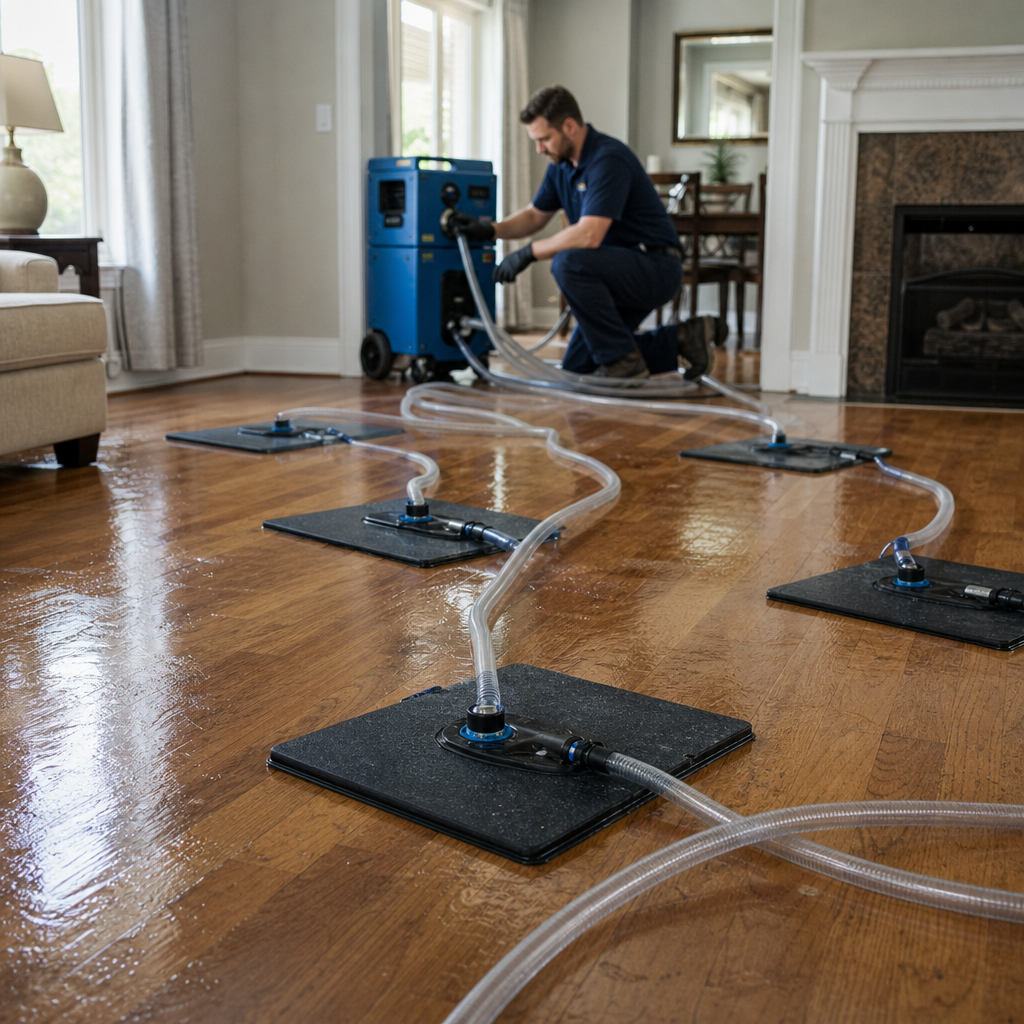
Professional water restoration companies like Floodline Restoration Co. use industrial dehumidifiers and air movers to dry saturated structural components, monitoring moisture levels until materials return to normal dry standards.
Step 6: Review Estimates and Complete Repairs
Review the repair estimates from your contractor alongside the scope prepared by the insurance adjuster to ensure all damaged areas and necessary repairs are accounted for.
Handling Additional Damage
If contractors discover hidden damage during the repair process, contact your adjuster to submit a supplemental estimate for review before continuing work.
Understanding Water Damage Costs and Insurance Coverage
When a water damage loss is covered, the homeowner is responsible for paying the applicable policy deductible, and the insurer covers the remaining approved repair and mitigation costs up to policy limits.
Frequently Asked Questions About Water Damage Claims
Does standard homeowners insurance cover sewer backups?
Standard homeowners insurance policies generally exclude sewer and drain backups unless optional water backup coverage has been added to the policy.
Why are some water damage claims denied?
Claims are typically denied if the damage is determined to be the result of unresolved maintenance issues, continuous leaks over time, or surface flooding.
What steps should I take immediately after discovering water damage?
Shut off the main water source, make sure the area is electrically safe, take photos and videos of the damage, contact a water mitigation professional such as Floodline Restoration Co., and notify your insurance carrier.
Will insurance pay for the plumbing repair that caused the leak?
Standard policies usually cover the resulting damage caused by sudden and accidental water discharge, but they generally exclude the cost of repairing or replacing the broken pipe or appliance itself.
Need homeowners insurance water damage?
We’re available now - call for a fast, free estimate.
Sources
- Appliance Water Damage: $13,954 Average Claim – bozmanfix.com – bozmanfix.com (2026)
- The Rising Cost of Water Damage in American Homes in 2026 – thesource.com (2026)
- Water Damage Statistics and Information – This Old House – thisoldhouse.com (2025)
Related reading: Ceiling Water Damage Repair Cost | Call Now-10% Off | On-Site in 60 Minutes | Free Estimate
Related reading: Water Mitigation Cost | Call Now-10% Off | Same-Day Service | Free Estimate
Related reading: Sewage Cleanup Cost – 10% Off & Free Estimate – Same-Day Service
Frequently Asked Questions
What documentation do insurance adjusters require to approve a water damage claim?
Insurance adjusters require clear evidence proving the loss was sudden and accidental, including initial photos, itemized repair scopes, and moisture mapping records. Floodline Restoration Co. provides adjuster-ready documentation and detailed drying logs through its Straight Claim Program to help prevent claim delays and disputes.
What should I do if hidden water damage is discovered after the adjuster's initial inspection?
If contractors uncover additional moisture or structural decay during demolition, you must file a supplemental claim with your insurer before continuing repairs. Restoration professionals like Floodline Restoration Co. capture thermal imaging and moisture readings of newly discovered areas to submit comprehensive supplement requests directly to your carrier.
How quickly must water mitigation start to satisfy homeowners insurance policy requirements?
Most policies mandate that homeowners take prompt action to mitigate secondary losses, which generally requires professional water extraction and drying to begin within 24 to 48 hours. Calling Floodline Restoration Co. for 24/7 emergency response helps prevent structural deterioration and mold while fulfilling your policyholder duties.
About the author
 |
Christopher Vance Christopher Vance brings over 12 years of hands-on experience in water mitigation and structural drying, holding multiple certifications from the Institute of Inspection, Cleaning and Restoration Certification (IICRC). Before shifting his focus to consumer education, he managed large-loss commercial and residential recovery operations throughout the New York metropolitan area. He specializes in breaking down complex restoration processes and pricing models to help property owners make informed decisions during high-stress situations. |
Water damage, flood, or mold emergency?
We’re available now - call for a fast, free estimate.
Call Now - Free Estimate